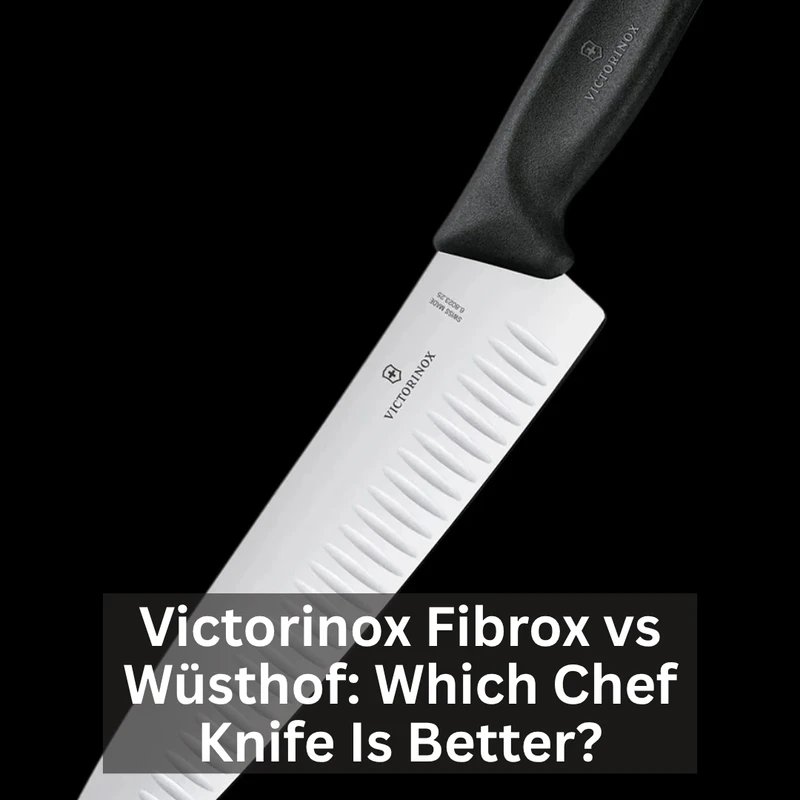
Victorinox Fibrox vs Wüsthof: Which Chef Knife Is Better?
Posted by HH on 21st Sep 2026
Choosing between a Victorinox Fibrox and a Wüsthof isn't really about picking a winner. It's about working out which knife suits the way you actually cook. Both are serious contenders, built by brands with decades of cutlery experience behind them, and both will outlast plenty of trends in your kitchen drawer.
This guide breaks down how they compare on steel, weight, sharpness and handling, so you can choose with confidence rather than guesswork. Have a look at our Victorinox kitchen knife range while you're deciding.
Most articles comparing these two knives get stuck on price and call it a day. That tells you almost nothing about what it's like to use one for two hours straight on a Sunday roast. What actually matters is how the blade feels mid chop, how often you'll be reaching for a sharpening steel and whether the handle sits right in your hand. So let's get into what separates them, and what doesn't.


Victorinox Fibrox vs Wüsthof: how do their kitchen knives compare?
Here's where the two brands properly part ways: construction.
Construction shapes everything else about how these knives feel and perform, from the weight in your hand to how often you'll be reaching for a sharpening steel.
What steel do they use?
Victorinox Fibrox — stamped, not forged. The blade starts as a cold rolled sheet of high carbon stainless steel, cut into shape then ground, tempered and sharpened. Fewer production steps mean a lighter, narrower blade with a Rockwell hardness sitting around 56. Think of it as the reliable hatchback of chef's knives. Nothing flashy but it starts every time and does exactly what you need.
Wüsthof Classic — forged in Solingen, Germany, a city with a long history in blade making. Each blade comes from a single billet of X50 CrMoV15 German stainless steel, heat treated to 58 on the Rockwell scale. Full tang construction means the steel runs the entire length of the handle rather than stopping at the bolster.
How sharp are they, and how long does that last?
Both brands sharpen to a narrow edge. The Fibrox sits at around 15 degrees per side, the Wüsthof Classic closer to 14. Either way, a knife straight out of the box will bite into a tomato without a fight. The real test comes weeks later.
Because the Fibrox sits at a lower Rockwell hardness, it's easy to bring back to a keen edge on a whetstone or honing rod. That's a fair trade for cooks who don't mind a quick five minute maintenance routine every so often.
The Wüsthof Classic, sharpened using the brand's PEtec process, holds its edge for longer between touch ups. If you're cooking daily and sharpening feels like a chore you'd rather skip, that extra hardness earns its keep.
What are the handles made from?
Fibrox handles are made from a textured thermoplastic elastomer, engineered by Victorinox to stay secure even when your hands are wet or greasy. They're slimmer than most Western chef's knives, which suits smaller hands or anyone prepping for long stretches without wrist fatigue creeping in. Dishwasher safe too, though hand washing will always be kinder to any blade.
Wüsthof's Classic handle is made from triple riveted polyoxymethylene (POM), a dense synthetic material that resists fading and holds up well over the years. It's broader in the grip, giving a more substantial feel that plenty of professional cooks lean towards for repetitive prep work.
Neither handle is objectively better. It really comes down to what feels right when you pick it up.
| Victorinox Fibrox | Wüsthof Classic | |
|---|---|---|
| Construction | Stamped | Forged |
| Blade steel | High carbon stainless steel | X50 CrMoV15 German stainless steel |
| Rockwell hardness | Around 56 | Around 58 |
| Edge angle | Approximately 15 degrees per side | Approximately 14 degrees per side |
| Handle material | Thermoplastic elastomer (TPE) | Triple riveted POM |
| Sharpening | Quick and easy to maintain at home | Holds an edge for longer between sharpens |
| Made in | Switzerland | Solingen, Germany |
Key benefits of Wüsthof and Victorinox
So which one actually makes your cooking easier? That depends on what your kitchen routine looks like.
The Victorinox Fibrox chef's knife suits cooks who want a light, low maintenance blade. Its reduced weight cuts down on wrist fatigue if you're working through a mountain of vegetables for a batch of soup or prepping ingredients for a dinner party. Because it's simple to resharpen, it never really has a bad day. Backed by a lifetime warranty and made in Switzerland, it's a knife you buy once and use without thinking twice about it.
Wüsthof's forged construction gives you a knife with more heft and presence. That extra weight does some of the work for you when you're pushing through a butternut squash or a dense root vegetable, meaning less effort per cut. Longer edge retention means fewer interruptions mid recipe, and the full tang build keeps the balance consistent from tip to handle, something a lot of cooks notice the moment they start doing fine, controlled work like julienning or trimming fat.
A few things to bear in mind whichever knife you choose:
Wash by hand and dry immediately. Even a dishwasher safe blade benefits from gentler treatment.
Store it properly, away from other blades in a drawer, to protect the edge from unnecessary knocks.
Hone regularly rather than waiting until the blade feels blunt. A few strokes on a steel every week or two keeps either knife performing at its best.
Neither of these knives is going to let you down in the kitchen. The Fibrox rewards cooks who don't mind a bit of regular upkeep in exchange for a lighter tool. The Wüsthof rewards cooks who'd rather sharpen less often and enjoy the heft of a forged blade doing some of the heavy lifting. Both are built to a standard that has nothing to do with price tags and everything to do with getting the job done, meal after meal, for years.
If the lighter, easier to maintain option sounds like your kind of knife, take a proper look at our Victorinox kitchen knives collection and see which model fits your kitchen.
Why not check out our other great blogs For Gear Recommendations And Outdoor Survival Tips