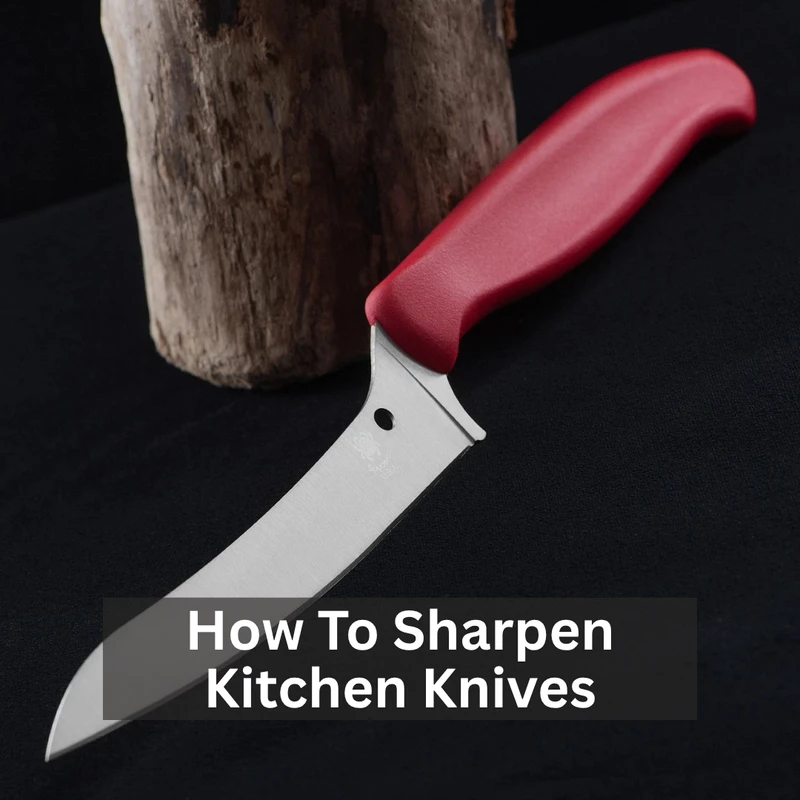
How To Sharpen Kitchen Knives
Posted by HH on 23rd Sep 2026
Is my knife blunt? It's the question every home cook asks eventually. There's a quick way to find out. Rest the blade lightly on a ripe tomato's skin and let its own weight do the work. If it needs sawing, something's wrong. A properly sharp blade doesn't need force, it needs almost none at all, and that's exactly why this guide to sharpen kitchen knives exists. Heinnie's own kitchen knives range is built from steel that's properly worth the effort of sharpening, so once you've read this you'll have both the knowledge and the reason to put it into practice.
Most guides to sharpening a kitchen knife pick one method and hope it suits your blade, and a proper guide should do better than that. This particular take on how to sharpen a kitchen knife does things differently. Think about what's actually in your knife block. A chunky Western chef's knife, a slim Japanese santoku, maybe a serrated bread knife gathering dust at the back. Each one asks for something different. Six knife types, six different answers, and that's the whole point of a proper guide to keeping your knives sharp.
Why you should keep your knives sharp
A dull knife is more dangerous than a sharp one. It sounds backwards, doesn't it? But think it through. A sharp blade cuts with barely any pressure, so it goes exactly where you point it. A blunt one needs force, and force is unpredictable. Push hard on a blunt blade through a butternut squash and you already know what happens next. It skids, and your hand's suddenly closer to the edge than you'd like.
A blunt knife bruises herbs instead of slicing them cleanly. It crushes a tomato rather than parting the skin. It drags through an onion in a way that releases more of the compound that makes your eyes sting. Kitchen knives sharpening isn't some fussy chore reserved for professional chefs, and neither is kitchen knife sharpening something you need special training for. It's simply the difference between food prep you enjoy and food prep you dread.
Knife sharpening angle: the right angle for your knife
Before you even pick up a stone, ask yourself what you're actually sharpening. Skip this step and everything else falls apart, because the angle decides how your finished edge behaves.
Western style chef's knives (thicker blades, softer steel, built for durability) are usually ground to around 20 degrees per side. That wider angle puts more metal behind the edge. It resists chipping and copes happily with dicing hard vegetables or breaking down a chicken.
Japanese style knives, your santoku, nakiri and gyuto, are typically ground much finer, closer to 15 degrees per side. That narrower angle gives you a precise, almost surgical edge, ideal for filleting fish or slicing vegetables paper thin. But there's a trade off. Less steel behind the edge means it dulls faster and chips more easily under heavy use.
Not sure which camp your knife falls into? Check the manufacturer's specification rather than guessing. As a rule of thumb, sharpen kitchen knives at 15 or 20 degrees per side depending on origin and grind. Get this wrong and you'll wonder why your knife never quite feels right, even after hours of careful stone work. A knife sharpened too shallow for its steel chips the moment it meets a chopping board. One sharpened too steep for its job never gets properly sharp at all. This single decision, more than any other, decides whether your sharpening session was worth it.

Preparing the sharpener
Rushing this bit is where most home sharpening sessions go wrong before they've even started, whichever method you land on.
If you're using a whetstone, soak water stones in cool water for around ten minutes before you begin (check the packaging, since some combination stones only need a light misting). Put the stone on a stable, non-slip surface. A damp tea towel underneath, or a proper stone holder, stops it sliding about mid stroke, which is the last thing you want with a sharp blade in hand.
Using a sharpening system or guided rig? Set your angle before the first pass rather than fiddling with it as you go. Consistency beats precision here every time. A slightly off angle held steady across every stroke outperforms one that keeps drifting, however carefully you set it each time.
Electric knife sharpeners need the same care up front. Check the manufacturer's guidance on which slot suits which angle first, since most electric sharpeners for sale are preset to either 15 or 20 degrees with no room for adjustment. That preset is worth checking against your knife type before you commit to a single pass.

How to sharpen kitchen knives with a whetstone
Sharpening a knife with a stone gives you the most control of any method and, with a bit of practice, the best possible edge. Sharpening a knife with a stone for beginners can feel intimidating at first (all that talk of angles and grits), but the sharpening process itself is refreshingly simple once you've done it a few times.
Start with your coarsest grit (somewhere around 400 to 600) if the blade's properly dull. If it's just lost its bite, a medium grit stone (around 1000) will do the job. Hold the blade against the stone at your chosen angle, whether that's 15 or 20 degrees, and picture a straight line running along the spine to keep yourself honest.
Draw the blade across the stone in smooth, even strokes. Lead with the edge, cover the full length in each pass, heel to tip, and keep your pressure light. Sharpening a kitchen knife is about repetition and patience, not muscle. Swap sides every few strokes so you're removing metal evenly, otherwise you'll end up with a lopsided edge that never quite bites right.
Once you feel a faint burr along the far side (run a careful finger away from the blade to check), you're ready for your finishing stone, typically somewhere between 3000 and 6000 grit. The finer grit polishes the edge and smooths out the coarser scratches left behind.
Finish with a light strop on leather if you've got one. It'll clear away any last burr and leave the edge properly aligned. Give the blade a wipe before it goes anywhere near your food.
That's how to use a whetstone or sharpening stone from start to finish, and it's a skill properly worth having, even if you rely on a rod day to day. Learn this once and you'll never be stuck wondering how to sharpen kitchen knives at home without a specialist tool for every knife on the block.
How to sharpen kitchen knives with a rod
A honing rod (sometimes called a sharpening steel) doesn't remove metal the way a stone does. Instead, it straightens out the microscopic edge that bends slightly out of true with everyday use. This is honing, not sharpening, and the two get muddled constantly. Knowing how to hone knives using a steel keeps a sharp edge sharp for longer. What it can't do is bring a properly blunt knife back to a working edge.Hold the rod vertically with its tip resting on a stable surface, or angled away from your body if you prefer the traditional horizontal grip. Set the blade against the rod at the same angle it's ground to (15 or 20 degrees again) and draw it down and across in one smooth, controlled arc, heel to tip. Repeat on the other side. Five or six light passes per side is all you need.
That's how to use a knife sharpening steel properly, and reaching for one of Heinnie's knife sharpeners before most cooking sessions is one of the easiest habits a home cook can build. It stretches out the gap between full sharpening sessions, and once you understand how to sharpen and hone your knife as two separate jobs rather than one you're most of the way there.
Sharpening a knife with a sharpener
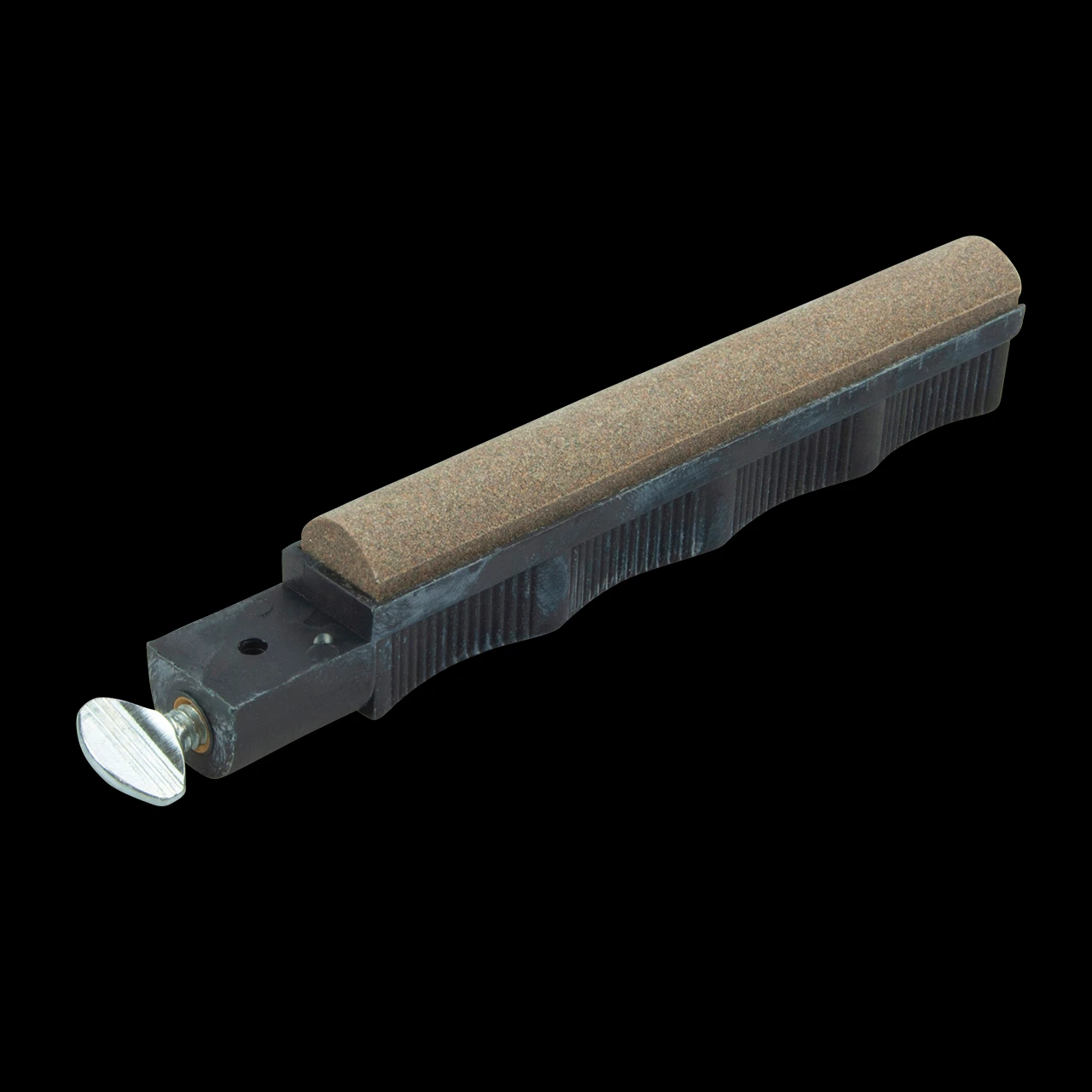
Manual knife sharpeners, the pull through kind with fixed carbide or ceramic slots, trade a little control for speed and consistency. Draw the blade through with light, even pressure and let the preset angle do the work rather than forcing it through. They suit knives that see hard daily use and don't need a showpiece edge, and they're a sound middle ground if you're not yet confident sharpening a knife with a stone.
An electric knife sharpener does much the same job, just with rotating abrasive wheels instead of fixed slots. How do knife sharpeners work? Most use two or three progressively finer stages, moving from coarse through to fine, and you draw the blade through each one in turn. They're fast and forgiving for beginners, which is exactly why it's tempting to overuse them. But they remove metal quickly, so a knife that only needs honing shouldn't go near one.
Can electric sharpeners damage knives? Used too often, or on a blade that only needed a strop, yes. Every pass strips away steel that a rod would have preserved, shortening the knife's life without you noticing. Used sparingly on properly dull edges though, they're a perfectly legitimate route to a working blade. That's how to sharpen kitchen knives with a sharpener without wearing one out before its time. In broader terms, the electric versions are just a faster, motor driven take on the same abrasive principle as a whetstone.
Sharpening kitchen knives on a bench grinder
A bench grinder removes metal fast. Too fast, in fact, for most kitchen knives most of the time. The speed and abrasive generate heat quickly, and too much heat at the edge can draw the temper out of the steel, leaving you with a blade that dulls almost as soon as you've finished. If you're set to sharpen kitchen knives on a bench grinder anyway, keep a light touch, dip the blade in water regularly to control the heat, and finish on a stone rather than trusting the grinder edge as your final result. For most kitchen knives, a whetstone or a guided system will get you a safer, better result with far less risk to the blade.
Can you sharpen a bread knife?
Serrated edges won't respond to a flat stone the way a straight blade does. Each individual scallop needs sharpening on its own bevel, using a tapered ceramic rod or a specialist serrated sharpener, working one gullet at a time rather than the whole edge in a single sweep. It's slower going, and more fiddly too, which explains why the question of how often serrated knives should be sharpened has a different answer entirely to a straight blade. Serrated edges hold their bite for years under normal use, since the scalloped shape does most of the cutting work rather than a single continuous edge. Most home cooks never sharpen a bread knife at all and when the day finally comes a specialist tool is worth having rather than improvising with whatever's already on the block.
How often should you sharpen a kitchen knife? Why you should keep your knives sharp
There's no magic number of weeks here. A knife used daily on a wooden board needs proper sharpening more often than one that only sees occasional use on plastic, since the board itself wears an edge down over time. As a working guide, most home cooks get a properly useful result from sharpening kitchen knives every two to three months, with honing in between to keep the edge properly aligned. That's also, in essence, why you need to keep your knives sharp on a schedule rather than waiting for a blade to fail you halfway through a recipe.
Can you over sharpen your knife? How to tell if your knife is sharp enough is really the more useful question. Over sharpening isn't about ruining a blade outright, but every pass on a stone or a sharpener takes away a sliver of steel, and a knife sharpened too often or too harshly, wears thin faster than one properly maintained with honing between sessions. Go back to the tomato test for your answer. If the edge glides through the skin under its own weight, you're done. If it needs pressure, it's back to the stone with you.
How to store your knife so it stays sharp
The sharpest edge in the world won't survive a cluttered drawer. Steel against steel, or steel against ceramic crockery, chips and rolls an edge every single time that drawer opens. A magnetic strip works beautifully if you're short on counter space. A wooden block suits those who prefer everything tucked away out of sight, and individual blade guards are worth considering too, particularly if you travel with your knives. Whichever you choose, the principle stays the same. Give the edge nothing to knock against.

What is the best way to sharpen kitchen knives?
There isn't one single best method, only the right one for the knife you're holding and the time you're willing to give it. A whetstone gives you the sharpest possible edge and total control, but it asks for practice and patience in return. A honing rod keeps a good edge working for longer between full sessions, no practice required. Manual and electric sharpeners trade some of that control for speed, which suits knives that see hard daily use and don't need to be babied. The best methods to sharpen knives are the ones matched to the blade in front of you: a 15 degree santoku wants a stone or a guided system set to match it, not a generic pull through built for a 20 degree Western edge.
Knife sharpening tips worth keeping
A handful of habits make every method above work better. Maybe you're figuring out how to sharpen a dull knife for the very first time, or maybe you're refining a routine you've had for years. Either way, the same habits pay off.
Keep your angle consistent throughout each stroke rather than letting your wrist drift. Consistency does more for the finished edge than raw technique ever will. Wash and dry the blade properly after sharpening, before it goes anywhere near food. Hone more often than you sharpen - a rod takes seconds and keeps a stone sharpened edge working for weeks longer than it otherwise would. Match the tool to the knife rather than forcing the knife to fit the tool, and don't be shy about asking for advice if you're still unsure how to sharpen a chef knife you've owned for years but never quite got round to maintaining properly.
Learning how to sharpen knives properly, and understanding how to sharpen and hone knives as properly separate habits rather than one blurred routine, is what separates a blade that lasts for years from one you'll replace within months. How to sharpen a knife well always comes down to the same handful of fundamentals: the right angle, the right grit progression, a light hand and enough patience to let the stone do the work rather than forcing it through. How to sharpen kitchen knives at home, often enough that you stay ahead of a properly dull edge, is really a question of habit rather than skill. Once it stops feeling like a chore and starts feeling as routine as washing up, you've cracked it. If you'd rather sharpen kitchen knives with stone from the very start, a decent mid range combination whetstone is one of the best investments a home cook can make.
Types of knife sharpeners cover a lot of ground, from whetstones and honing rods through to pull through manual sharpeners, electric sharpeners and guided systems. Heinnie's knife sharpeners range covers all of them, alongside the stropping equipment and sharpening steels that keep an edge going between full sessions. Pair the right sharpener with a knife built to hold its edge, and you'll spend far more time cooking than you ever will wrestling with a blade that's given up on you. Heinnie's kitchen knives range is built with exactly that in mind. Steel worth sharpening properly, shaped for how you actually cook.
Disclaimer
This guide offers general advice on sharpening kitchen knives at home. Techniques, angles and tools vary by knife type and manufacturer, so always check your knife's care instructions before sharpening. Knives are sharp - handle with care and seek professional sharpening if you're ever unsure.
Why not check out our other great blogs For Gear Recommendations And Outdoor Survival Tips