How to Choose the Best EDC Torch: Brightness, Battery & Beam
Posted by Heinnie Haynes on 15th Apr 2026
You're reading this because you've already decided a phone torch isn't good enough. Maybe it died when you needed it, maybe you had to choose between lighting a path and saving battery, or maybe you simply prefer being prepared. An EDC torch is for anyone who carries with intention: the commuter who parks in multi-storeys, the tradesperson who works in dark spaces, the hillwalker who pushes on past golden hour, the person who'd rather not depend on a smartphone to navigate a power cut. These lights are most useful exactly when you don't plan to need them, which is why they live in your pocket or on your keychain every day rather than sitting in a drawer waiting for special occasions. You'll find our full range at heinnie.com/lighting/. This guide won't just throw specs at you: it'll tell you what those specs actually mean for your carry, your habits and the situations you'll genuinely face.
How Do You Choose an EDC Flashlight?
Most people pick an EDC torch backwards. They start with output, then work out how to live with the battery. The better approach is to start with how you carry and work forward to the light you actually need.
Decide your carry position first. A keychain torch and a pocket torch are solving different problems. A keychain torch is always with you, is usually under 70mm long, and trades peak output for convenience. A pocket torch gives you more power and runtime but adds weight and bulk. Most serious EDC carriers end up with both: a keychain light for everyday incidental use and a dedicated pocket torch for anything more demanding.
Lumens aren't the whole story. Every torch spec leads with its peak lumen figure. Ignore that number on its own. A 1,000-lumen torch running flat-out for 30 seconds before stepping down is a different tool from a 500-lumen torch that holds output steadily for two hours. What matters is sustained output: how many lumens does it actually deliver once thermals kick in, and for how long? Look at the full output table, not just the headline.
Beam type changes what the light is good for. A flood beam spreads light wide and close, brilliant for task lighting, navigation and reading a map. A throw beam pushes a tight, distant hotspot useful for spotting something 100m away. Most EDC torches blend both, but some lean hard in one direction. Flat-bodied torches like the Nitecore EDC series tend toward wide, even illumination. Long, narrower tubes like the Fenix PD-series throw further. Know which you need before you buy.
Battery type defines the carry experience. This is the most important decision you'll make, and it's why this guide organises its recommendations around it. Broadly, your options are:
- built-in rechargeable (convenient, sealed, no spares)
- standard batteries like AA or AAA (replaceable anywhere, no charging required)
- removable lithium-ion cells like CR123A, 16340, 18350, 18650 or 21700.
The larger the cell, the more energy it stores and the more powerful the torch can be - but that capacity comes in a larger, heavier package. There's no objectively correct choice: there's just the right battery type for your habits, your carry and your budget.
IP ratings matter in the UK. Our weather doesn't ask permission. IPX4 means splash-resistant. IPX6 means it handles heavy rain. IP67 and IP68 mean it'll survive submersion. For pocket carry in all conditions, you want at least IPX6. Most quality EDC torches hit IP68 as standard.
Switch type shapes how fast you can use the light. Tail switches let you activate momentary-on with a half-press and constant-on with a full click: ideal for task lighting and situations where speed matters. Side switches give you mode access without repositioning your grip. Dual-switch designs (one tail, one side) give you both. Some torches add electronic lockout modes to prevent accidental activation in a pocket or bag: a detail that matters far more than it sounds.
Build material tells you where the torch was engineered for. Aircraft-grade A6061-T6 aluminium with HA III hard-anodising is the benchmark: lightweight, hard-wearing and handles heat well. Stainless steel and titanium versions are heavier but carry a different quality of permanence. Polycarbonate bodies are found on smaller keychain lights where weight is the priority.
Once you've answered those questions, the right torch becomes obvious. The sections below organise Heinnie's range by battery type, from the smallest lights you can carry to the largest cells that power the highest output.
What Are the Best Rechargeable EDC Flashlights and the Smallest EDC Lights?
This is the category for the carrier who doesn't want to think about their torch. You clip it to a keychain, plug it in every few days and forget about it until you need it. The best lights here disappear into your carry entirely.


The Photon Microlight II is where we'd start if you want something genuinely pocketless. It runs on button cells and has been a Heinnie staple for over two decades because it simply doesn't fail. Customers report seven to eleven years of daily use. It's not bright by modern standards, but it's always with you, it weighs nothing and it works. The Photon Freedom Micro steps that up with full-range adjustable brightness in something roughly the size of a 10-pence piece.


If you want a proper keychain torch with modern output, the Nitecore keychain range is the most technically sophisticated at this size. The Nitecore TINI 2 delivers 500 lumens and an 89-metre beam from a built-in USB-C rechargeable battery inside a body barely longer than your thumb. It has a real OLED display showing battery level, brightness, runtime and mode: a detail that sounds trivial until you're in the dark wondering how much charge you have left. The TINI 2 Titanium variant swaps the aluminium body for premium materials if you want something that'll age with you.
The Nitecore TIP 3 MCT is the most versatile keychain torch at Heinnie. At 62mm and 720 lumens, it runs to 160 hours on its lowest setting and offers three selectable colour temperatures: warm white for close-range task work, neutral for general use and cool white for maximum distance. Its clip doubles as a cap-brim mount, turning it into a hands-free light when you need both hands free. IP54 keeps it splash-protected for everyday carry.

The Nitecore TIKI family offers a different kind of versatility. The standard TIKI pairs a 300-lumen white LED with a 365nm UV light in a 10g polycarbonate body: genuinely useful for checking banknotes or UV-reactive materials on the go. The TIKI GITD version uses a phosphorescent body that glows in the dark after UV or sunlight exposure, which means you can find it in complete darkness: a small but genuinely practical detail.

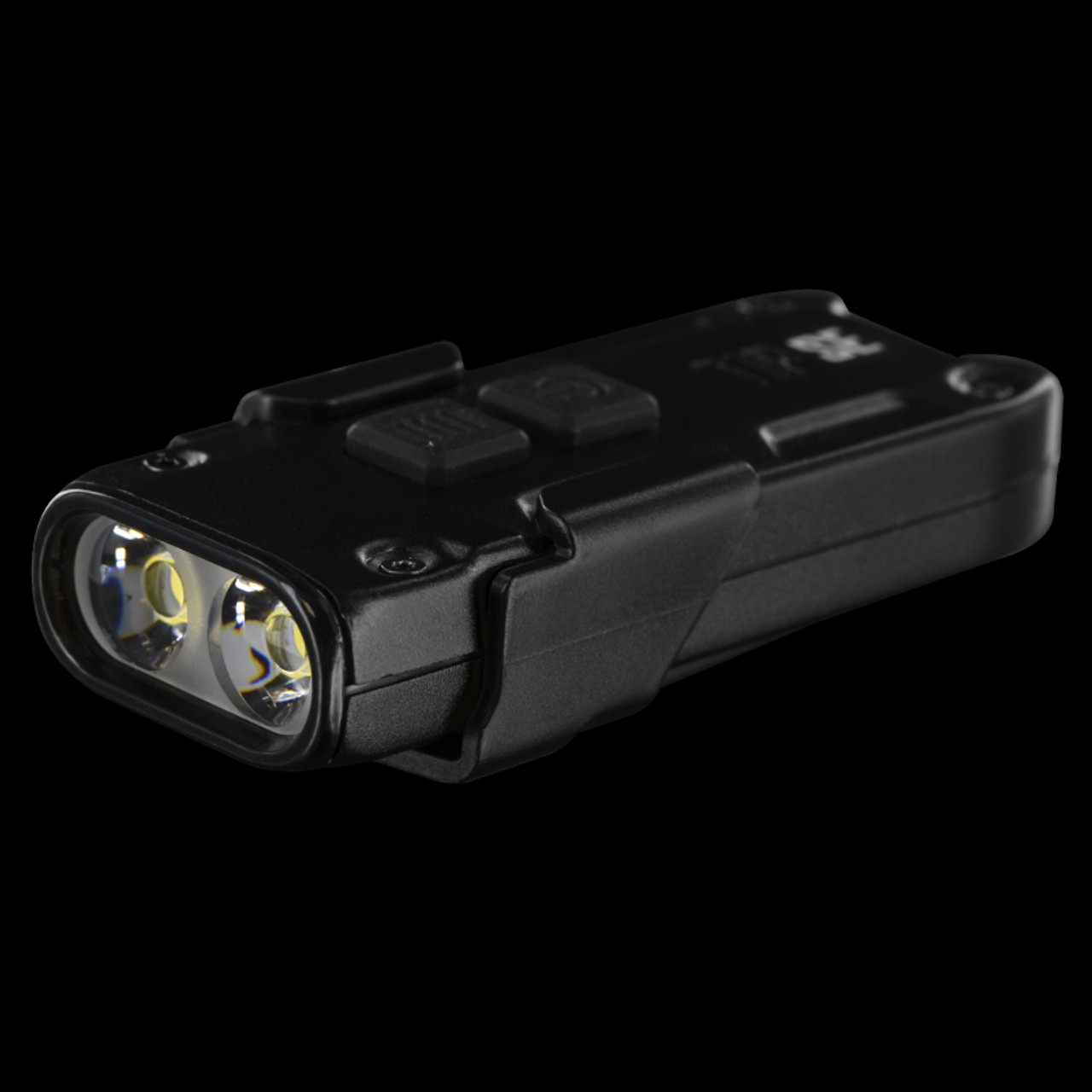
The Nitecore TIP SE delivers 700 lumens from dual OSRAM P8 emitters in a flat keychain body, making it one of the output-to-size leaders at this end of the range.

Fenix's answer to the rechargeable keychain category is the E03R v2.0: 500 lumens, USB-C, a red LED for night-vision preservation and a breathing indicator light in both red and green. The E05R offers a 400-lumen burst mode in a 24g package that can operate while charging, which matters if you've let it run flat and need it immediately.


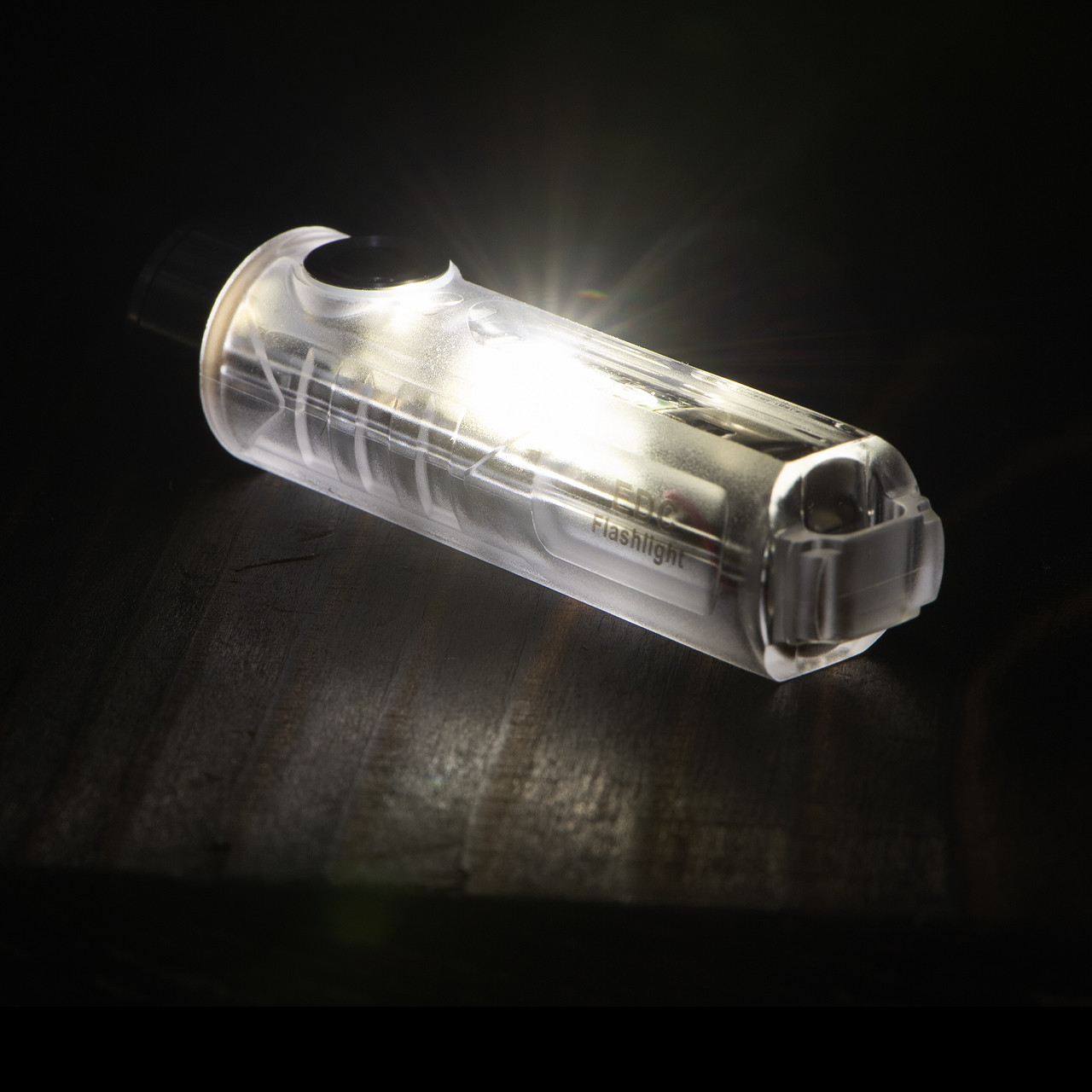
For those who want keychain carry with proper tool-grade ambition, the Rovyvon Aurora A4 Pro Gen 4 does it in TC4 titanium at 24g: 650 lumens, USB-C and a lockout mode.
The Aurora A5 Gen 4 adds UV and white side-mounted auxiliary lights in a glow-in-the-dark polycarbonate body at around 15g.
The Aurora A8 Gen 4 brings UV, red and white side lights together under 20g.

The Wuben G2 earns its place at this size: 500 lumens, 63mm long with a 70-hour moonlight mode and a hat clip built into the body.
What Are the Best AA-Sized EDC Flashlights (Including 14500)?
The AA torch is for the carrier who refuses to be stranded. When your rechargeable runs flat in a remote bothy, an AA from a petrol station will get you home. When someone else needs a light in an emergency, you can hand them batteries from any corner shop.
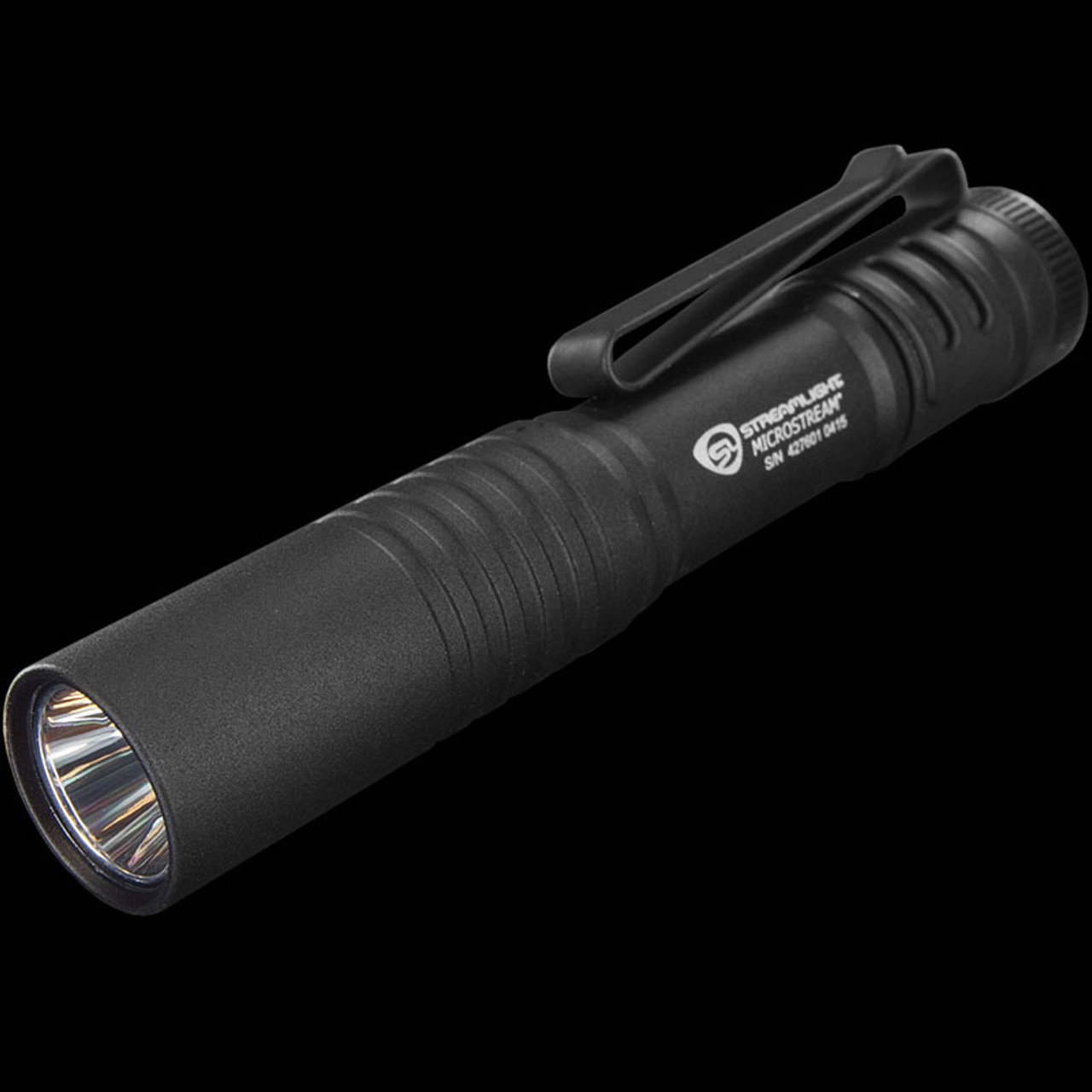
The Streamlight MicroStream is one of the most sensible pocket torches ever made. It delivers 45 lumens from a single AAA, weighs 30g, measures 90mm and activates via a forward push tail switch that gives you momentary-on with a half-press. That momentary function (being able to flash light without committing to constant-on) is underrated. Used by medical and emergency professionals, the MicroStream's simplicity is the point. The Stylus Pro steps up to 65 lumens across two AAA cells in a penlight profile.

The Fenix E12 V3.0 is the AA torch for people who think about their gear. A single AA, 200 lumens, a magnetic tail cap for hands-free mounting on any steel surface and a bidirectional body clip. It tail-stands, turning it into a makeshift area light when you need both hands free. Memory mode means it returns to your last setting rather than cycling back to low at next activation.

The Fenix E20 V2.0 takes two AA cells and turns them into 350 lumens with a 126-metre beam. Its 12-degree central beam combines with an 85-degree flood ring, which means it illuminates close detail and mid-range simultaneously - a more useful beam profile for everyday navigation than a pure thrower. On eco mode at 5 lumens it'll run for over eight days, which matters if you're using it as a long-term backup light.
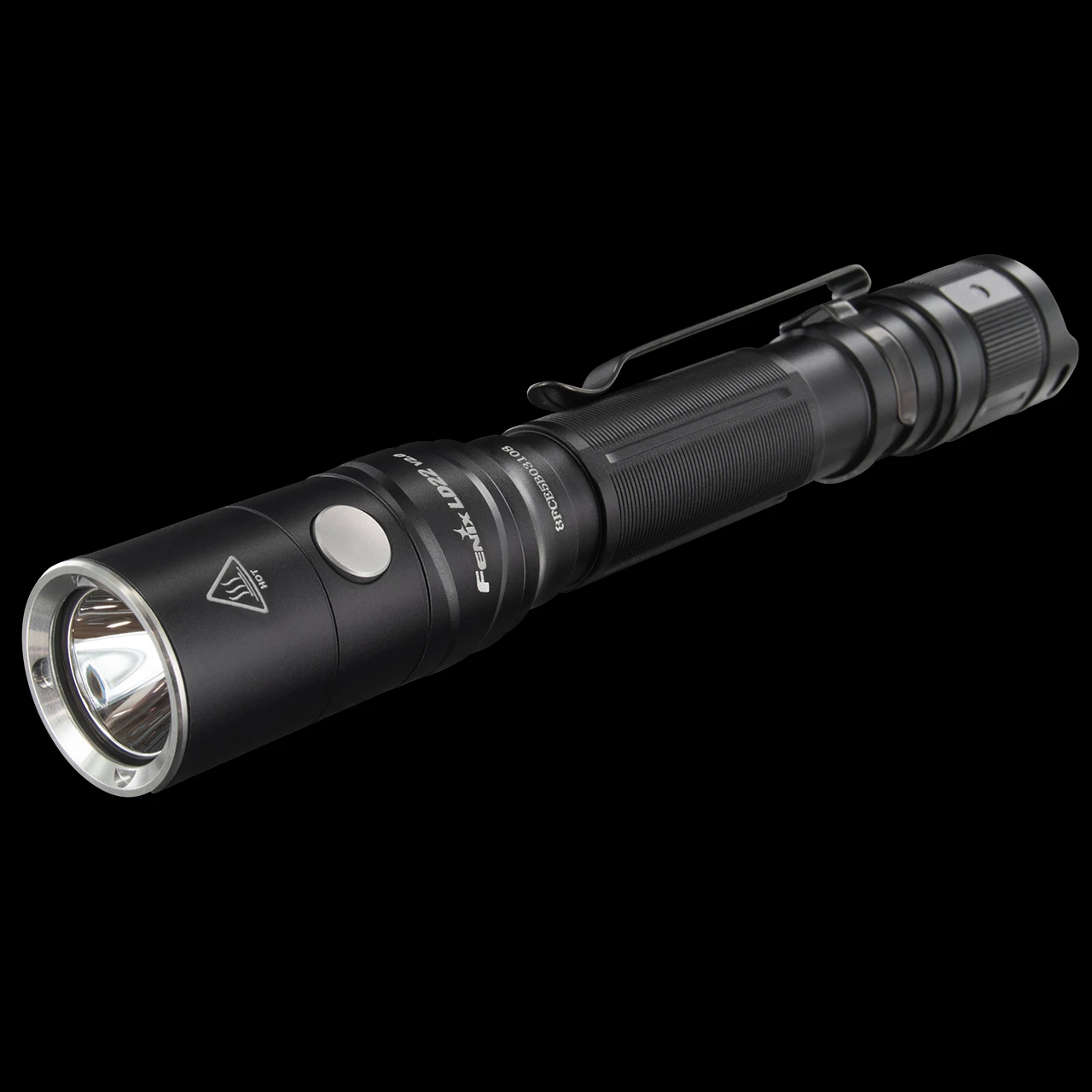
The Fenix LD22 V2 bridges the gap between AA convenience and rechargeable speed. It accepts a bundled USB-C rechargeable pack as its primary power source but reverts to two standard AA cells if that pack is empty. 800 lumens, 220-metre beam, dual switches. It's the torch you'd choose if you want the backup reassurance of AA but aren't prepared to give up rechargeable convenience.

The Nitecore MT1A Pro makes a strong case for the 14500/AA format at a higher performance level. Running a 14500 lithium-ion cell (charged via the built-in USB-C port), it hits 800 lumens. Drop in a standard AA and output steps down to around 200 lumens - still useful, and exactly the kind of field-expedient backup that makes dual-fuel worth having. 52g, IP68, 2-metre drop rating.
What Are the Best 16340 EDC Flashlights?
The 16340 is a CR123A-sized lithium-ion cell: roughly half the length of an 18650 but considerably more energetic than an AA or AAA. This is the format for the carrier who needs real output in a genuinely compact body. Torches in this category tend to be stubby, dense and very capable for their size.

The Fenix E18R V2.0 is the standout 16340 torch at Heinnie. At 56g including its battery, it delivers 1,200 lumens with a magnetic tail cap, a two-way pocket clip and dual lockout modes. The magnetic tail cap lets it stand upright on any steel surface, turning it into a workshop light or campsite lantern without accessories. USB-C charging is built in, so you don't need to remove the battery to top it up. Five brightness levels from a near-invisible moonlight down to a 1,200-lumen turbo, with strobe accessible when you need it. IP68 rated to 2 metres for four hours. This is the torch we'd recommend to someone who wants the most capable EDC light in the smallest practical package.

The Fenix TK05R takes the 16340 format in a different direction. 1,000 lumens with a 450-metre beam distance: exceptional throw for a torch this short. Dual tail switches give you immediate access to three brightness levels and an instant strobe that activates whether the torch is on or off. If you need a compact light that reaches at distance rather than floods a close workspace, the TK05R makes the case for the 16340 format.

The MecArmy PT16 is for the carrier who wants a precision-machined everyday companion at this size. Three emitters, over 1,000 lumens and Micro USB charging in a 67mm body. Available in aluminium, titanium and brass: the brass version develops a patina that makes it genuinely individual over time.
What Are the Best 18350 EDC Flashlights?
The 18350 is 35mm long to the 18650's 65mm, which means torches built around it stay compact without the keychain-class limitations of a CR123A. You gain meaningful battery capacity, a reduction in body length compared to 18650 designs and the option of extending to a full 18650 tube on some models.

The Wuben E7 is the most feature-complete torch at this size class. In a body measuring 60.6mm × 24mm × 28mm, it delivers 1,800 lumens with 180-degree wide-angle illumination: it spreads light both forward and to the sides simultaneously, which is genuinely different from any conventional torch and makes it exceptional for close-range task work. The magnetic base mounts it hands-free on any steel surface. A headlamp band converts it for wearable use. It accepts an 18650 extension tube for doubled runtime. IP68, USB-C, six modes plus strobe and SOS. This is one of the most practically thoughtful EDC torches in the range.
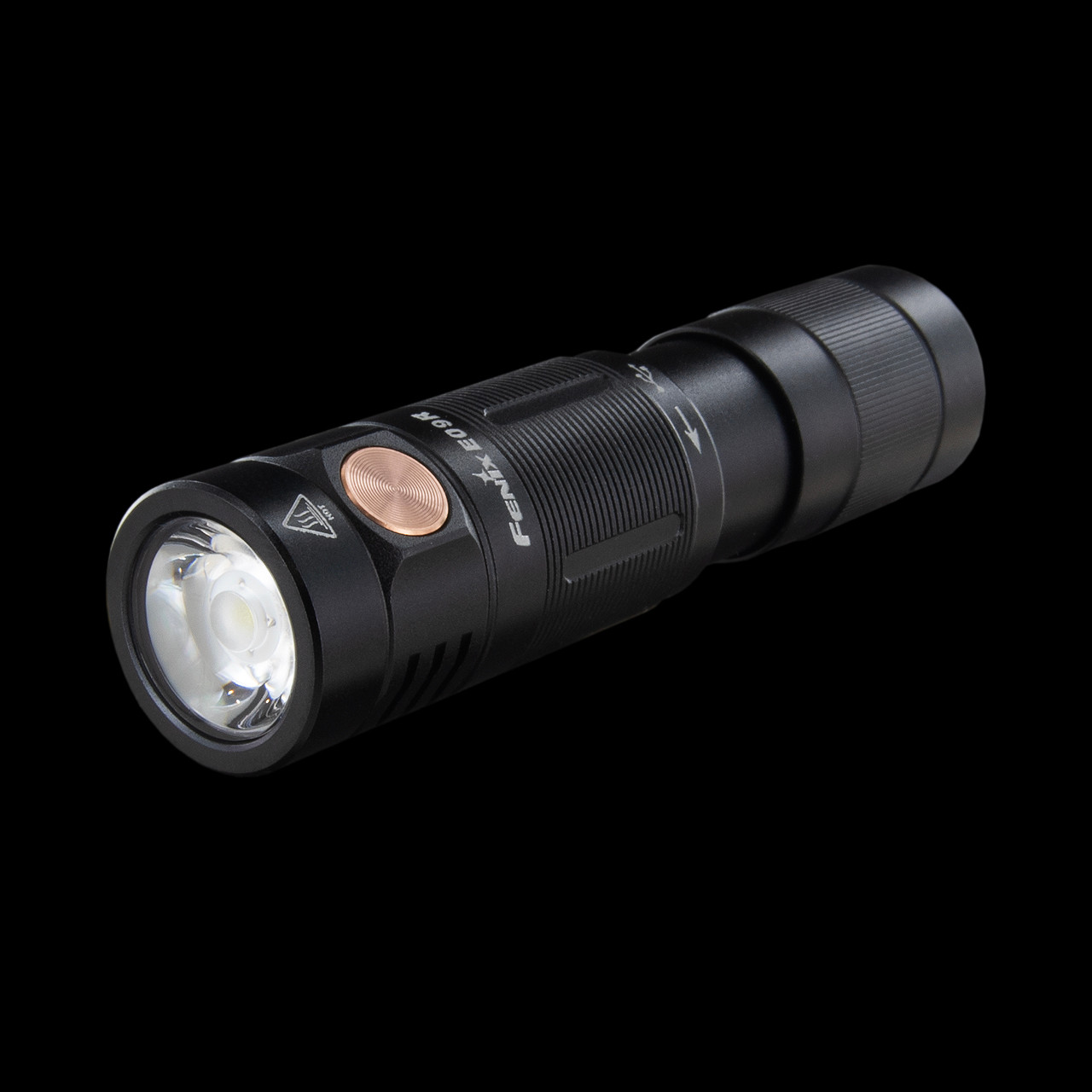
The Fenix E09R fits this category by power class: its built-in 800mAh LiPo battery sits in an 18350-scale body and delivers 600 lumens at 124-metre beam distance. Five brightness levels from 3 lumens (70-hour runtime) up to a 600-lumen burst, electronic lockout and IP68. At 45g it's light enough to forget you're carrying it and capable enough to handle anything you'd ask of an everyday light.
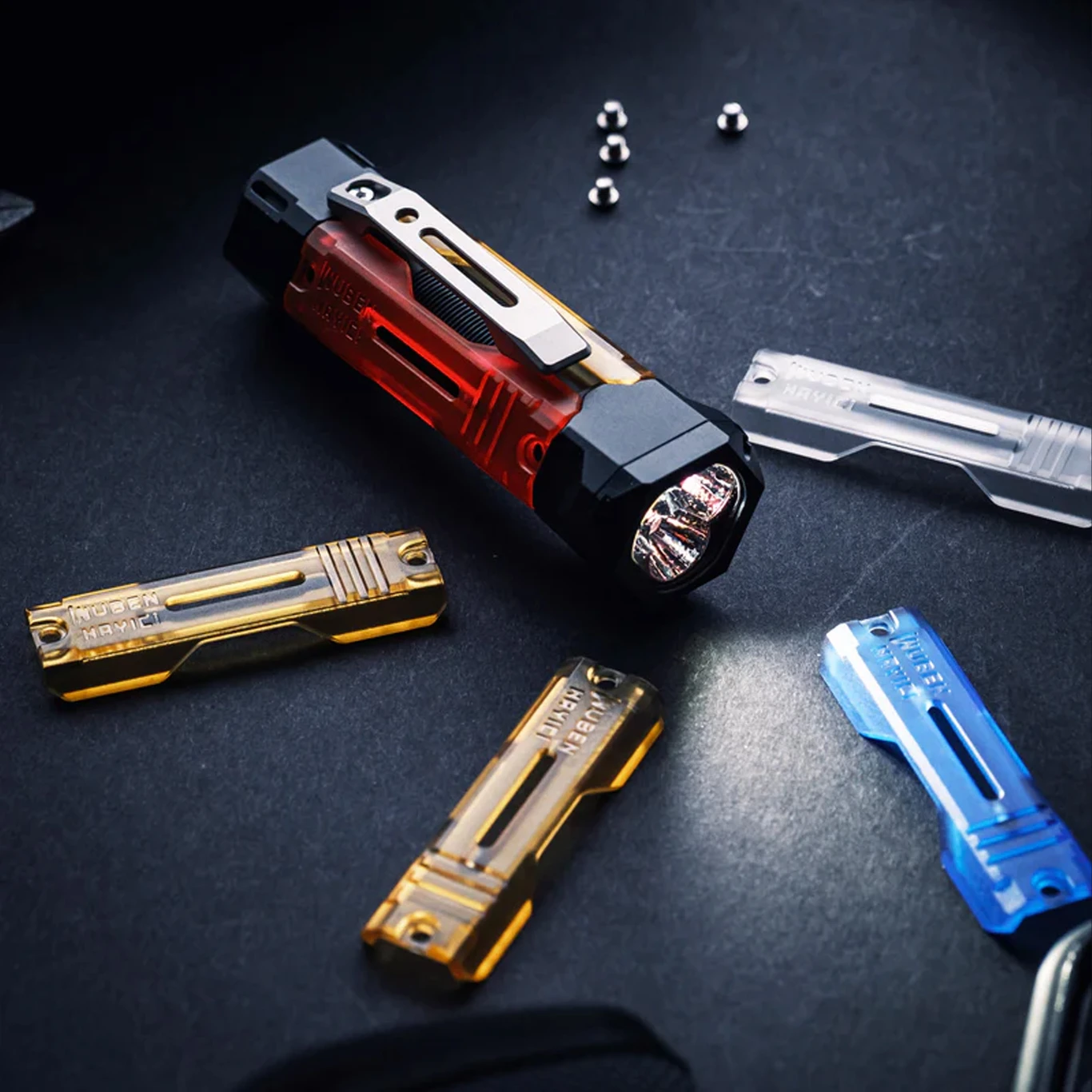
The Wuben E8 takes a different approach. Its aluminium body features magnetic modular panels that snap on to customise the light's appearance and tritium vial slots for glow-in-the-dark locating capability. A titanium variant is also available. The E8's side illumination adds 50 lumens of flood for close work alongside the main beam.
What Are the Best 18650 EDC Flashlights?
The 18650 is the standard cell of serious EDC torches. It's large enough to power properly sustained high output, compact enough to fit in a pocket with a good clip, and available in enough variants to support virtually any charging requirement. More torches are built around the 18650 than any other format, and the range at Heinnie reflects that.

The Fenix E28R V2.0 is the natural step up from the E18R V2.0 for those who need more from a single cell. 1,700 lumens, USB-C side-port charging, magnetic tail cap and a two-way body clip. Like most Fenix torches, it accepts two CR123A cells as field backup if you've drained the 18650 and can't recharge. IP68, five brightness levels and strobe.
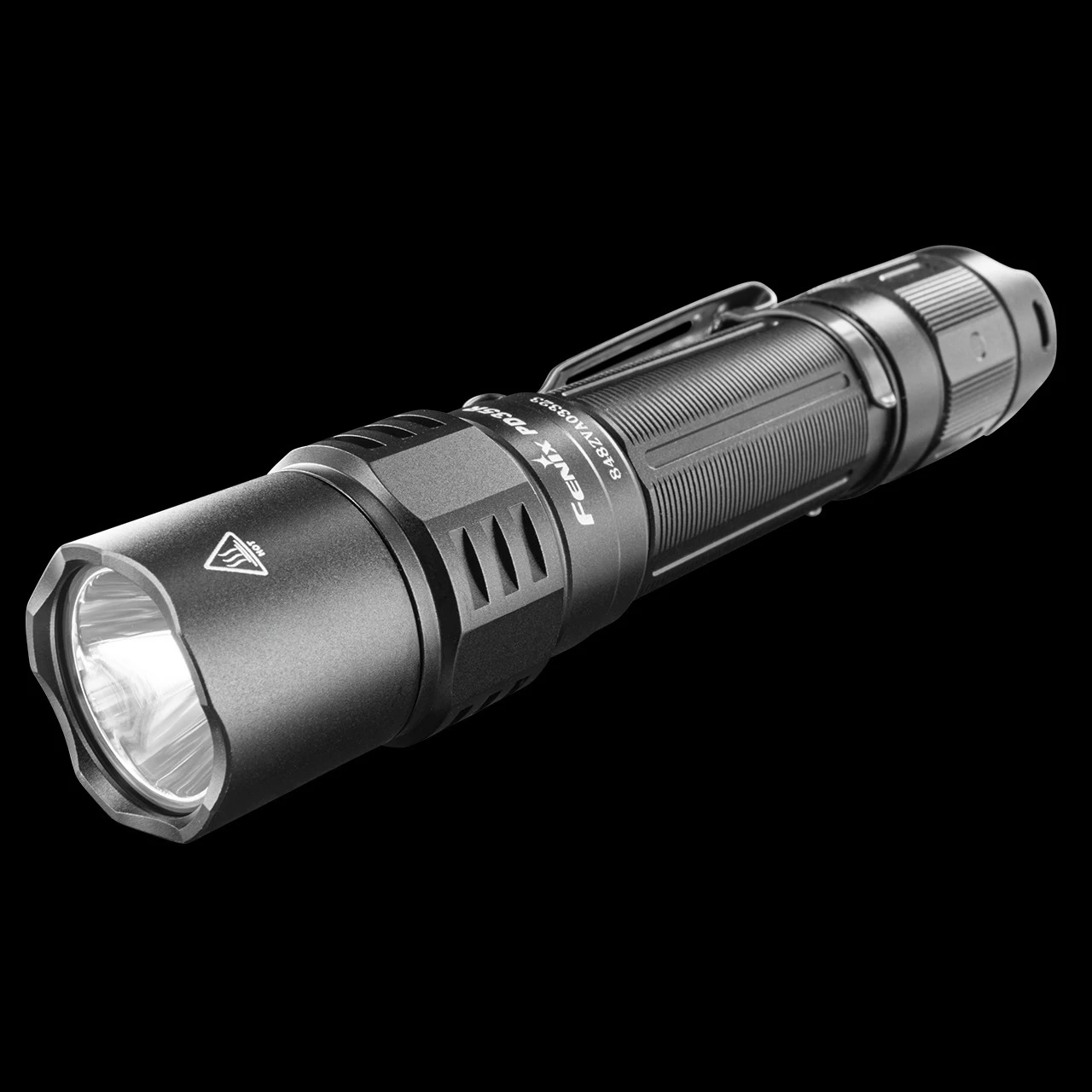
The Fenix PD-series is the answer for those who need real throw alongside their output. The PD35R delivers 1,700 lumens with a beam over 350 metres: relevant for hillwalkers, search work or anyone who needs to identify something at distance. The waterproof USB-C port design is worth noting: the PD35R's charging port stays watertight without its cover, so accidental rain exposure with the port open isn't a failure. The PD32R sits below it at 1,400 lumens with an ultra-quiet single tail switch for those who want simplicity of operation over maximum features.

The Nitecore EDC series represents a fundamentally different approach to the 18650 EDC torch. Where most torches are round tubes, the EDC range uses a flat, rectangular profile that sits differently in a pocket: wide and low rather than tubular. The EDC23 wraps a stainless steel body in PVD titanium coating, delivers up to 3,100 lumens through an OLED-equipped chassis and uses dual-stage tactical tail buttons for immediate output access. The EDC25 uses carbon fibre reinforced polymer alongside aluminium alloy to cut weight at 3,000 lumens. The EDC27 UHi matches the EDC23's stainless/PVD build with 3,100 lumens, an OLED display and a thermal dissipation plate to manage heat during sustained use.

The Wuben C3 earns repeated mention in its price bracket. Built-in rechargeable, 1,200 lumens, a 179-metre beam, IP68 and a 143-hour eco mode from an OSRAM P9 emitter. Available in black, green or khaki. No removable battery means fewer moving parts and nothing to lose.

The Nebo Torchy 2K is one of the most-reviewed torches on the Heinnie site, and the reason is straightforward: 2,000-lumen turbo, 200-metre beam, magnetic charging dock, two-way detachable clip, Smart Temperature Control and up to 30 hours runtime on low. It does everything well without needing you to understand the spec sheet. The Torchy 2K Black Line upgrades that platform with USB-C charging in a stealthier finish.
What Are the Best 21700 EDC Flashlights?
The 21700 is the current apex of the EDC torch format: 21mm in diameter and 70mm long, it stores more energy than an 18650 in a cell that's still pocketable. Torches built around it tend to offer extraordinary runtime at modest output, extraordinary output at shorter runtimes, or both at different modes. This is the format for the carrier who does not want to think about charging every day.
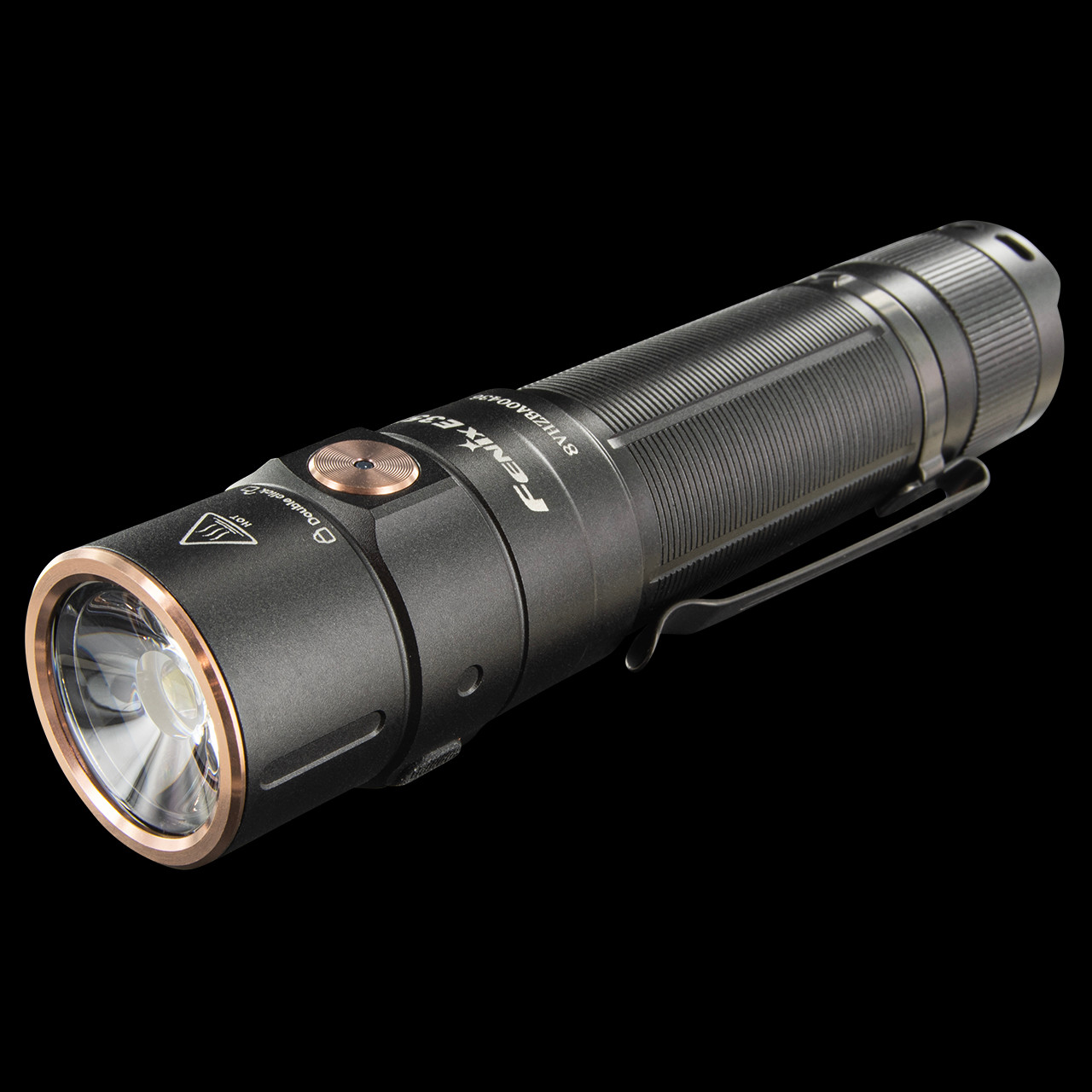
The Fenix E35R is Fenix's most capable E-series torch: 3,100 lumens, a 260-metre beam, USB-C charging and a 21700 cell included. It's compact for its output and represents what's possible when a 21700 powers a well-engineered head unit. For an EDC torch that keeps up with demanding outdoor and professional use, this is the Fenix answer.

The Fenix PD36R Pro takes the PD-series ethos to its logical conclusion: 2,800 lumens, a 5,000mAh 21700 cell and Fenix's APF (Advanced Pulse Frequency) system for consistent, regulated output. USB-C charging remains functional even with the port cover removed, and a digitally regulated circuit maintains brightness across discharge rather than gradually dimming as the cell depletes. If you're buying one torch to carry for the next decade, the PD36R Pro is the case for long-term investment.
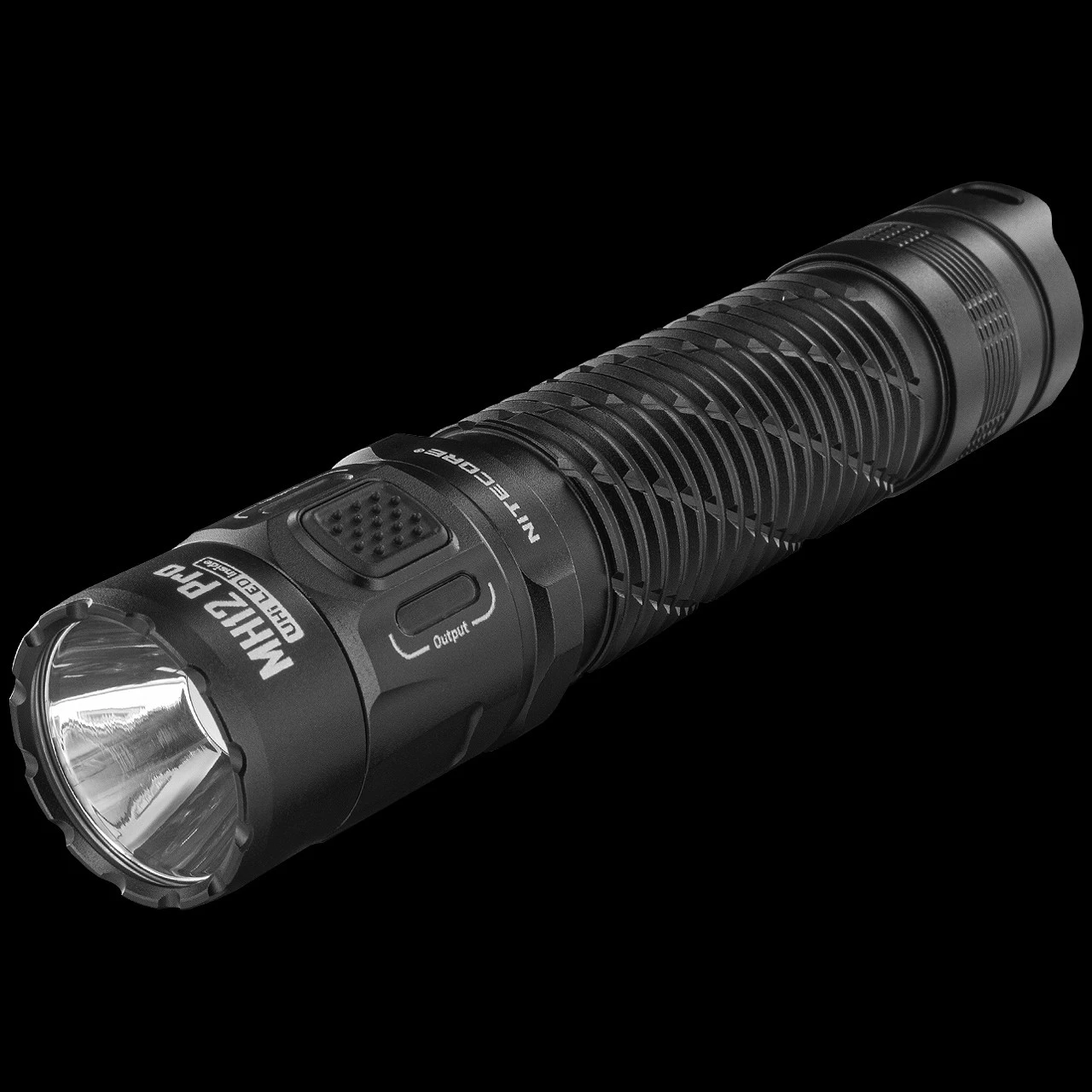
The Nitecore MH12 Pro adds an optical proximity sensor: the torch detects when an object is within close range and automatically reduces output to prevent surface damage and heat build-up. 3,300 lumens, a 505-metre beam and a 5,300mAh 21700 cell. For close inspection work followed by long-range scanning in the same carry, this is a genuinely intelligent tool.

The Nitecore E4K takes a different approach: 4,400 lumens through four Cree XP-L2 V6 emitters in a CNC unibody chassis, with a 21700 cell featuring a built-in USB-C port. Palm-sized, IP68 rated and designed for situations where flooding a wide area at high output matters more than throw.

The Nitecore EDC29 and EDC31 extend the flat EDC format into 21700 territory. The EDC31 is worth highlighting: a 3,500-lumen Lumin Shield mode floods close range whilst a 1,500-lumen spotlight searches distance from a single body, switchable on the same torch. An LED tail display shows remaining battery without switching the light on. The EDC29 steps above it with 6,500 lumens in a carbon fibre composite frame.
What Is the Brightest EDC Flashlight?
There's a version of this question that doesn't really make sense: no carrier genuinely needs 8,000 lumens in their trouser pocket for walking the dog. But there's another version that's completely reasonable: what's the brightest torch still small enough to carry every day?
The answer changes depending on your definition of carry. Here's what the range looks like at the top end.
At 3,100 lumens the Fenix E35R is the brightest in Fenix's dedicated E-series. At the same output the Nitecore EDC27 UHi delivers 3,100 lumens in a flat stainless steel format that's genuinely pocketable alongside a phone and a knife.
At 4,000 lumens the Nitecore E4K is palm-sized and IP68 rated: more output than most people realise they can carry in a package that fits a jacket pocket without complaint.
At 6,500 lumens the Nitecore EDC29 is technically still an EDC torch: a flat, clippable body designed to pocket. At this output the thermal management, carbon fibre composite construction and OLED battery display stop being features and start being necessities.
At 8,000 lumens the Nitecore EDC37 uses 18 LED cores, a 420-metre beam and a carbon fibre frame with silicon nitride ceramic glass breaker tips. Its dual-stage tail switch, full OLED display and large built-in USB-C cell make it a serious tool for serious situations rather than an exercise in spec-sheet one-upmanship.
At 13,000 lumens the Imalent MS03 is technically pocketable but practically demands respect. Three Cree XHP70.2 emitters in a 112mm body with a 21700 cell and USB-C charging. Turbo output is explosive and short-lived due to thermal demands. This isn't an everyday carry in the traditional sense: it's an emergency or professional-grade tool that happens to fit in a jacket pocket.
Brightness figures are peak measurements. Every torch thermally steps down from its maximum within seconds to a sustained level. The most powerful torch isn't always the most useful one - and the most useful one is the one you actually carry. If you want help deciding which torch is right for your carry, gear and use case, our Heinnie Kit Assist service connects you with the team for a no-pressure 20-minute video call.
Why not check out our other great blogs For Gear Recommendations And Outdoor Survival Tips