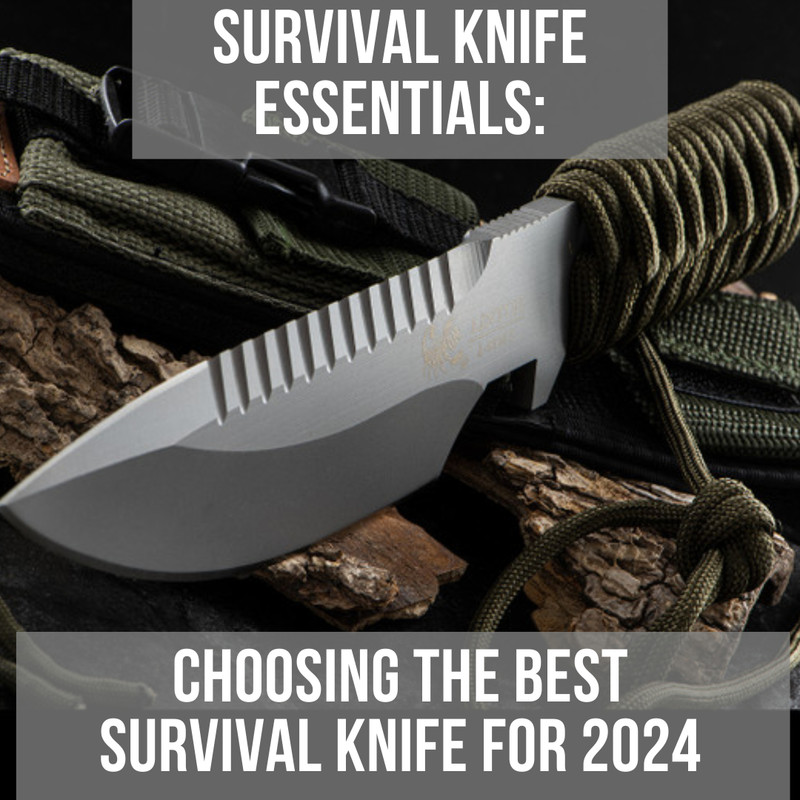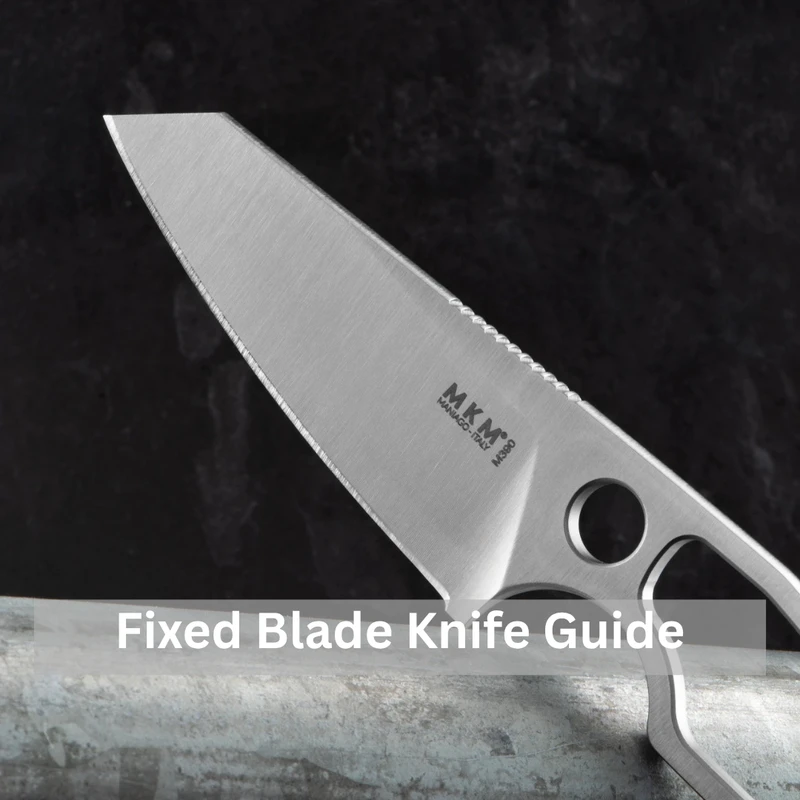
Fixed Blade Knife Guide
Posted by HH on 8th Sep 2026
Ever had a folder flex mid task and wondered why you bothered? A fixed blade knife doesn't have that problem. No hinge, no play, no weak point waiting to show up at the worst moment. Just one solid piece of steel doing one job well. That's the whole appeal in a sentence, and it's why this fixed blade knife guide exists.
Most round ups tell you which are the best fixed blade knives 2026 has to offer. Then they leave you to work out why any of it matters to your kit. Consider this a guide to fixed blades built the other way round. Match the job to the blade first, and the right knife tends to follow. By the time you finish reading, you'll know exactly what to look for. And why. That's true whether you're buying your first fixed blade knife with sheath, or adding something more specialised to a growing collection.


What is a fixed blade EDC knife?
A fixed blade EDC knife is a single piece of blade and handle. It's carried daily in a sheath, not folded into a pocket.
What actually separates one fixed blade from another? Understanding the different types of fixed blade knives is the quickest way to buy the right one not just the prettiest one. Grouped by blade shape, the main fixed blade knife styles break down like this.
Drop point: the generalist. Strong tip, easy to control, good for most everyday tasks.
Clip point: think Bowie style. A finer tip that suits detail work.
Tanto: trades some slicing ability for a much tougher point.
Trailing point: a curved edge that favours slicing over piercing, handy for food prep and skinning work.
Each blade shape suits a different job. Think about what you'll actually be cutting before a striking design talks you out of practicality. Zoom out further and these sit inside the wider map of types of knives and their uses. Folding EDC knives suit pocket carry. Fixed blades bring strength and simplicity. Kitchen and fishing knives sit apart again, each built for one job alone.
Sheath variations matter every bit as much as the blade sitting inside them. A fixed blade knife with horizontal sheath sits across your belt or bag. That suits shorter blades and quick, low profile access. A vertical sheath rides straight down instead, better suited to longer blades where you need a full, controlled draw. Some designs go further still, adding an EDC fixed blade with finger loop built into the sheath or handle for a more secure grip. None of these options wins outright. It depends entirely on how and where you carry.
That same logic runs through EDC, hunting and survival use. A lot of the same knives cover both. What shifts is emphasis. A hunting focused blade tends to prioritise a fine tip for detail work. A survival leaning design puts more weight behind baton ready spine strength instead.
What makes a good fixed blade EDC?
Four things, really. The key elements of a good fixed blade EDC come down to full tang construction, a trustworthy steel, a handle that fits your hand and a sheath that suits your carry style. Put together, these also explain the key benefits of a fixed blade knife over a folder. Nothing to hinge. Nothing to loosen. One continuous piece of steel from tip to butt.
Full tang construction
Full tang construction means the metal runs the entire length of the handle, instead of stopping partway through it. It's non-negotiable for anything beyond light duty use. It's the difference between a knife that flexes under pressure and one that simply doesn't budge.
Types of steel
Types of steel vary enormously, and this is where most buying decisions get made or unmade. Some steels hold an edge for a long time, but take real effort to resharpen. Others sharpen easily in the field, though they'll need more frequent touch ups to stay keen. Stainless options resist corrosion better. That counts for a lot if you're near water, or working through damp UK conditions most of the year. Carbon steels often take a sharper edge and are easy to touch up with basic tools, even an improvised stone. The trade off is rust. Carbon steel needs regular oiling and drying to stay in good condition.
Here's a quick way to picture the trade off:
| Steel type | Edge retention | Ease of sharpening | Corrosion resistance |
|---|---|---|---|
| Stainless | Moderate | Moderate | Strong |
| Carbon | Strong | Easy | Weak (needs care) |
| Powder metallurgy | Strong | Harder | Moderate to strong |
Among the most popular fixed blade knives on the market, you'll find all three families well represented. There's no single correct answer here. Only the right answer for how you'll actually use the knife.
Handle material and sheath design
Handle material shapes your grip in the wet, in the cold, in a rush and across long working sessions. Textured synthetic handles tend to perform best when hands are wet or gloved. Natural materials like wood or micarta feel warmer in hand and age with real character. They just ask for more upkeep in return.
EDC sheath variations bring the same set of questions back round: horizontal or vertical carry, belt or bag, retention clip or finger loop, leather or synthetic build. Get the sheath wrong, and even the best fixed blade becomes awkward to carry day to day. It's worth giving the sheath as much thought as the blade itself.
A mini fixed blade knife, or a 3 inch fixed blade knife with sheath, brings real advantages for low key daily carry. It's unobtrusive. It's light. And it's easy to justify as a practical tool rather than anything more than that. A fixed blade pocket knife in this smaller category deserves a look too. Especially if you want the strength of a fixed blade, minus the bulk of a full sized sheath knife. For plenty of people, this compact format ends up being the best EDC fixed blade knife they own. Simply because it's the one they actually reach for.
Common fixed blade use cases in 2026 lean heavily towards multi purpose EDC. Opening packages. Prepping food on a lunch break. Handling light cordage, or the odd bit of whittling when the mood strikes. Your favourite fixed blade EDC knives are rarely the flashiest ones on the shelf. They're the ones that turn up and do the job, every single time. No fuss involved.

How to choose the right fixed blade knife
This is the practical core of any EDC knife guide, so let's get into it properly. Choosing a fixed blade EDC starts with being honest about what you'll actually use it for. Not what looks impressive sitting in a drawer.
Start with blade length
Shorter blades (under 8cm) suit discreet daily carry and precision tasks well. Longer blades hand you more leverage for heavier cutting and processing. They're harder to justify carrying around town, though. The same logic applies even to tactical fixed blade knives with sheath designs built for outdoor or duty use. A longer, harder wearing blade only earns its size if the job actually calls for it.
Think about blade shape
Next, weigh up blade shape against your main use case. Mostly opening boxes and handling light general tasks? A drop point earns its keep here. After something more specialised for hunting or detail work? A clip point or trailing point tends to suit better.
Weigh up steel choice
Steel choice comes down to a simple trade off: edge retention against ease of sharpening against corrosion resistance. Carrying daily in a UK climate? Corrosion resistance deserves serious weight. Damp pockets and bags do not help untreated carbon steel.
Know the law before you buy
Whichever direction you land on, check the legal position first. It's not optional. Fixed blade knife laws in the UK sit under Section 139 of the Criminal Justice Act 1988. This makes it an offence to carry a bladed or sharply pointed article in public without good reason. A fixed blade knife doesn't get the folding pocket knife exemption, which only covers non locking folders with a blade not exceeding 7.62cm.
That means a fixed blade knife generally needs a good reason to be carried in public. Work counts. So does travelling to or from an outdoor activity, or another legitimate purpose along those lines. Owning one is perfectly legal, no question there, but carrying it about in a bag ‘just in case’ doesn't count as having good reason. It's worth mapping out your actual use case before you buy, not after.
This is exactly the kind of decision where a second opinion earns its keep. Heinnie Kit Assist gives you a free 20 minute call with someone who handles this kit daily. No sales pressure attached. Just honest options talked through properly.
What do you use a bushcraft knife for?
How to choose the perfect bushcraft knife starts with understanding what bushcraft actually demands of a blade. Wood processing. Fire preparation. Food prep. General camp tasks, often stretched across hours at a time. So how do I choose a bushcraft knife that holds up to all of that? Look for full tang construction and a blade somewhere around 10 to 12cm. The steel should be easy to resharpen with basic tools, since you're often well away from a proper sharpening setup.
A drop point or Scandi ground blade is the standard here, and for good reason. The flat Scandi grind stays simple to maintain in the field. It excels at controlled wood carving, notching, feather stick preparation and general shaping work around camp. A spine with sharp, 90 degree edges gives you a striking surface for a ferro rod too. That matters more than it sounds when you're relying on it to get a fire going in the rain.
Handle ergonomics matter more on a bushcraft knife than on almost any other type. You'll often be gripping it for extended periods through changing conditions. Look for a handle shape that sits comfortably in a gloved hand as well as a bare one. You'll notice the difference the first time the temperature drops.
How to maintain your fixed blade knife
A well maintained fixed blade knife will outlast almost everything else in your kit. The upkeep itself only takes minutes. Worth remembering next time it feels like a chore.
Clean the blade after every use, especially once food prep or salt water has been involved. Dry it fully before storing it away. Damp storage is the single biggest cause of avoidable corrosion. That's true even on stainless steels that feel like they ought to shrug it off.
Sharpen little and often, rather than waiting until the edge has gone properly blunt. A few passes on a whetstone or pull through sharpener after each significant use keeps things working with minimal effort. Let it go too far, though, and you'll need more sharpening later. That strips away more material and shortens the life of the blade overall.
A short routine covers most of what you need:
Oil carbon steel blades regularly, particularly before longer spells in storage.
Check the sheath as often as you check the blade itself; a worn or split sheath puts both you and the edge at risk.
Store the knife somewhere dry, and out of its sheath if it's going unused for a good stretch. Some sheath materials trap moisture against the blade over time.
Give the handle a quick once over too, checking for loose pins or cracked scales before they turn into a bigger repair.
Treat maintenance as part of owning the knife, not an optional extra tacked on afterwards. It'll still be doing its job for years to come.
Ready to find the right fixed blade for the job at hand? Browse the full fixed blade knife range at Heinnie Haynes. Or book a free call with Heinnie Kit Assist if you'd rather talk it through first.
Why not check out our other great blogs For Gear Recommendations And Outdoor Survival Tips