What Are the Best Survival Knives for Bushcraft and Wilderness? The Ultimate Expert Guide: Part 1 - Survival Knives: Reddit Answered
Posted by James Gregory on 1st Sep 2025
Key Takeaways
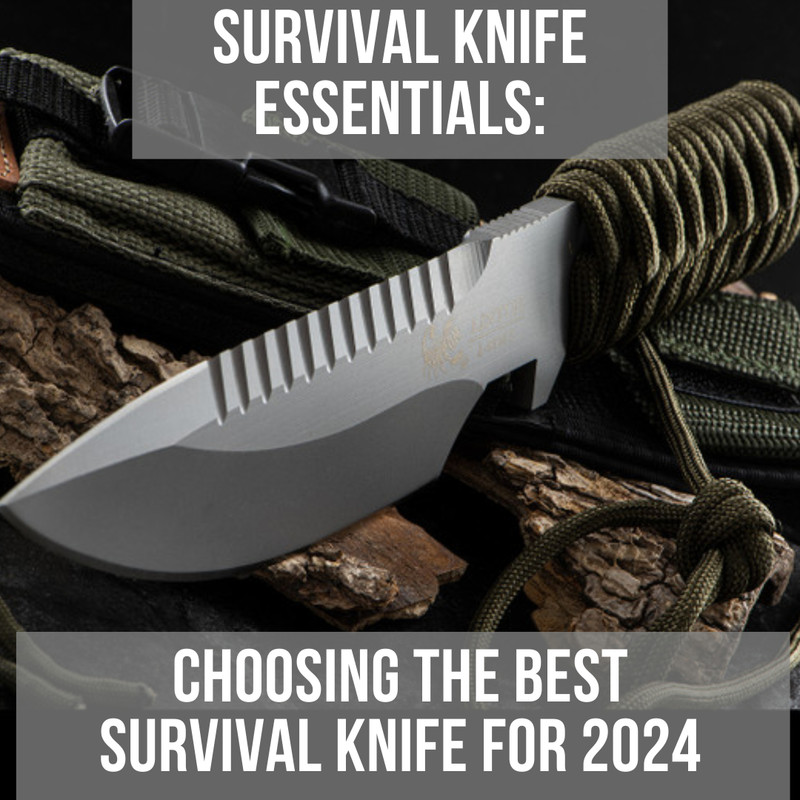
- A proper survival knife needs a full tang construction, high-carbon steel and a blade length of 10-15 centimetres for maximum reliability.
- D2 carbon steel, 1095 Cro-Van steel and CPM S30V represent the best blade steel options for different budgets and requirements.
- Fixed-blade knives are superior for survival situations, though carrying both a fixed blade and a folder provides optimal versatility.
- Fällkniven, TOPS Knives, Ka-Bar and Benchmade consistently deliver high-quality survival knives for serious wilderness use.
- Proper maintenance requires cleaning after each use, regular sharpening with diamond or ceramic stones, and storage in moisture-resistant sheaths.
- A blade length between 10-15 centimetres provides the best balance between precision work and heavy-duty tasks.
- Plain edges offer better control and easier field sharpening compared to serrated or combination edges for most bushcraft work
- Full-tang construction provides maximum structural strength and reliability compared to partial-tang designs
- Dedicated sheaths with secure retention systems ensure safe carry whilst complying with UK knife laws
- UK law requires legitimate reasons for carrying fixed-blade knives or folders over 7.6 centimetres in public spaces
Welcome to Heinnie Haynes, where nearly three decades of knife expertise meet honest, practical advice. Since 1996, we have been helping outdoor enthusiasts, bushcrafters and survivalists find the right tools for wilderness adventures. We have sifted through Reddit's most active outdoor communities to answer the questions that matter most, drawing on our experience as one of the UK's leading suppliers of quality gear.
Whether you're planning your first expedition or a seasoned wilderness explorer looking to refine your survival kit, this guide gives you the practical knowledge you need. No fluff, no sales pitch, just the straight goods on survival knives from people who actually use them.
What essential features should you look for in a survival knife?
A proper survival knife needs to handle whatever the wilderness throws at you without letting you down. The essential features include:
- Full tang construction: Blade extends through the entire handle for maximum strength
- High-carbon steel blade: Holds an edge brilliantly and sharpens easily in the field
- 10-15 centimetre blade length: Sweet spot between precise detail work and heavy-duty tasks
- Micarta or G10 handle materials: Excellent grip in wet conditions, with years of durability
- Corrosion-resistant coating: Protection against harsh elements
- Flat or Scandi grind: Makes sharpening simple with basic field tools
- Ergonomic design: Prevents hand fatigue during extended use
Comfort matters more than you might think. Your survival knife should feel like a natural extension of your hand, not a burden in your pack.


Which blade steel delivers the best durability and reliability?
The choice of blade steel makes a massive difference in how your knife performs under pressure. Here's how the top options compare:
| Steel Type | Edge Retention | Corrosion Resistance | Ease of Sharpening | Price Point | Best For |
|---|---|---|---|---|---|
| D2 Carbon | Excellent | Moderate | Moderate | Mid-range | Extended trips with limited resharpening |
| 1095 Cro-Van | Good | Low | Excellent | Budget | Dry climates, traditional users |
| CPM S30V | Excellent | Excellent | Difficult | Premium | Frequent water exposure, long-term investment |
D2 carbon steel offers exceptional edge retention and wear resistance, making it brilliant for extended trips where resharpening opportunities are limited. For traditionalists, 1095 Cro-Van steel provides outstanding toughness and sharpens quickly on basic field stones, crucial when you're miles from civilisation.
If the budget allows, CPM S30V represents the premium tier. This steel is corrosion-resistant alongside impressive edge retention, though it commands a higher price point. Each of these steels has earned its reputation through decades of field use by serious outdoorsmen who depend on their tools.
The right steel depends on your specific needs. Frequent water exposure? Lean towards corrosion-resistant options. Primarily dry-climate use? High-carbon steels offer superb performance at lower cost.
How do you choose between fixed-blade and folding knives for survival situations?
Understanding the strengths and limitations of each knife type helps you make the right choice:
| Feature | Fixed-Blade | Folding Knife |
|---|---|---|
| Strength | Maximum – no weak points | Limited by the pivot mechanism |
| Reliability | No moving parts to fail | Potential mechanical failure |
| Heavy-duty tasks | Excellent (batoning, shelter building, game processing) | Not recommended |
| Portability | Bulkier, requires a sheath | Compact, pocket-friendly |
| Weight | Heavier | Lighter |
| Maintenance | Simple cleaning and oiling | Pivot point requires regular maintenance |
| Best use | Primary survival workhorse | Backup tool, everyday carry |
Our Fixed-blade knives win hands down for survival work due to their superior strength and reliability. With no moving parts to fail, they're utterly dependable in extreme environments. They excel at heavy-duty tasks like batoning firewood, building shelters and processing game meat that would destroy lesser tools.
Folding knives offer different advantages. They're compact, lightweight and perfect for everyday carry. Where weight matters, their portability makes them ideal as backup tools for lighter tasks or as your primary blade for day hikes.
The sensible approach? Carry both. A fixed blade as your workhorse survival tool and a quality folder as your utility backup. This combination covers virtually every cutting task you'll encounter and keeps your pack weight reasonable.
What brands should you trust for high-quality survival knives?
Several manufacturers consistently deliver knives that perform when it matters:
- Reputation earned through military contracts and extreme-environment testing
- The F1 series represents the gold standard
- Originally designed for the Swedish Air Force
- Proven in some of the harshest conditions on earth
- Brings innovation to traditional survival knife formats
- Collaborations with wilderness experts
- Designs that work brilliantly in real-world scenarios
- Legendary reliability backed by decades of military service
- The USMC knife remains a benchmark for fixed-blade survival tools
- Time-tested designs
- Cutting-edge materials and precision engineering
- Premium performance for serious work
- Meticulous attention to detail and quality control
How should you maintain and sharpen your survival knife?
Proper maintenance extends the knife's working life. Follow these steps.
Daily Maintenance:
- Clean your blade after each use, even if it looks clean
- Apply a light coat of protective oil to prevent corrosion
- This takes minutes but prevents problems that could compromise your tool
Sharpening Process:
- Use diamond or ceramic stones for excellent results
- Maintain a consistent angle between 15-20 degrees
- Use light, controlled strokes rather than heavy pressure
- Test the edge regularly during sharpening to avoid removing excess material
- Finish each session with stropping to polish the edge to razor sharpness
Storage:
- Store your knife in a moisture-resistant sheath between uses
- Keep the blade and handle dry before storage
- Check periodically for any signs of corrosion
What blade length works best for versatile survival use?
Choosing the right blade length is crucial for wilderness versatility:
| Blade Length | Best For | Strengths | Limitations |
|---|---|---|---|
| Under 10 cm | Detail work, food preparation, fine carving | Excellent control and precision | Struggles with heavy tasks like splitting wood |
| 10-15 cm (Ideal) | Versatile wilderness tasks | Balance of power and control | None – optimal range |
| Over 15 cm | Heavy chopping, large game processing | Maximum leverage and power | Unwieldy for detailed work, heavier to carry |
A blade length between 10 and 15 centimetres handles the widest range of tasks effectively. Shorter blades struggle with heavy work like splitting wood or processing larger game. Longer blades become unwieldy for detailed work such as making feather sticks or preparing trap triggers.
This mid-range length offers sufficient mass and leverage for demanding tasks while maintaining the control required for precision work. It's compact enough to carry comfortably yet substantial enough to handle serious wilderness challenges. The Fällkniven F1, for example, demonstrates how this length range performs brilliantly across diverse scenarios.

Should you choose serrated edges, plain edges or combination blades?
Understanding edge types helps you select the right tool for your needs.
Plain Edges:
- Excel at precise cutting and clean slicing
- Easier to sharpen in the field using basic stones
- Deliver better control for detailed work
- Best for most bushcraft tasks (carving, food preparation, wood processing)
Serrated Edges:
- Shine when cutting fibrous materials like rope or webbing
- Maintain cutting ability longer between sharpenings
- Concentrate pressure at multiple points
- Require specialised tools for field sharpening
Combination Edges:
- Features both plain and serrated sections
- Offer versatility for users encountering varied cutting scenarios
- More complex to sharpen properly
Consider your typical tasks when choosing. If you're primarily processing wood and preparing food, stick with a plain edge. If you're regularly working with rope or synthetic materials, a combination edge might serve you better.
What are the advantages and disadvantages of full-tang versus partial-tang construction?
Construction type dramatically affects knife performance and reliability:
| Feature | Full-Tang | Partial-Tang |
|---|---|---|
| Structural strength | Maximum – blade material through the entire handle | Moderate – blade extends partway into handle |
| Force distribution | Even across the entire tool | Concentrated at the connection point |
| Durability | Can hammer on pommel, withstands batoning | Risk of blade separation under stress |
| Weight | Heavier | Lighter |
| Cost | Higher due to materials and manufacturing | Lower |
| Best for | Serious survival work, heavy-duty tasks | Casual use, weight-sensitive applications |
Full-tang knives provide maximum structural strength by extending the blade material through the entire handle. This distributes force evenly across the tool, preventing weak points that could fail under stress. When you're batoning wood or prying, full-tang construction ensures the blade remains fixed in the handle.
These knives typically cost more due to increased material and manufacturing complexity, but the investment pays dividends in reliability. You can even hammer on the pommel in emergencies without damaging the tool; this would usually destroy a partial-tang knife.
Partial-tang knives weigh less and often cost less, but they're more prone to structural failure. The blade only extends partway into the handle, creating a potential weak point. For serious survival work where tool failure could prove dangerous, full-tang construction is worth the extra weight and cost.
How do you safely carry and store survival knives during outdoor activities?
When carrying any fixed-blade, safety and accessibility are paramount. Follow these guidelines.
Sheath Selection:
- Use a dedicated sheath that securely holds the knife
- Ensure the sheath protects both the blade and anyone handling your pack
- Choose quality sheaths with retention systems preventing accidental blade exposure
- Verify the sheath allows quick access when needed
Carry Options:
- Horizontal carry: Often works better for extended hiking
- Vertical carry: Can be more accessible for camp work
- Some sheaths offer adjustable positioning to suit different scenarios
Legal Compliance: Always ensure your carry method complies with local legal regulations. In the UK, carrying fixed-blade knives requires a legitimate purpose for outdoors, wilderness activities or similar justifiable purposes. Proper blade protection isn't just about safety; it's about demonstrating responsible ownership.
What are the legal considerations for carrying survival knives in different regions?
UK knife laws require careful attention to ensure compliance:
| Knife Type | Blade Length | Locking Mechanism | Legal to Carry Without Reason? | Notes |
|---|---|---|---|---|
| Folding, non-locking | Under 7.6 cm | No | Yes | General everyday carry permitted |
| Folding, non-locking | Over 7.6 cm | No | No | Requires a legitimate reason |
| Folding with a lock | Any length | Yes | No | Requires a legitimate reason |
| Fixed-blade | Any length | N/A | No | Requires a legitimate reason |
UK Legal Requirements:
- Folding knives with blades under 7.6 centimetres and no locking mechanism can generally be carried without specific justification
- Larger folding knives and all fixed-blades require a legitimate reason for carry in public
- Legitimate reasons include wilderness activities, bushcraft, outdoor work or similar pursuits where a knife is a necessary tool
- Simply owning the knife isn't restricted; you can purchase, collect and keep survival knives at home without issue
- Regulations apply specifically to carrying them in public spaces
Best Practices:
- Always verify current local regulations before carrying any knife
- Laws vary by region and can change
- When heading into the countryside, be prepared to explain your genuine need for the tool if questioned
- Responsible ownership means understanding and following these requirements while pursuing your outdoor activities safely and legally
This guide synthesises decades of collective outdoor experience with practical insights from active wilderness communities. From selecting appropriate blade steel to understanding full-tang construction, these fundamentals help you make informed decisions about survival knives. By equipping yourself with quality tools, proper maintenance knowledge and a sound understanding of their capabilities, you'll confidently meet whatever challenges the wilderness presents.
Frequently Asked Questions (FAQs)
What is the ideal blade length for a survival knife?
Are expensive survival knives worth the investment compared to budget options?
Can you use a folding knife as your primary survival tool?
How often should you sharpen a survival knife during extended wilderness trips?
Is full-tang construction essential for survival knives or just a premium feature?
James Gregory
Content Writer
James Gregory, from Heinnie Haynes, is part of the team behind the UK’s most trusted supplier of knives, tools and outdoor equipment. Since 1996 Heinnie Haynes has built a reputation for specialist knowledge and excellent service, helping customers find the right gear while staying safe and within the law. James is a knife expert, who is happy to answer customer questions and give his exceptional advice.
Why not check out our other great blogs For Gear Recommendations And Outdoor Survival Tips