Site Safe Everyday Carry: The UK EDC Guide for Work and Beyond
Posted by Heinnie Haynes on 12th May 2026
Estimated reading time: 8 minutes
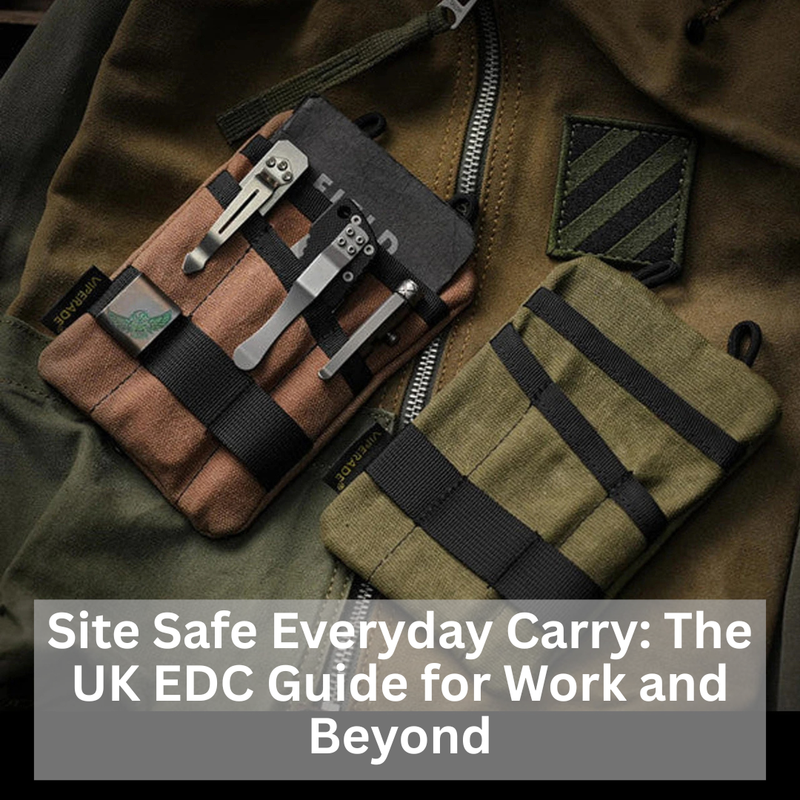
Site safe everyday carry is one of those topics that sounds straightforward until you actually try to build a kit. Choosing the right tools for UK worksites means balancing practicality, site rules and legal considerations that don't always get explained clearly. This guide cuts through that. You'll find practical guidance on what to carry and what to leave at home, whether you're on a construction site five days a week or moving between trade jobs. A well-organised Viperade VE1 Waxed Canvas Pocket Organizer makes a real difference to how that kit comes together.
Which specific features make site safe everyday carry practical and compliant in the UK?
Before you start adding items to your kit, it helps to know what you're actually optimising for. The features that matter on a UK worksite aren't the same ones that dominate EDC forums, and getting that distinction right saves you from carrying something that causes problems at the gate
What site safe means on real UK worksites
Site safe isn't a formal certification in this context. It's a practical standard. On UK construction and trade sites, it means your tools and kit don't create hazards, don't alarm other workers and don't fall foul of site security checks.
Most sites operate under health and safety frameworks that prioritise risk reduction. The UK PPE regulations set minimum standards for protective equipment, and site managers often layer additional rules on top. CDM regulations, which govern construction design and management, place duties on everyone present to avoid introducing unnecessary risk.
That means your EDC kit needs to pass a basic test. Is it a work tool? Is it proportionate? Does it look like something a professional would carry? If the answer to all three is yes, you're in good shape.
Knife rules that shape UK EDC choices
UK knife law is often misunderstood, and that confusion leads people to either carry nothing useful or carry something they shouldn't.
The core rule is simple. You can carry a folding pocket knife with a blade no longer than three inches in a public place, provided it's non-locking. A non-locking slip joint knife meets that standard. It doesn't lock open, which is the key legal distinction. Locking knives, fixed blades and anything that could be classed as an offensive weapon require a good reason to carry, and being on a worksite doesn't automatically provide that reason in law.
For site safe everyday carry, a non-locking slip joint is the sensible default. It's legal, it's useful for cutting tape, opening packaging, and handling general tasks, and it won't cause concern at a site security check.

The core site safe EDC checklist
A practical UK site EDC kit doesn't need to be complicated. These are the features and items worth including:
- A non-locking slip joint pocket knife with a sub-three-inch blade
- A compact multitool or small pliers for on-the-spot fixes
- A reliable torch suited to inspections in low-light areas
- A few basic first aid items (plasters and a small wound dressing)
- A pen and a small notebook for site notes and signatures
- A key organiser to keep access cards and keys secure and quiet
- A power bank if your role involves extended time away from charging points
How you carry it matters just as much as what you carry. An organiser pouch keeps everything accessible without loose items rattling around your pockets. Belt pouches work on some sites, but check the rules first. Sharp tools should always be secured, not loose in a pocket.
The mindset behind all of it is preparedness and utility. This is about being the person on site who has what's needed, without making a fuss about it. That framing shapes every comparison in the next section.
What comparisons help you choose site safe everyday carry gear that works on site and off site?
Multitool vs dedicated tools
The core question is 'Which earns its place in your pocket every day?'
Plier-based multitools like the Leatherman Bond give you gripping, cutting and fastening in one unit. The trade-off is bulk. Swiss Army style tools from Victorinox sit flatter and lighter, but you lose the pliers. For most site work, pliers win.

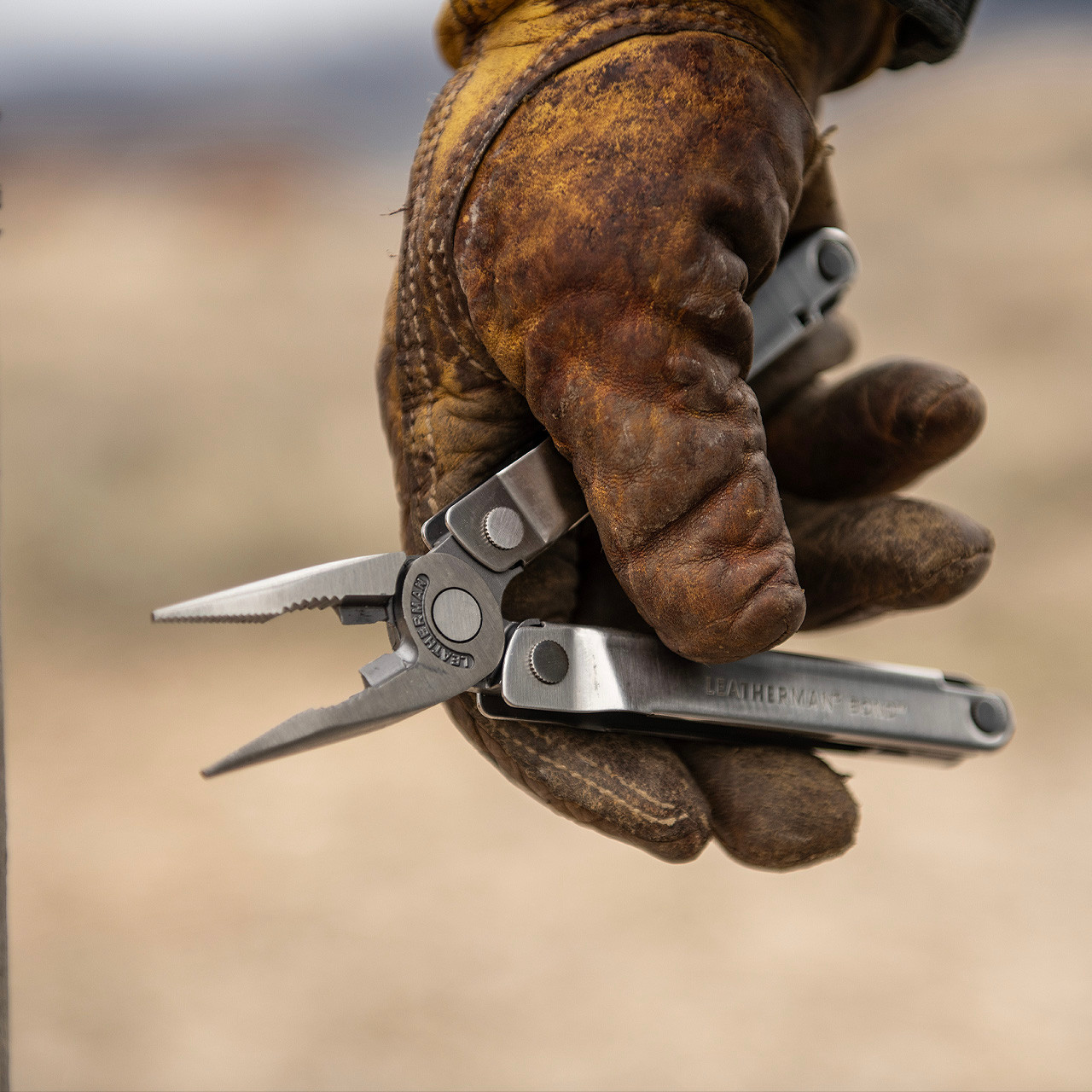
Outside-accessible tools matter more than people realise. If you have to unfold the whole unit to reach a blade or screwdriver, you'll stop using it. Look for tools you can deploy one-handed.
Locking tools are more secure in use, but some sites flag them during checks. A locking blade on a multitool sits in a grey area on certain sites, so it's worth knowing before you're standing at the gate.
Non-locking pocket knife vs multitool blade
A dedicated non-locking slip joint gives you a cleaner, more comfortable cutting experience than most multitool blades. The blade geometry is better, the handle is designed for the task and it's unambiguously legal to carry in public.
The multitool blade is a backup, not a primary cutter. It works, but it's a compromise. For site use and public carry, a slim non-locking knife alongside a multitool is a more practical pairing than relying on one to do both jobs.
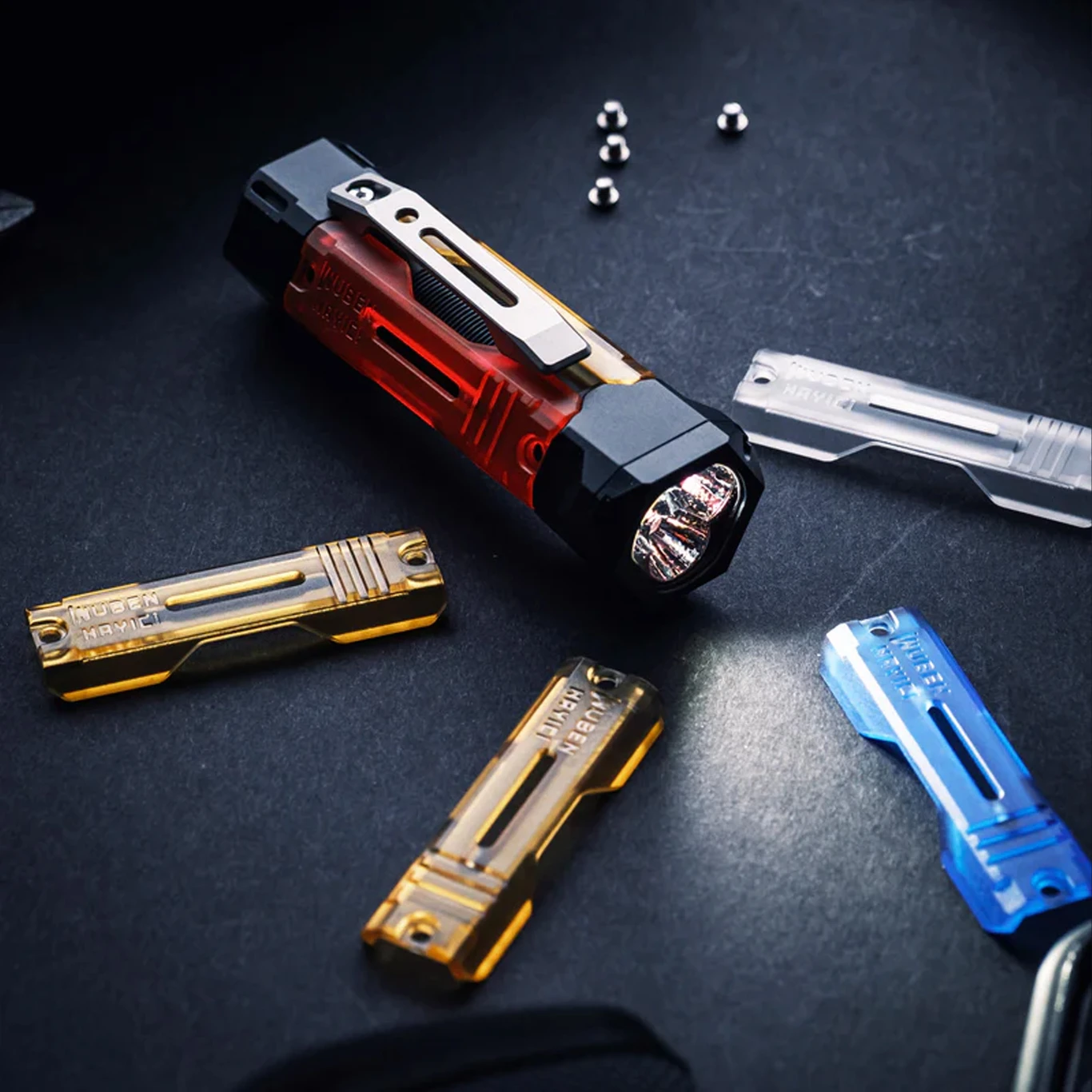
Torch comparisons that matter on site
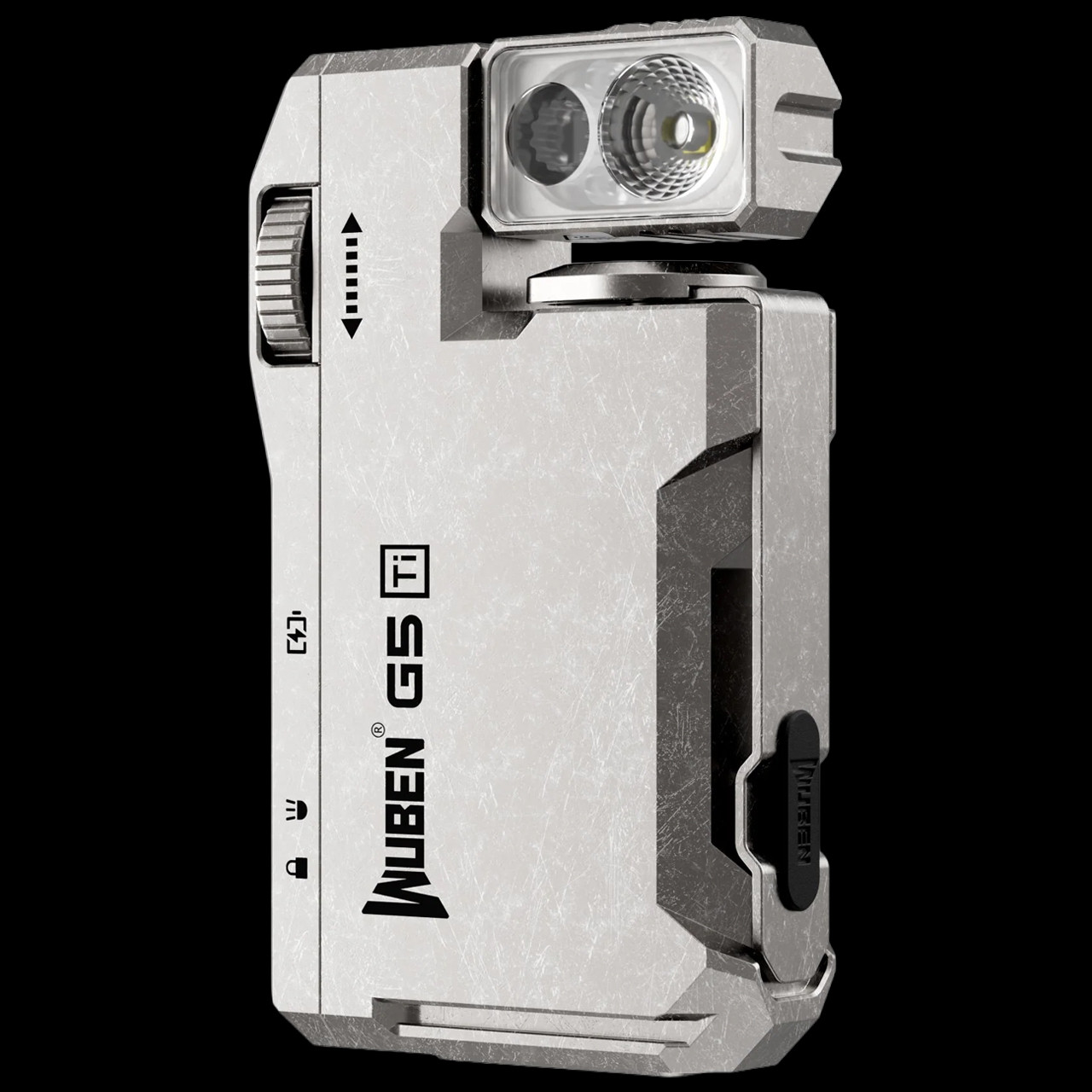
Output stability matters more than peak lumens. A torch that dims as the battery drops is frustrating mid-inspection. Look for regulated output.
For site work, a tight to medium beam suits close inspection in plant rooms and access points better than a wide flood. A reliable pocket clip and a glove-friendly switch are non-negotiable if you're using it regularly.
Battery choice splits between rechargeable and replaceable. Rechargeable is convenient for daily use. Replaceable AA or AAA means you can swap cells on site without hunting for a cable.
On power banks: worth carrying on long days away from charging points, particularly if your phone is your site documentation tool. On shorter jobs, it's a burden. The HSE injury statistics consistently show that poor communication and documentation contribute to site incidents, so keeping your phone charged isn't a trivial concern.
Which site safe everyday carry items are best for different workdays and weekends?
The checklist and comparisons above give you the framework. Now it's about applying that to the actual shape of your day, because a construction site shift and a post-work walk in the hills call for slightly different answers.

Best for a construction site day
The priority here is function without friction. Your kit needs to pass a site check, survive a full shift and not get in the way.
A plier-based multitool earns its place on a construction day: simple mechanism, strong grip, a couple of drivers and minimal moving parts. The Knipex Pliers Wrench XS Chrome 100mm is a strong choice, compact, precise and built for real work rather than novelty. If you already carry a dedicated cutting tool, a compact pliers-only option keeps the loadout lean without doubling up.
For cutting, a non-locking slip joint with a sub-three-inch blade is the sensible default. Check it against your employer's site policy before you carry it. Legality depends on context, not just blade length.
Keep a few first aid basics in a small pouch: plasters, antiseptic wipes, a nitrile glove or two, and a small wound dressing. Not a replacement for the site kit. Just the gap-filler for minor issues before you reach it.
A pocket organiser keeps everything secure around machinery and ladders. Loose sharp tools in a pocket are a hazard. Lanyards work well where site rules allow them.
Best for commuting and public carry
The commute is where most site kits quietly fall apart. What works on site can feel awkward on a train or in a coffee queue.

Slim down. A non-locking slip joint, a flat multitool or the CRKT Pilar Heinnie Haynes® UK Edition as a compact carry option, and a reliable pen cover most needs. The Tec Accessories Hi MARKR Pen Ti Stonewashed sits flat in a pocket and doesn't look out of place anywhere

Your EDC kit should feel invisible in public. If something draws attention, it probably doesn't belong there
Best for light maintenance, inspection and office hybrid days
Lighter days call for a lighter kit. A slim multitool, a pen and a small torch handle most inspection and maintenance tasks without bulk. Skip the full pouch. A single pocket organiser with the essentials is enough.
Best for outdoor leisure after work
You don't need to rebuild the kit. Swap the site-specific items, add a small torch if you haven't already, and you're covered for most post-work outdoor use. The core EDC travels with you.
That adaptability is the point. One well-chosen kit (adjusted at the margins) covers most of what the day throws at you. The next question is what to do when the site itself limits your options.
What alternatives make sense if a knife or multitool is not allowed on your site?
Safer cutting options for packaging and strapping
Some sites ban blades outright. It's not always about the law: it's client policy, risk assessments or a blanket rule that applies to everyone on site regardless of role. That's their call, and working around it is straightforward enough.
The first step is to use what the site provides. Many sites stock safety cutters for strapping and packaging. They're not elegant, but they do the job without raising any concerns at the gate. Scissors (where permitted) cover most light cutting tasks. If neither is available, ask the site manager. Leaning on site-issued tools first is always the right move before reaching for your own kit.
Non-tool additions that still earn their keep
A blade-free EDC still has plenty of room to be useful. Personal safety and productivity don't depend on a cutting edge.
A small flashlight earns its place on any site, regardless of rules around blades. So does a reliable pen, a marker for labelling and a small first aid kit with plasters and a wound dressing.
Under UK PPE regulations, protective equipment is the employer's responsibility. Your personal kit is an addition, not a substitute. Keep that distinction clear, and your EDC gear stays on the right side of site policy without legal considerations becoming complicated.
How do you choose site safe everyday carry gear without wasting money?
Buying EDC gear without a clear filter is how you end up with a drawer full of things you never reach for. The table below cuts through it.
| Quality indicators | Common mistakes |
|---|---|
| Solid build with minimal moving parts | Flimsy construction or loose tolerances out of the box |
| Comfortable to carry with gloves on | Awkward grip or controls that require bare hands |
| Low snag risk: smooth profile, no exposed catches | Aggressive styling with hooks or tactical aesthetics |
| Easy to wipe clean at the end of a shift | Textured surfaces that trap grit and debris |
| Corrosion-resistant materials for outdoor or wet conditions | Uncoated carbon steel on tools used in damp environments |
| Sensible tool selection matched to actual tasks | Packed with features you'll never use on site |
| Warranty and spare parts available for daily-use tools | No manufacturer support once you've bought it |
| Matches employer site policy | Ignores site rules or employer restrictions |
| Non-locking slip joint knife for public and site carry | Locking or fixed blade knife without a clear lawful reason |
A few UK-specific points worth flagging. Carrying a locking knife or fixed blade without a demonstrable work reason creates legal considerations that aren't worth the risk. Overly tactical styling draws attention at site gates and in public spaces. Neither is a good trade-off for marginal performance gains.
For multitools and pocket knives that see daily work, check whether the manufacturer offers a warranty and replacement parts. A tool that can't be serviced becomes a liability once it starts to wear.
At Heinnie, we stock tools that meet this standard. Every item on our shelves has been questioned and tested before it earns its place, so you're not guessing at build quality or suitability.
If you're unsure whether something fits your site or your carry setup, our Heinnie Kit Assist service gives you a free 20-minute call with someone who actually uses this gear.
What do people ask about site safe everyday carry in the UK?
What should be in an everyday carry?
A practical EDC kit covers cutting, light, notes and minor first aid. For site use, that means a non-locking slip joint knife, a compact multitool, a torch, a pen and a few basic dressings. Keep it proportionate to your actual workday.
What does everyday carry mean?
Everyday carry, or EDC, refers to the small set of tools and items you carry on your person each day. The idea is simple: have what you need, when you need it, without going back to the van or the store cupboard.
What is the difference between a site safe EDC and a general everyday carry?
A general EDC is built around personal preference. A site safe EDC is built around the same principles but filtered through site rules, employer policy and UK legal considerations. The tools still need to be useful. They also need to pass a gate check and fit within your employer's expectations.
What EDCC items are restricted or prohibited on UK construction sites?
Policies vary by site and client, so there's no single answer. Locking knives and fixed blades are commonly flagged. Anything with a tactical appearance can attract attention even if it's technically legal. Where restrictions apply, lean on site-provided tools and employer-issued PPE first. Your personal kit fills the gaps; it doesn't replace what the site provides.
Build a site safe EDC that fits your work and your commute
Getting your site safe everyday carry right comes down to one question. Does each item earn its place on site, in public and in your pocket every day? Use the checklist and comparison table to make that call with confidence. A well-chosen EDC kit is about carrying the right things, in a form that works wherever the day takes you.
We've been helping people build practical, UK-legal carry setups since 1996, and we know this stuff isn't always straightforward. If you want a second opinion on your kit before you buy, book a free Heinnie Kit Assist call. No script, no pressure, just honest advice from people who carry this gear themselves.
Why not check out our other great blogs For Gear Recommendations And Outdoor Survival Tips