

Reddy when you are …
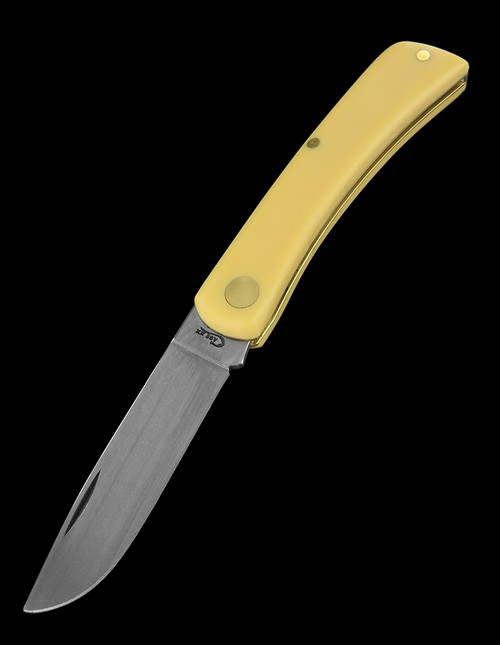
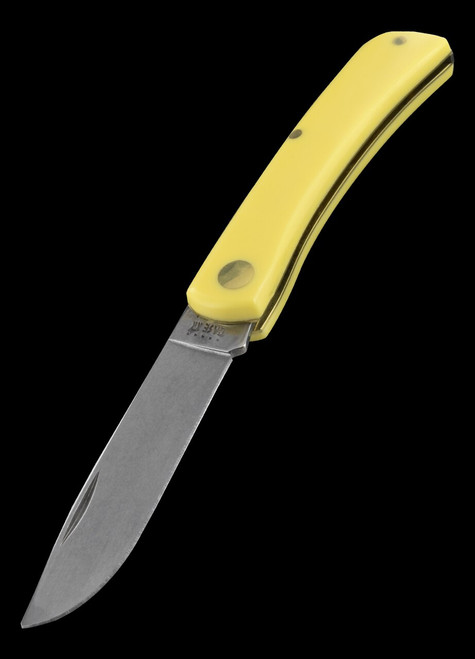
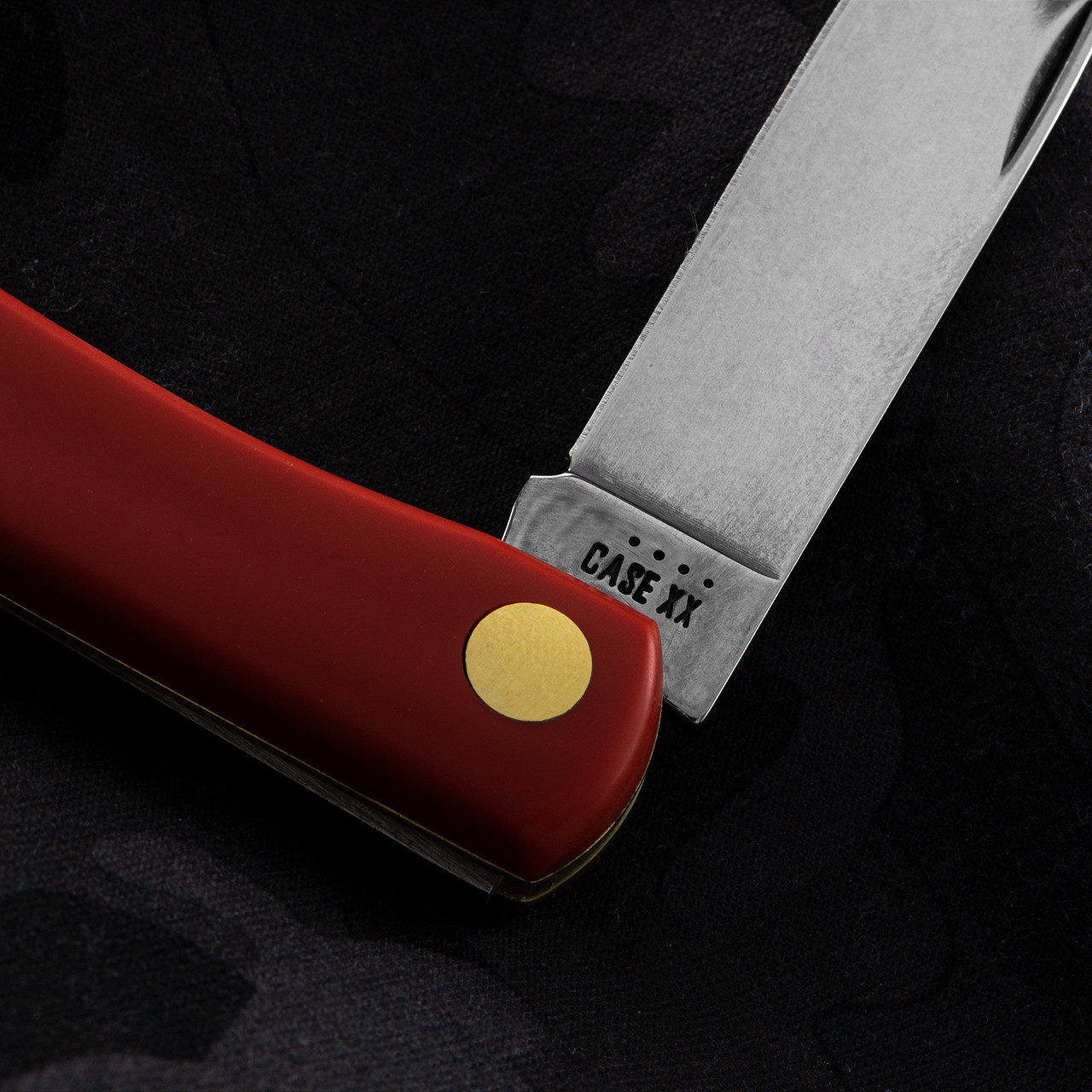
Classic design that is useful for modern life. The basic pattern has remained unchanged for decades; and regardless of its agrarian origins, the Sodbuster Jr is simple and convenient. A ready pocket tool which easily copes with daily needs. Case has recently changed the tang stamp on their carbon steel pocket knives from the time - honoured “CV” or Chrome Vanadium (an industry standard designation for tool steel) to “CS” meaning, most logically, carbon steel. If you are new to carbon steel knives, be aware that ordinary use, particularly for food preparation, will impart a metallic taste to some foods. This is normal, and with frequent use, any such taste is quickly ignored. What some new carbon steel users disgustedly refer to as stains on the blade are in fact the gradual acquisition of a patina. This is not objectionable to most knowledgeable users of carbon steel knives. One can either choose to keep their blades bright and polished, or allow the natural hues of blue, grey, and purple to eventually develop as the carbon steel blade gains character, as many sage users would put it. Interestingly, from a collector’s standpoint, the back spring is bright stainless steel; a common feature in most slip joint folders these days, reflecting the overwhelming market preference for low maintenance stainless steel blades and springs, compared to the small amount of care required by the more traditional, let’s say, carbon steel pocket knives which for many decades were simply the norm. Manufacturers wisely make good use of their materials, rationalising these to limit needless duplication, as for example, with dimensionally identical back springs; because why stock both carbon steel and stainless steel back springs when stainless wins in terms of customer choice and best use of production funds? As far as this specific model, it is a testament of sorts to the fact that good designs stand the test of time. The dimensions and operation fully comply with present legislation for UK EDC (every day carry). Case has gently rounded the sides of the scales, the tough tomato red Nylon handles on this model, so that it is not entirely flat on the sides, as was true for many years with recent Sodbuster Jr production models. This somewhat recalls older varieties of the Sodbuster Jr, which were even more so curved and sculpted with more pronounced sleek buffed contours. The scooped hollow ground blade, brightly polished to a mirror finish, excels at slicing tasks, and easily manages sensible food preparation assignments. Ordinary maintenance includes keeping it clean after each use, occasional oiling of the joint, and stropping to preserve a keen edge. A very capable strop can easily be made from dense (hard) single ply cardboard, with fine buffing compound scribbled across or smeared into the rough side of the cardboard (not the glossy printed side, of course). A few careful swipes easily removes any burrs, or “wire edges” in industry terms, leaving a good sharp edge that you need only sharpen on a stone in the (hopefully) remote event of any chipping or similar accidental damage to the cutting edge. Just a little reasonable maintenance yields a lifetime of willing service by this humble hand tool. Many well maintained pocket knives can be passed down to second and third generation users, as many know from experience. The previous review mentioned a crack that developed at the rear pin (presumably, the central pin securing the back spring, brass liners, and Delrin scales). A bit disappointing, true, yet the gentleman’s pocket knife, based upon my own several years of collecting, experience, and usage, will no doubt still be giving sturdy utilitarian service many years from now. W R Case, certainly with their traditional slip joint models, provide a link to a more uncomplicated past. And yet, a humble pocket knife still proves to be a tremendously useful item in the modern age.