
How to Look After and Maintain a Carbon Steel Knife in 2025: Your Essential Guide
Posted by Heinnie Haynes on 1st Oct 2025
Carbon steel knives are experiencing a remarkable renaissance. Professional chefs swear by them, knife enthusiasts collect them obsessively and home cooks are discovering what they've been missing. Yet many people still hesitate, worried about rust, maintenance and the patina. Here's the truth: caring for carbon steel in 2025 is easier than ever, and the rewards are worth the minimal effort required.
Why are carbon steel knives making such a comeback?
The debate between carbon and stainless steel has evolved significantly. Modern powder stainless steels like SG2 and HAP40 offer impressive performance, but carbon steel maintains distinct advantages that keep professionals coming back.
You'll achieve a sharper edge with carbon steel, particularly with Japanese white steel (Shirogami). The edge retention surpasses most stainless options thanks to the finer grain structure. Most importantly, when it's time to sharpen, carbon steel responds beautifully to whetstones, making maintenance satisfying rather than frustrating.
Consider this: a quality carbon steel knife in the £80-150 range often outperforms stainless options costing twice as much. The patina that develops isn't a flaw - it's a protective layer that enhances the knife's resistance to corrosion while adding unique character that tells the story of your cooking.
What is carbon steel, and why does it matter?
Carbon steel is an alloy where carbon is the primary element alongside iron. Different carbon steel grades contain varying amounts of carbon atoms. The higher the carbon content, the sharper the blade can become, but also the more maintenance it needs.
Not all carbon steels are created equal, and understanding your steel helps tailor your care approach. White Steel #2 (Shirogami) offers the best balance for most users - it takes an incredible edge and remains manageable for maintenance. Blue Steel (Aogami) contains small amounts of chromium and tungsten, making it slightly less reactive and offering better edge retention.
For Western knives, 1095 remains popular for its excellent hardness and ease of sharpening, though it's highly reactive and develops patina rapidly. 52100 offers significantly better corrosion resistance thanks to its 1.5% chromium content, making it an excellent choice for those wanting carbon steel performance with slightly easier maintenance.
Carbon steel knives rust and oxidise more easily than stainless steel. The higher the carbon content, the faster oxidation occurs when the blade contacts oxygen, water, food acids or even moisture in the air. But here's why people choose carbon steel: these blades are easier to sharpen and hold their edge longer than stainless steel counterparts.
What are the three golden rules for carbon steel maintenance?
- Keep it dry: Moisture causes corrosion, so dry your blade immediately after every use.
- Clean it immediately: Don't let food residue sit on the blade. Acids from foods speed up corrosion.
- Store it properly: Never store a carbon steel knife in a leather sheath long-term, as leather retains moisture.
What should you do if rust spots appear?
Don't panic. If you catch rust spots early, you can usually rub them off with no lasting damage to the blade. Quick action is key.
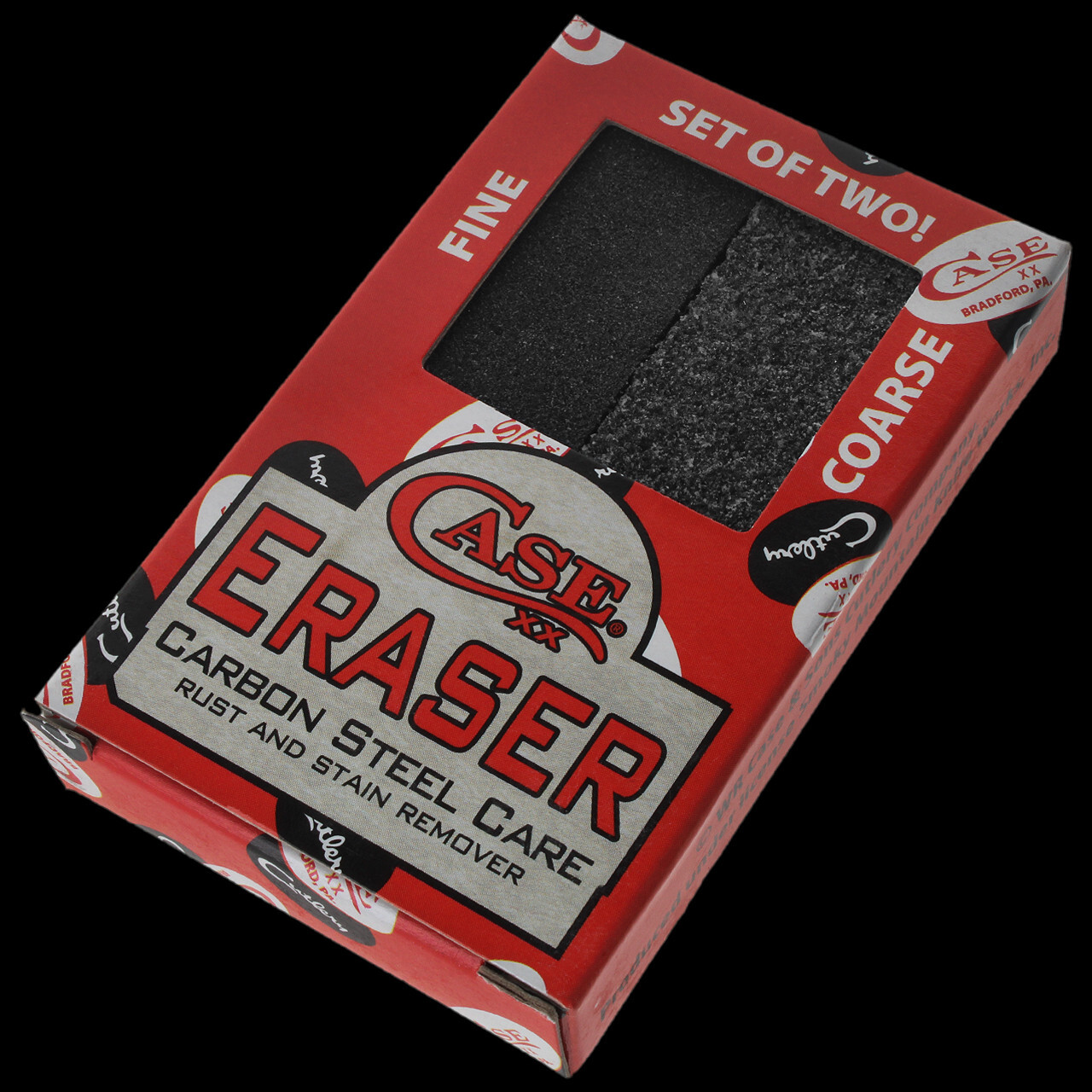
The array of cleaning products has expanded dramatically. Rust erasers have transformed from niche Japanese imports to mainstream essentials. The Case Rust Eraser Set provides both coarse and fine options. Use the coarse for initial rust removal, then finish with the fine for a polished appearance.
What's the best way to develop a protective patina?
Forget everything you've heard about mustard and vinegar. The coffee patina method has emerged as the gold standard for forced patina development. Simply brew strong instant coffee (the cheaper brands work brilliantly), keep it warm and submerge your blade for 30-45 minutes while monitoring progress. The result? A uniform dark grey-black patina that provides excellent protection without harsh chemicals.
For those preferring natural development, the secret is strategic protein exposure. Cut hot chicken breast, and you'll see blues and purples develop within seconds. Slice into a freshly cooked pork loin for vibrant blue hues. Build your patina in layers - proteins first, then gradually introduce acidic foods like onions and tomatoes.
Patinas are controlled surface corrosion that actually protects your blade from deeper, damaging rust. Rust appears orange-brown and feels coarse. Patinas look more attractive with greys, blacks and sometimes blue tones. They feel smooth to the touch.
Some knives come pre-patinated. The Svord Kiwi Machete has a beautiful greyish-blue patina straight from the box.
For uncoated blades, you can create your own patina. Place the knife in a shallow pan and cover it with mild acid like vinegar, citrus juice or potato juice. Leave for an hour or longer, depending on how dark you want the patina. Wash thoroughly, clean and seal when done.
How should I store my carbon steel knives?
Storage has evolved beyond simple knife blocks. Magnetic strips have become the preferred option for daily users, providing excellent ventilation that prevents moisture accumulation. Mount them away from your hob to avoid steam exposure, and ensure knives are completely dry before hanging.
For serious collectors or those in humid climates, modern storage demands more sophisticated solutions. Quality knife rolls hold knives securely and allow proper ventilation. For display, consider premium storage cases that protect valuable pieces and keep them visible.
The game-changer for long-term storage? VCI (Vapour Corrosion Inhibitor) papers. These molecular-bonding sheets provide up to three years of protection in sealed environments. Combine them with silica gel packets in a quality case, and you've created a microclimate that keeps carbon steel pristine even in challenging conditions.
What are the best practices for daily use?
Daily carbon steel care in 2025 follows a streamlined routine that takes seconds once it becomes a habit. Rinse immediately after cutting acidic foods - tomatoes, citrus and onions all accelerate oxidation. Use hot water for rinsing; it helps the blade dry faster and more completely. Dry thoroughly with a clean towel, paying special attention to the area where the blade meets the handle.
Professional kitchens have adopted a two-towel system: one damp towel for immediate cleaning during prep, one dry towel for thorough drying. This simple approach prevents the accumulation of food acids that cause corrosion. Keep both towels within arm's reach, and develop the habit of wiping and drying your knife every few minutes during use.
For the first few months with a new knife, apply a thin layer of camellia oil weekly. Once a stable patina develops, you can reduce this to monthly or even less frequent application. Store your knife somewhere dry with good airflow.
How do modern cleaning products make maintenance easier?
For routine cleaning, FrogLube Solvent removes petroleum products and prepares the blade for protective treatment. Unlike harsh chemicals, it's environmentally friendly and won't damage handle materials.
Microfibre cloths are perfect for cleaning without chemicals or scratching. They remove dust, wax and dirt easily, are affordable and essential for proper maintenance.
The micro-bevelling technique has gained traction among professionals for protecting edges. Adding a tiny secondary bevel at a slightly steeper angle (2-3 degrees more than your primary edge) strengthens the cutting edge without sacrificing sharpness.
Is carbon steel really worth the extra effort?
The ‘extra effort’ amounts to perhaps 30 seconds of additional care per use - hardly overwhelming when you consider the superior performance. Your carbon steel knife becomes sharper, stays sharp longer and sharpens more easily than comparable stainless options.
Carbon steel blade owners develop genuine respect for their knives. The maintenance isn't difficult, but it does need consistency. Carbon steel knives also build good habits. You'll automatically clean and dry your blade after use instead of leaving it with food residue.
The connection you develop with a carbon steel knife is something stainless can't replicate. You learn its preferences, develop routines together and watch it transform from pristine steel to a seasoned cooking companion. The patina tells your story, the edge does the work and the minimal maintenance becomes invisible once it's a habit.
Look after your carbon steel blade properly and it'll last a lifetime.
Ready to master carbon steel maintenance?
Carbon steel in 2025 is about choosing performance, developing a relationship with your tools and enjoying the unique character only carbon steel provides. Modern products have eliminated the genuine hassles of carbon steel ownership, making maintenance routine rather than burdensome.
Carbon steel knives reward careful owners with exceptional performance. The maintenance routine becomes second nature quickly, and you'll enjoy sharper, longer-lasting edges that make every cutting task a pleasure.
Browse our full range of carbon steel knives and maintenance products to find everything you need for proper blade care. Join the carbon steel renaissance - your cooking deserves it.
Why not check out our other great blogs For Gear Recommendations And Outdoor Survival Tips