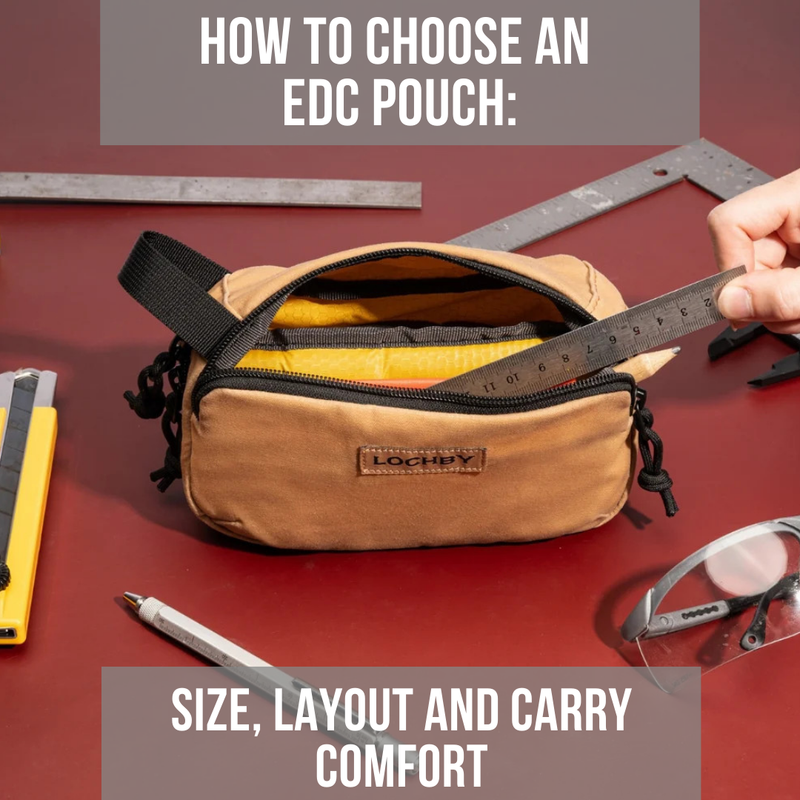
How to Choose an EDC Pouch: Size, Layout and Carry Comfort
Posted by HH on 17th Mar 2026
Estimated reading time: 12 minutes
Choosing the right EDC pouch looks simple. It isn't. Get it right and every tool has a home. Nothing rattles. You can lay your hands on what you need without thinking twice. Get it wrong and you've got a bulky lump that stays at home after the first week.
This guide walks you through the decisions that actually matter when you're picking an EDC pouch. Size categories, internal layouts, materials, attachment systems and real-world carry comfort: it's all here, drawn from hands-on experience and the kind of honest advice you'd get from a knowledgeable friend who happens to live and breathe gear.
Whether you're organising a compact set of daily tools or building out a loadout for work or the outdoors, the right pouch ties everything together.
What Size EDC Pouch Do You Actually Need?
Size is the single most important decision you'll make. Too small and your gear doesn't fit. Too large and you've defeated the purpose of carrying light.
Start with a physical audit. Lay out everything you intend to carry on a flat surface. A folding knife, a torch, a multi-tool, a pen, a small notebook, a lighter and perhaps some first aid basics. Once you can see the full picture, match your needs to one of three general size categories.
Micro and compact pouches typically measure under 13 cm tall. They're designed for the bare essentials. A pocket organiser in this range holds a knife, a pen and one or two smaller items. These slip into trouser pockets or jacket interiors with barely any footprint. If you keep your everyday carry lean, this is where to look.
Medium pouches sit in the 13 cm to 20 cm range. This is the sweet spot for most people. They'll accommodate a full-size multi-tool, a torch, a pen, a lighter and several smaller accessories without becoming unwieldy. Brands like Maxpedition and Viperade do particularly well here, with layouts that maximise capacity without adding bulk.
Large pouches and admin panels exceed 20 cm. These suit professionals, trade workers and outdoor enthusiasts who need to carry medical supplies, documentation, batteries and multiple tools. They typically live inside or attached to a backpack or bag rather than on a belt.
Practical tip: Torn between two sizes? Go smaller. A pouch that's slightly snug forces you to carry only what you truly need. And you'll be far more likely to actually carry it every day.
How Does Internal Layout Affect Everyday Carry?
A pouch without internal organisation is just a bag. The layout inside determines how quickly you can reach your gear, how well it stays protected and how comfortable the pouch sits against your body when it's loaded.

- Elastic loops and slip pockets are the most common features. Elastic loops hold cylindrical items like torches, pens and lighters securely in place. Slip pockets provide flat storage for cards, notes, plasters and thin tools. Look for pouches where these are sized proportionally. A loop that's too loose lets a pen rattle around. A pocket that's too tight makes pulling out a card a two-handed job.
- Zipped compartments add security for items you can't afford to lose: cash, medication, memory cards and small spare parts. The best pouches use YKK zippers, which run smoothly even after years of daily use.
- Dedicated tool slots are found on more specialist pouches. These are individual pockets shaped for specific items like folding knives, multi-tools or tactical pens. They reduce versatility but speed up access considerably. If you carry the same items every day, this kind of tailored layout makes a real difference.
- Open main compartments offer the most flexibility but the least organisation. They work best when paired with smaller pouches or inserts, creating a modular system inside a larger shell.
Think about how often you reach for each item. Your most-used tools should sit in the easiest positions to get to. Items you only need occasionally can go deeper inside.
What Materials and Construction Should You Look For?
Materials determine how long your pouch lasts, how it handles weather and how it feels against your body or inside your pocket.
Nylon is the most common material, and for good reason. High-denier nylon rated at 500 Denier or above provides strong abrasion resistance and a degree of water resistance. Higher denier ratings like 1000D offer even greater durability for hard-use applications. Maxpedition uses high-denier nylon across their range, which is one of the reasons their pouches hold up so well over years of daily carry.
XPAC is a laminated fabric originally developed for sailmaking. It's lightweight, highly water-resistant and has a distinctive textured appearance. Viperade offers several pouches in XPAC, and the material is increasingly popular among the EDC community for its combination of low weight and strong performance.
Waxed canvas provides a more heritage look and develops character over time as it picks up marks and patina. It offers reasonable water resistance, and it's quieter than nylon. That matters if you need a pouch that doesn't draw attention in professional settings.
Leather is the premium option for belt-carry organisers. Good leather is durable, moulds to the shape of your gear over time and looks better with age. It's heavier than nylon or XPAC but suits everyday professional environments.
Beyond the shell material, pay attention to the stitching. Double-stitched stress points, bar-tacked attachment points and reinforced zipper ends all signal quality. A pouch loaded with metal tools and opened multiple times a day needs to handle that kind of repetitive stress without coming apart.
| Material | Weight | Water Resistant | Durability | Best For |
|---|---|---|---|---|
| High-denier nylon (500D+) | Medium | Good | Excellent | General EDC and field use |
| XPAC | Light | Very Good | Very Good | Weight-conscious carry |
| Waxed canvas | Medium | Moderate | Good | Professional and urban settings |
| Leather | Heavy | Low | Very Good (with care) | Belt carry and heritage style |
| Cordura | Medium | Good | Excellent | Heavy-duty field applications |
How Do Different Attachment Systems Affect Carry Comfort?
The attachment system connects your pouch to your body or your bag. It has a direct impact on comfort and security.
MOLLE webbing is the most versatile option. It uses rows of stitched webbing loops that let you weave pouches onto compatible bags, vests and belts. MOLLE-compatible pouches can be repositioned easily and they integrate with tactical backpacks and chest rigs without adapters. If your carry system already uses MOLLE gear, stick with it.
Belt loops and clips are simpler. Fixed belt loops offer the most stability but you'll need to thread the belt through before wearing. Rotating clips and spring-loaded clips allow quicker attachment but can shift position during the day. The best belt pouches use reinforced attachment points that distribute weight evenly and sit close to the body.
Pocket carry needs no external attachment at all. Slim pocket organisers sit inside a trouser or jacket pocket and open like a book or wallet. This is the most discreet method and works well for office environments or situations where a visible belt pouch would look out of place.
Carabiner and D-ring attachment lets you clip pouches onto bag straps, belt loops or MOLLE webbing. It's quick and flexible but offers less stability than dedicated loops. It works best for pouches that need to move between different bags or carry positions throughout the day.
Practical tip: Test your chosen attachment at home before committing. Sit down, stand up, bend over and walk briskly. If the pouch shifts, digs into your hip or creates a pressure point, try a different mounting option before giving up on the pouch entirely.
What Should You Put in an EDC Pouch?
The contents of your pouch should reflect your daily reality. Not an idealised version of what you think you should carry. Build around three categories: tools you use every day, items you need for safety or emergencies and personal essentials.
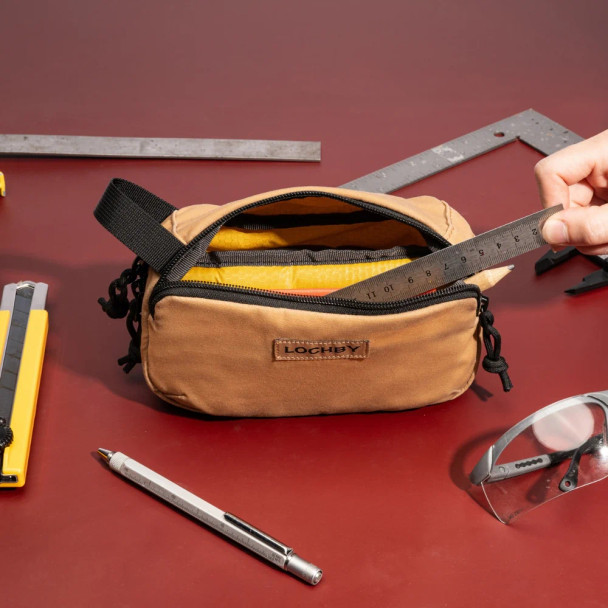
Daily tools form the core of most EDC pouches:
- A UK-friendly folding knife for cutting tasks
- A compact torch for low-light situations
- A pen and a small notebook for everyday tasks
- A Leatherman or similar multi-tool for versatility without the bulk of separate items
Safety and emergency items might include plasters, a small roll of tape, a USB charging cable, a spare battery and basic medication. These take up very little space but can make a significant difference when you need them.
Personal essentials vary widely. Some people carry a slim wallet or card holder in their pouch. Others include a lighter, lip balm, spare keys or a USB drive. The key is to include only what you genuinely reach for.
Practical tip: Carry your pouch for a full week. Then empty it completely. Any item you didn't use even once during those seven days is a candidate for removal. This keeps your carry lean and prevents the slow creep of unnecessary weight.
For a broader breakdown of what to carry and how to structure your full kit, our Ultimate Guide to EDC covers the topic in depth.
What Are the Most Common EDC Pouch Mistakes?
Even experienced carriers get this wrong sometimes. Here are the ones to watch for.
Overloading. Cramming every possible item into a single pouch makes it heavy, difficult to close and uncomfortable to carry. A pouch that weighs too much on a belt pulls at your waistband. In a pocket, it creates an awkward bulge. Distribute heavier items centrally and closer to your body.
Choosing looks over function. A pouch that looks great in a flat-lay photo might be impractical in real life. Prioritise access speed, durability and comfort over aesthetics. The best pouch is the one you actually carry.
Ignoring the closure mechanism. Velcro closures are fast but noisy. Zippers are secure but slower. Flap closures with buckles are robust but add bulk. Match the closure type to your environment and how often you need access.
Neglecting maintenance. Nylon pouches benefit from an occasional wipe down with a damp cloth. Leather needs conditioning. Zippers run more smoothly with a drop of lubricant. A well-maintained pouch will outlast a neglected one by years.
Buying before handling. If possible, get hands-on with a pouch before committing. Feel the material, test the zippers and check the stitching. If you can't visit a showroom, take advantage of extended return policies to test at home. We offer a 60-day return window for exactly this reason.
How Do You Match a Pouch to Your Lifestyle?
Different routines demand different approaches. Here's a quick framework.

- Urban commuters benefit from slim pocket organisers that hold a knife, pen, torch and a few cards without creating bulk under work clothing. Waxed canvas or leather blends into professional environments naturally.
- Trade and field workers need rugged belt-mounted pouches that can take daily abuse. MOLLE-compatible options let you reposition tools for different tasks, and durable nylon construction handles exposure to dirt, moisture and impact.
- Outdoor enthusiasts should look for water-resistant pouches with secure closures. If your pouch lives inside a rucksack, choose one with a high-visibility internal lining so you can find items quickly in low light. For those building out a wider outdoor kit, our EDC pouches and tactical organisers range covers everything from compact belt pouches to full-size admin panels.
- Collectors and enthusiasts often maintain several pouches for different situations. A slim pocket organiser for work. A larger belt pouch for weekends. A full admin panel for outdoor trips. This rotation means you're always carrying the right amount of gear for what you're doing.
For those still weighing up the broader question of how to organise all their gear, our guide on the best EDC gear for 2026 offers a practical framework. And if your EDC includes a knife, it's worth understanding UK knife law to make sure your carry stays fully compliant.
Not sure which direction to go? The Heinnie Kit Assist service offers free 20-minute video calls with our gear team. No scripts. No pressure. Just honest advice from people who carry this gear themselves.
| Green Flags | Red Flags |
|---|---|
| YKK or branded zippers | Unbranded or stiff zippers |
| Double-stitched stress points | Single-thread stitching throughout |
| Proportional elastic loops | Uniform loops regardless of item size |
| 500D+ nylon or equivalent material | Thin, uncoated fabric |
| Multiple carry and attachment options | Single fixed attachment point |
| Flat profile when partially loaded | Bulges or gaps when half full |
How Do You Match a Pouch to Your Lifestyle?
Different routines demand different approaches. Here's a quick framework.
Urban commuters benefit from slim pocket organisers that hold a knife, pen, torch and a few cards without creating bulk under work clothing. Waxed canvas or leather blends into professional environments naturally.
Trade and field workers need rugged belt-mounted pouches that can take daily abuse. MOLLE-compatible options let you reposition tools for different tasks, and durable nylon construction handles exposure to dirt, moisture and impact.
Outdoor enthusiasts should look for water-resistant pouches with secure closures. If your pouch lives inside a rucksack, choose one with a high-visibility internal lining so you can find items quickly in low light. For those building out a wider outdoor kit, our EDC pouches and tactical organisers range covers everything from compact belt pouches to full-size admin panels.
Collectors and enthusiasts often maintain several pouches for different situations. A slim pocket organiser for work. A larger belt pouch for weekends. A full admin panel for outdoor trips. This rotation means you're always carrying the right amount of gear for what you're doing.
For those still weighing up the broader question of how to organise all their gear, our guide on the best EDC gear for 2026 offers a practical framework. And if your EDC includes a knife, it's worth understanding UK knife law to make sure your carry stays fully compliant.
Not sure which direction to go? The Heinnie Kit Assist service offers free 20-minute video calls with our gear team. No scripts. No pressure. Just honest advice from people who carry this gear themselves.
Frequently Asked Questions (FAQs)
What is the best size EDC pouch for beginners?
A medium pouch in the 13 cm to 18 cm range is the best starting point. This size fits a folding knife, a torch, a pen and a multi-tool without excess bulk. Starting with a medium pouch lets you learn what you actually carry daily before sizing up or down.
Can you carry an EDC pouch on a belt without it looking bulky?
Yes. Low-profile belt pouches designed for EDC sit flat against the hip and tuck under a jacket or untucked shirt. Choosing a pouch in dark colours and slim materials helps keep the profile discreet. Vertical orientation also tends to be less noticeable than horizontal mounting.
What is the difference between a utility pouch and a pocket organiser?
A utility pouch is typically designed for belt or MOLLE attachment and features a top-opening or flap closure. A pocket organiser sits flat inside a trouser or jacket pocket and usually opens like a book or wallet with elastic loops and slip pockets inside. Both keep your EDC gear organised. The carry method is what differs.
How do you stop an EDC pouch from wearing out your clothes?
Choose a pouch with smooth external surfaces and rounded edges. Avoid exposed MOLLE webbing or hard mounting hardware against your body. If you're wearing the pouch inside a pocket, opt for nylon or waxed canvas over rough-textured materials. Rotating the carry position occasionally helps distribute wear across different areas of your clothing.
How often should you review the contents of your EDC pouch?
Every two to three months. Lay everything out and honestly assess whether each item earned its place since the last review. Remove anything you haven't used and consider whether any new tools would fill a genuine gap. A regular review keeps your content lean, relevant and genuinely useful.
Disclaimer
This guide is for general educational purposes only. Product availability, specifications and pricing may change without notice. We make every effort to ensure accuracy but accept no liability for errors or omissions. UK knife law is subject to change. Always check the latest government guidance at GOV.UK before carrying any knife or bladed article in public.
Why not check out our other great blogs For Gear Recommendations And Outdoor Survival Tips