Everyday Carry Style: How to Build a Considered EDC Loadout
Posted by Heinnie Haynes on 12th May 2026
Most people don't think about what they carry until something goes wrong. A phone that needs charge, a missing key, a wallet that's turned into a brick of receipts and loyalty cards. That's usually the moment everyday carry stops being an afterthought and starts being something worth getting right. The question is how to carry it in a way that actually works for your outfit and your habits. Get that part right, and everything else follows.
Here at Heinnie, we've spent years helping people build loadouts that actually get used. Not the most impressive-looking kit, but the right kit for the right person. That starts with one decision: how are you going to carry it?
Which everyday carry style fits your day: pockets, pouch or backpack?
There are three broad approaches to everyday carry: keep it in your pockets, consolidate it into a dedicated pouch or move it into a bag. Each suits a different kind of day, and the differences matter more than most people expect. If you want to understand the everyday carry basics before going further, that's a solid place to start.
Minimal pocket carry for a clean silhouette


Slim-cut trousers like the Kuhl "Above the Law" Trousers Espresso are built with minimal pocket carry in mind: enough pocket depth to carry sensibly, without the bulk that ruins the line of the trousers.
The limits show up quickly, though. Overload your pockets and you get bulk and that familiar frustration of digging past three things to find the one you actually need. Minimalist carry works best when you've already edited your loadout down to what genuinely earns its place. It rewards discipline. If you haven't done that editing yet, the next section on what to carry will help.
Organised pouch carry for quick swaps between outfits
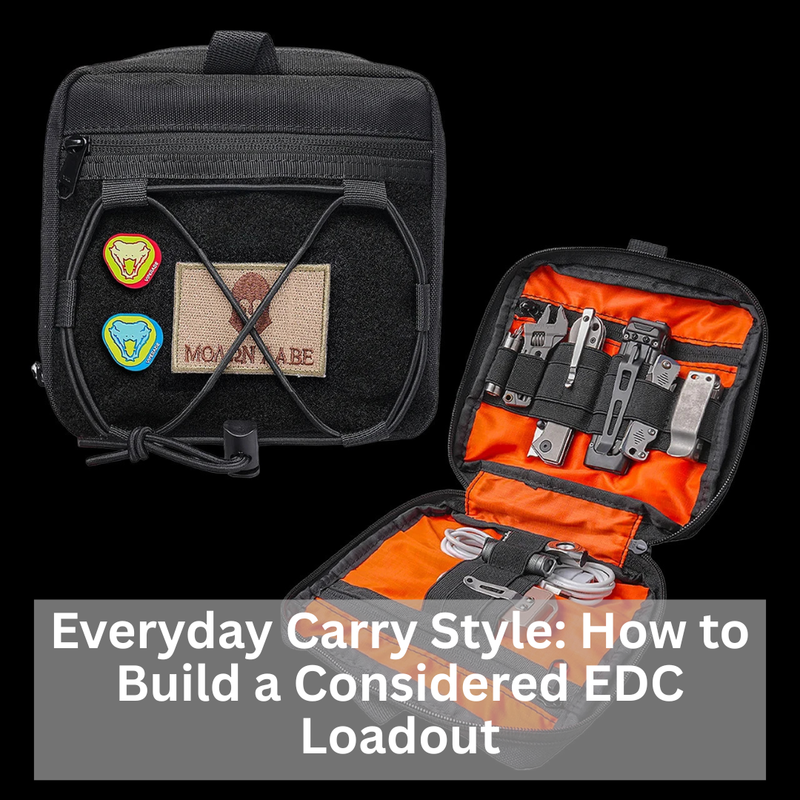
A pouch changes the dynamic entirely. Your EDC travels as a unit, drops into any bag and stays organised without any effort on your part. Something like the Lochby Venture Pouch Brown is a good example of how a well-designed carry pouch keeps everything accessible without turning into a black hole of loose items.

The trade-off is one extra step. You're reaching into a bag to reach into a pouch. For most people, that's a worthwhile swap for the consistency it brings, particularly if you move between outfits regularly. No repacking, no forgotten items.
Backpack carry for commuters and higher volume days
Backpack carry shifts the weight off your body entirely. That matters on longer days or when your loadout grows beyond what pockets can handle. A well-built option like the GORUCK GR1 USA Backpack Black 21L gives you the capacity to carry more without the carry becoming the problem.


The risk is that things get buried. Without a system inside the bag, access slows down and the considered feel of a good EDC loadout starts to unravel. That's where a pouch inside a backpack becomes the obvious answer: you get the capacity of the bag with the organisation of a dedicated carry system.
So the real decision comes down to three questions:
- How much do you need to carry?
- How quickly do you need it?
- How much does discretion matter?
The comparison below makes those trade-offs easier to see.
How do pockets, pouches and backpacks compare for everyday carry style?
The three carry styles each make a different set of trade-offs. None of them is objectively better. The right one depends on your day and how much you're actually carrying. This table lays out the practical differences across the factors that matter most.
| Factor | Pocket carry | Pouch carry | Backpack carry |
|---|---|---|---|
| Capacity | Low | Medium | High |
| Organisation | Low | High | Medium |
| Access speed | High | Medium | Low |
| Comfort (full load) | Low | Medium | High |
| Discretion | High | Medium | Low |
| Key noise control | Low | High | High |
| Outfit flexibility | Low | High | Medium |
| Loadout switching | Slow | Fast | Medium |
| Travel friendliness | Medium | High | High |
| Workplace appropriateness | High | High | Medium |
A few things stand out. Pocket carry wins on access speed and discretion, but it falls apart once your keychain, wallet and anything else you're carrying start competing for the same space. A key organiser solves the noise and bulk problem to a point, but pockets have a hard ceiling.
Pouch carry scores well across almost every category. The loadout switching row is worth paying attention to: if you move between outfits regularly, a dedicated EDC pouch means your carry transfers in seconds.

Backpack carry handles volume and comfort better than anything else, but it asks more of you organisationally. Without a system inside the bag, your wallet and other items end up loose at the bottom. The table also reflects something less obvious: workplace appropriateness and travel friendliness both favour the pouch. A compact, self-contained carry draws less attention in an office or an airport than a full backpack.
Once you've settled on a carry style, the next question is what actually goes in it.
What should be in your everyday carry loadout, and what stays at home?
Base layer essentials you probably already carry
Most people are already carrying the core of a solid EDC without realising it. Phone, keys, wallet and a wristwatch. That's the base layer. Everything else builds from there, or doesn't.
The wallet is worth a moment's thought. A traditional bifold stuffed with receipts and old loyalty cards adds more bulk than most people notice until they switch to something slimmer. A card holder or a slim wallet changes how your back pocket sits and how your trousers hang. Small difference, noticeable result.
A wristwatch earns its place beyond telling the time. It removes the need to pull your phone out on a trail or in a situation where you'd rather keep your hands free.
Utility tools that earn their place


Once the base layer is sorted, the next question is which single tool to add. Not several. One.
The choice usually comes down to a pocket knife or a multitool. They're not interchangeable. A pocket knife is lighter to carry and better suited to everyday cutting tasks. A multitool like a Leatherman covers more ground: pliers, screwdrivers, a blade. A Victorinox Swiss Army knife sits somewhere between the two, with a lighter footprint than most multitools.
The honest way to decide is to think back over the last two weeks. What did you actually need? If the answer is mostly cutting, a pocket knife is the right call. If you found yourself improvising with your keys or borrowing tools, a multitool probably earns its place.
Small admin items that make days smoother
A compact flashlight gets overlooked until it matters. Winter commutes, car parks, finding something at the bottom of a bag in a dark room. A small torch like those in the Nitecore range fits on a keychain or drops into a pocket without adding meaningful weight.
A pen and notebook are the other additions worth considering, particularly for anyone who moves between meetings or sites. Notes taken on a phone disappear. A written list stays visible. Neither item is essential for everyone, but both have a habit of earning their place once you start carrying them.
Pocket overload checklist: keep it light and usable
The most common EDC mistake is carrying too many of the right things. A few practical subtractions worth making:
- Remove duplicate items: two of something rarely makes sense
- Switch to a slimmer wallet if yours holds more than six cards
- Reduce keychain weight by moving barely used keys to a drawer
- Move any "just in case" items into a bag rather than your pockets
If something hasn't left your pocket in a week, it probably belongs somewhere else. With the loadout sorted, there's one more thing to get right before you start carrying in the UK.
UK everyday carry rules: what you can legally carry in public
Knives and tools: the everyday carry basics people get wrong
UK knife law catches people out more than almost any other area of EDC. The general rule of thumb you'll hear discussed is that a non-locking folding knife with a cutting edge of 3 inches or under can be carried in public without needing a specific reason. That's the starting point, not the whole picture.
Locking knives are where most people go wrong. In the UK, a locking blade is generally treated the same as a fixed blade for public carry purposes. That covers a significant portion of popular EDC knives. Many of the folding knives that appear in EDC content online are not suitable for everyday public carry in the UK, regardless of blade length.
Carrying anything beyond the basic non-locking folder requires what the law calls a "good reason". That's a context-dependent judgement, not a fixed list. If you're unsure whether your carry is lawful, check the current official guidance.
What changes the risk (where you are, why you have it & what you are carrying)

Context matters as much as the item itself. A multitool in a work bag on a building site reads very differently to the same item at a music festival with bag searches on the door.
Venues with security, nightlife settings and large public events are situations where carrying any tool is a bad idea, even if you believe it's lawful. The practical and legal risk isn't worth it.
For many everyday routines, a multitool without a blade, or a compact Victorinox-style Swiss Army knife, covers most tasks without the same considerations. Check the specific model before you carry it, as configurations vary.
If you're not sure which tools are appropriate for your routine, our Heinnie Kit Assist service is a free 20-minute call with someone who actually knows the gear and the law.
How to keep EDC stylish, not tactical: mindset, materials and cost per use
Self-reliance first, aesthetics second
There's a version of everyday carry that's really just gear collecting with a practical excuse. The loadout looks impressive online, but half of it never leaves the drawer. That's the trap worth avoiding.
The better question is, what problems do you actually solve on a regular day? A slim wallet that doesn't wreck your trouser line. A key organiser that stops your keys rattling against your phone. A torch that fits on a keychain without pulling it down. These are functional choices that happen to look considered because they're chosen with intention.
Carry psychology research suggests that what people carry reflects how they see themselves and what they value. That's worth keeping in mind. The goal isn't to signal preparedness. It's to be prepared.
Materials and colours
Size, finish and noise all affect how your EDC sits in daily life. A pocket clip that rides high above the pocket line draws attention. A keychain with too many attachments jingles with every step. A bulky wallet creates a visible outline through your trousers.
Minimalist carry tends to work best in neutral finishes: matte black, brushed steel, natural leather. These sit quietly against most outfits. Bright colours and aggressive branding do the opposite.
Cost per use: choosing fewer, better items
A quality key organiser carried every day for five years costs a fraction of what it appears to cost at the point of purchase. That's the cost-per-use argument, and it's a straightforward one.
Cheap replacements add up. They also tend to fail at inconvenient moments. One well-chosen item, used daily, almost always works out better value than several budget alternatives cycled through over the same period. It's the same logic we apply when we stock the shelves at Heinnie. If it doesn't earn its place, it doesn't get a place.
EDC for women: fit, pockets and carry options
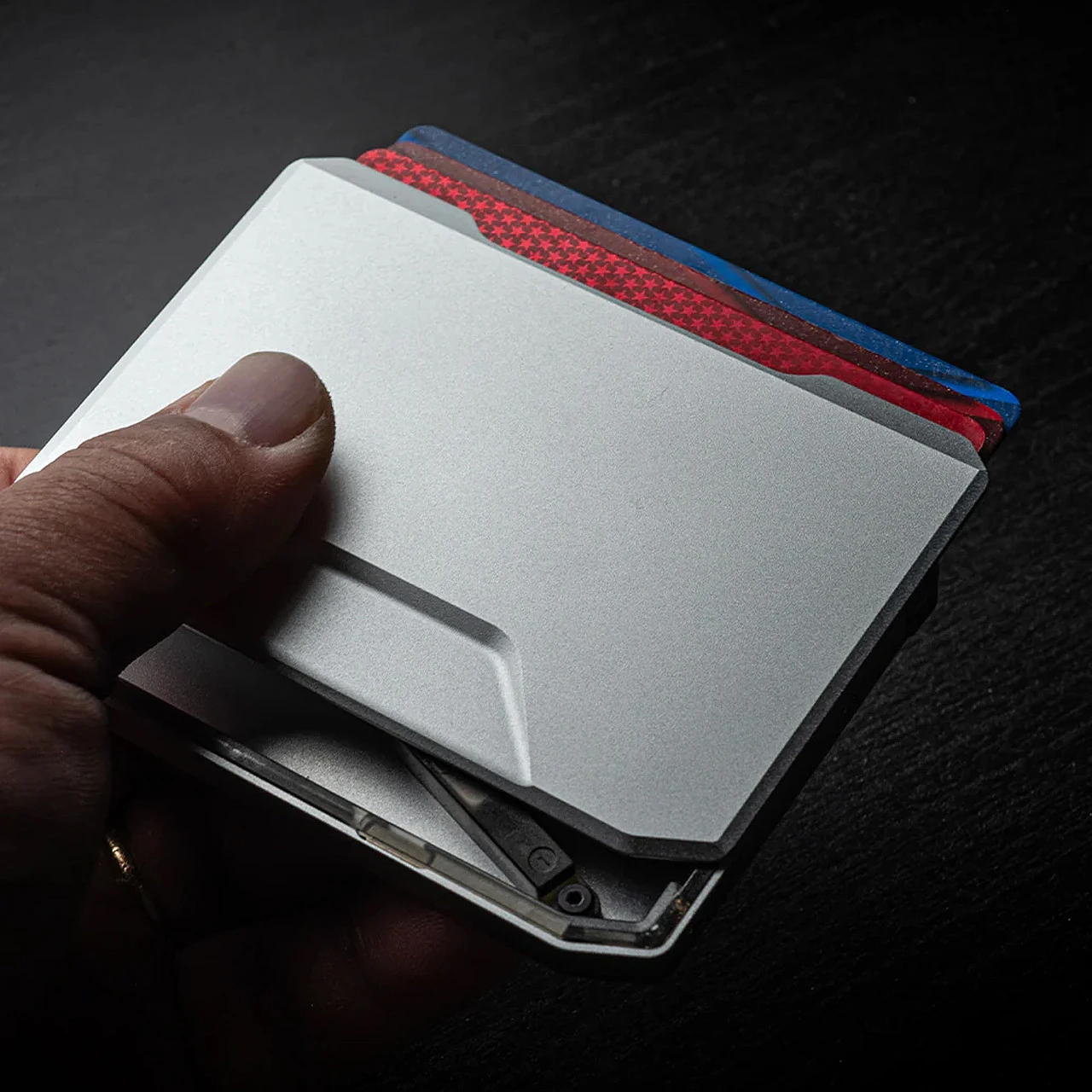
Women's clothing rarely offers the pocket depth or volume that men's cuts do. A slim card holder works where a traditional wallet won't. An EDC bag or a compact pouch carried in a handbag solves the pocket problem entirely, keeping the loadout organised without depending on clothing to do the work.
A Simple Way to Refine Your EDC over the Next Month
Give yourself a month. Carry what you normally carry, then look back honestly at what you actually used. Not what you intended to use. What you reached for. That review tells you more than any gear guide. If something sat untouched for four weeks, it probably doesn't belong in your everyday carry. Move it to a bag, a drawer or pass it on.
Before adding anything new, work through what's already there. Remove one item you don't use. Reduce duplicates. Improve how things are organised. A key organiser, a slimmer wallet, a pouch that keeps your EDC together. These changes cost less and deliver more than another piece of kit.
The right carry style is the one you'll actually use, comfortably, every day. Not the most impressive loadout. Not the most tactical. The one that fits your routine, clothing and environment without requiring effort or compromise.
For anyone carrying in the UK, that also means keeping the legal context in mind. A considered EDC is appropriate for where you are and what you're doing.
Start there. Edit before you add. The loadout that works is almost always the simpler one. If you'd like a second opinion on any of it, we're here. Book a free Heinnie Kit Assist call and talk it through with someone who carries this stuff every day.
Why not check out our other great blogs For Gear Recommendations And Outdoor Survival Tips