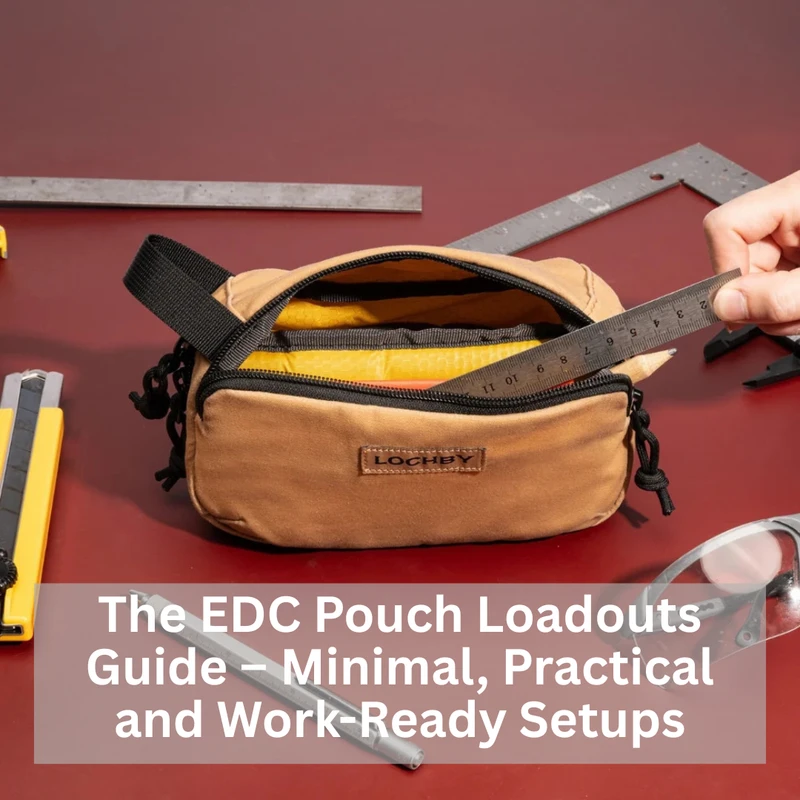
The EDC Pouch Loadouts Guide – Minimal, Practical and Work-Ready Setups
Posted by Heinnie Haynes on 15th Apr 2026
An EDC pouch is for anyone who's tired of fishing around at the bottom of a bag for something they use every day. It's best for consolidating the tools, kit and essentials you actually reach for: a torch, a multi-tool, a pen, a charging cable, a spare blade. It's most useful the moment your day stops being predictable - a commute that turns into an overnight, a site visit that demands more than you packed, a moment when you need the right tool and you need it in three seconds. Our range contains everything from slim organisers to modular multi-pouch systems. This guide covers three real-world loadout scenarios (minimal, practical and work-ready) so you can see exactly how a pouch changes the way you carry, not just what you carry.
Why Pocket Organisation Matters
Most people don't lose kit. They just can't find it when it counts.
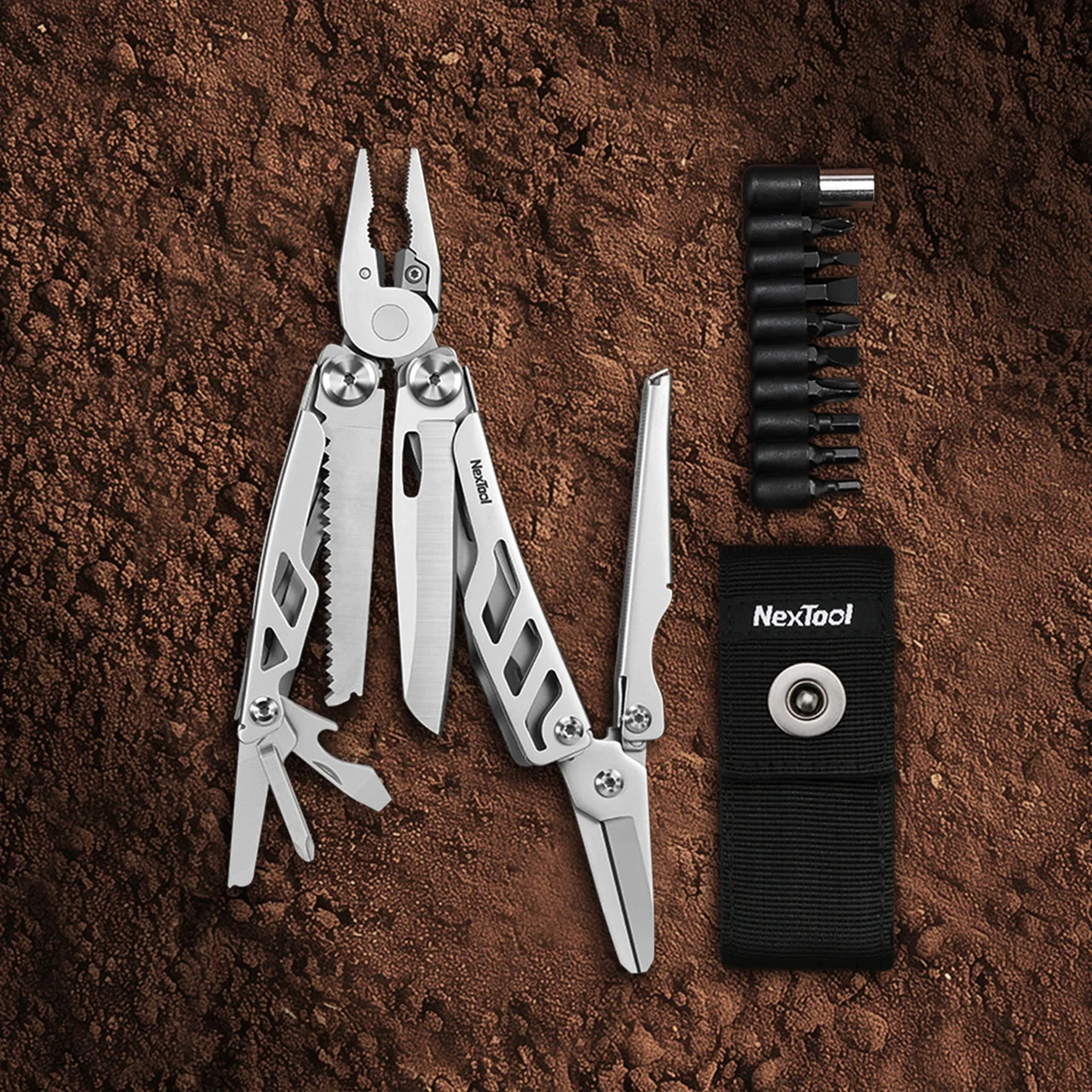

A loose torch rolls to the bottom of a rucksack. A multi-tool sits in a jacket pocket until it doesn't. A pen disappears the moment someone asks you to sign something. The problem isn't the gear - it's the absence of a system around it.
A well-packed EDC pouch solves this without turning your carry into a logistics operation. Everything has a home. Everything comes out the same way every time. That consistency is where the real value is. Not in the pouch itself, but in the habit it builds around your carry.
There's also a secondary benefit that doesn't get talked about enough: restraint. When you have a fixed pouch with defined capacity, you stop chucking things in on the off-chance. You carry what you need. You carry it deliberately. That shift from accumulation to intention is what separates an organised carry from a cluttered one.
What to Look For
Not every pouch suits every carry, and the wrong choice usually announces itself about two days into using it. Here's what to weigh up before you commit.
Size and form factor
The most common mistake is going too large. A pouch that fits your entire kit with room to spare will shift, sag and slap around inside a bag. Size down until the contents fill the pouch with a little resistance. That tension is what keeps everything in place.
Slim flat-lay pouches suit minimal carries: a handful of items you want accessible in seconds. Tiered or accordion-style organisers suit deeper loadouts where you're sorting cables, tools and documents alongside your daily essentials. Roll pouches work well for workshop or field carry where tools need to be visible and retrievable without unpacking everything.
Material
Nylon and CORDURA are the workhorses: lightweight, wipe-clean, tough enough to take daily abuse. Canvas carries more weight but rewards those who want a pouch that softens with use and develops a character of its own. Waxed canvas sits between the two - it's weather-resistant without the tactical aesthetic of ballistic nylon, which suits some users better than others.
For EDC in the UK, where damp is the default condition, water resistance matters more than it might elsewhere. Even a DWR-treated nylon outer keeps your kit dry on the walk from the car park.
Closure type
Zip closures are the most secure and the most common. YKK zippers are built to a higher standard than most generic alternatives and are a reliable indicator of overall build quality. Velcro closures are faster to open but noisier and less durable over time. Magnetic closures look clean but offer limited security for anything heavier than cards and cables.
Organisation inside
Elastic loops, mesh pockets and zip-out panels each solve a different problem. Elastic loops hold pens, torches and knives in fixed positions. Mesh pockets compress cables, batteries and smaller accessories without obscuring them. Zip-out panels let you pull a sub-section of your loadout away from the main body - useful if you're pulling your kit into different bags at different times of day.
MOLLE compatibility
If you're attaching a pouch to a bag, vest or pack, MOLLE webbing changes your options significantly. It locks the pouch in place, distributes weight evenly and lets you reconfigure your system without buying new gear. Not every use case needs it, but it's worth understanding whether your bag supports it before you buy.
The Classic Pocket Carry Set Up
This is the loadout for anyone who wants the smallest possible footprint: one slim pouch, five to seven items, no redundancy and no weight you didn't put there deliberately.
The minimal carry works because it asks you to make decisions before you leave the house, not during the day. You're not reaching in for the right thing — you already know where it is.

The pouch: A flat zip organiser in the 15 cm x 10 cm range. Slim enough to sit in a jacket inner pocket or the front pouch of a daypack. Tough enough to take daily handling.
The loadout:
- Folding knife: non-locking, sub-7.62cm blade, legal to carry anywhere in the UK without good reason. A Victorinox Cadet or a slim friction-folder keeps the profile thin.
- Compact torch: a AAA-cell torch in the 60-100 lumen range. Enough output for practical use, small enough to forget it's there until you need it.
- Pen: something that writes first time, every time. A Fisher Space Pen or a machined brass bolt-action writes at any angle, in any weather.
- Charging cable: a short 20cm braided USB-C cable coiled with a velcro tie. Takes up almost no space.
- Card or cash: a slim card sleeve rather than a full wallet keeps the profile honest.
That's it. Five items. Everything accessible in under five seconds.
The minimal carry is most useful for days where your main bag is left at the office or in the car and you're moving through the day with just a jacket or a small shoulder bag. It removes the choice fatigue of re-packing by giving you one pouch that's always ready.
How to Carry Your EDC Efficiently
The best-packed pouch in the world fails if it's buried under three other things every time you reach for it. Carry position matters as much as carry contents.


In a jacket or fleece: An inner chest pocket keeps a slim pouch at chest height - accessible, secure and protected from the weather. Most quality travel and outdoor jackets are sized for exactly this. It's the fastest retrieval position available.
On a belt or MOLLE platform: A belt-mounted pouch at the 3 or 9 o'clock position is the fastest retrieval outside of a jacket pocket. It works well for tradespeople, site workers and those who spend extended time outdoors. MOLLE pouches on a bag harness give you similar access without the belt bulk.
The one-bag approach: If your daily carry is a single bag (backpack, sling or briefcase) consider a modular system where the pouch detaches cleanly. You can pull the whole pouch and hand it over, slot it into a different bag for a weekend trip or leave it by the door as a ready-to-go kit. That modularity is the closest thing EDC has to a life hack.
The rule of two: Keep your most-used item and your emergency item within the same hand's reach. Everything else can live deeper in the system. If your torch and your multi-tool aren't accessible at the same time, re-pack.
Advanced Pocket Carry Hacks
Once you've run a basic loadout for a few weeks, you'll know what you reach for most. That's when it's worth refining.
Layer by frequency, not by category
Most people organise by type: cables together, tools together, lights together. Organise by frequency instead. What do you reach for ten times a day? That goes at the top of the pouch, closest to the opening, in the slot with the least friction. What do you reach for once a fortnight? That can live in a zip-pocket inside.
Run a kit audit
Every few weeks, empty the pouch entirely. What came out that you didn't touch? Either it earns its place back or it doesn't go back in. Carry creep is real - pouches accumulate weight the same way bags do. The audit keeps the system honest.
Seasonal swaps
Your summer carry and your winter carry don't need to be the same. In winter, a hand warmer, a compact fire starter or an additional light source earns its place. In summer, you can strip back. Keep a note of what you removed and restore it at the right time.
The go-bag insert
If you use multiple bags (a work bag, a weekend pack, a gym bag) a single pouch that moves between them removes the risk of forgetting something. The pouch is the constant. The bag is just the platform it's attached to. This is the single biggest carry improvement most people make.
Cable management
Loose cables are the enemy of a functional pouch. Short cables coiled with velcro ties, a small cable reel, or a dedicated cable organiser sleeve each solve the problem differently. The right answer depends on how many cables you carry and how often you use them. One cable: velcro tie. Three or more: a dedicated sleeve.
Redundancy without bulk
The advanced carry user tends to duplicate critical items at low weight: a second source of light (keychain torch), a second cutting tool (a small SAK on the keyring), a second writing instrument. None of these add meaningful weight. All of them remove meaningful friction when the primary item is unavailable.
Our Top Picks
These are the pouches we'd recommend across three scenarios. Each one suits a different type of carry and a different type of user.
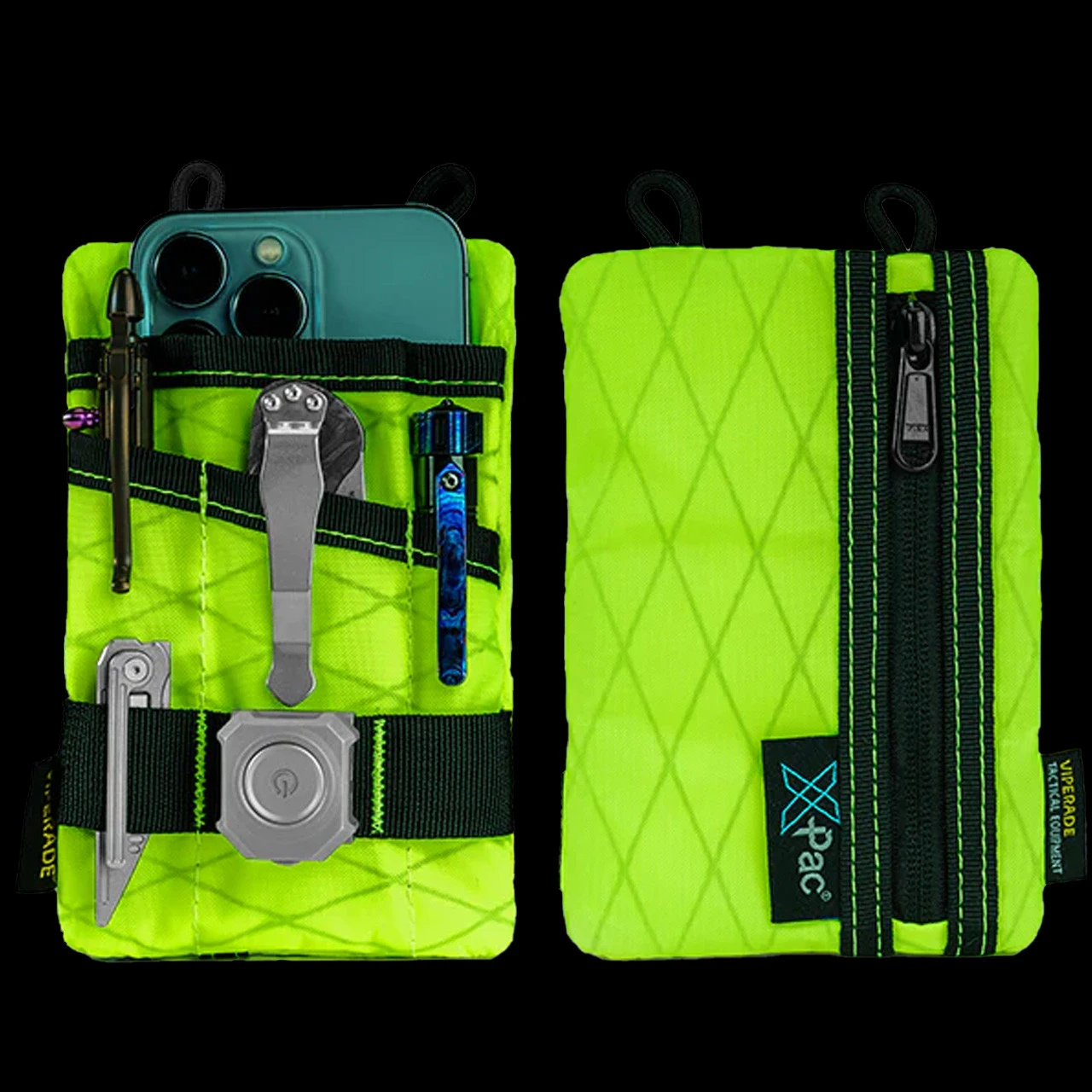
For the Minimal Carry: Viperade VE1 XPAC Pocket Organiser
The VE1 XPAC is the minimal carry standard. It measures 15.5cm × 10.5cm and sits comfortably in a jacket inner pocket or cargo trouser pocket without adding noticeable bulk. One side holds a YKK-zipped compartment for cards, cash or a flat battery; the other opens into four slip pockets that keep a torch, knife, pen and spare tool separated and instantly retrievable. The X-Pac sailcloth construction is waterproof, lightweight and wear-resistant - meaningfully more so than standard nylon for everyday UK weather. MOLLE loops and two top paracord loops mean it can attach to a bag or be worn as a neck pouch if needed. Pack it with five items, leave it packed, and you're ready every day without thinking about it.
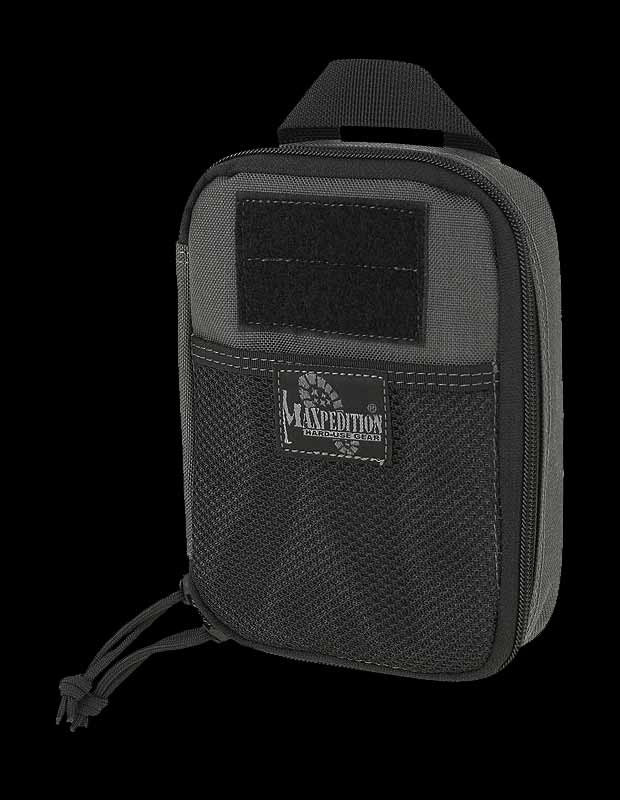
For the Practical Carry: Maxpedition Fatty Organiser
The Fatty earns its name honestly. It opens flat into two panels, giving you full visibility of the entire contents at once: elastic loops and a slip pocket with nine divisions on the left, a zip pocket and elastic organiser with six divisions on the right. There's enough depth to take a multi-tool, torch, cables, pen and small notebook without compression. It's not a slim pouch but it's a complete one. If you're carrying ten items rather than five, this is where you start.

For the Work-Ready Carry: Helikon-Tex Backpack Panel Insert
The Helikon-Tex Backpack Panel Insert is designed to drop into a larger bag and function as a standalone organisation layer. It attaches via a G-Hook to Helikon-Tex's own packs and is compatible with their Versatile Insert System, but it works just as well dropped loose into any bag with a front organiser compartment. A carry handle, zippered pocket and elastic cuffed pocket keep different categories of kit separated and accessible. It can also hang from a car seat headrest, making it useful for vehicles as much as bags. For tradespeople, site workers or anyone whose daily carry extends beyond personal items into job-specific tools, this gives structure to a loadout that would otherwise collapse into a main compartment.

For the Modular System: Viperade VE18 XPAC Pocket Organiser
The VE18 is the carry user's Swiss Army knife of pouches. It packs two EDC tool slots, two zippered pockets, a phone or notebook pocket, a dedicated multi-tool slot and two MOLLE webbing straps into a wrap-around XPAC body with a YKK zipper throughout. The MOLLE straps let it attach to a bag, vest or belt. Two paracord loops let you add a shoulder strap and run it as a sling pouch. A velcro panel on the front takes patches for identification or personalisation. It's the pouch that keeps working when the day changes around it: move it from the commute bag to the weekend pack to the belt without repacking anything. If your carry needs to travel between platforms and stay organised through all of them, the VE18 is where to start.
Final Verdict
The right EDC pouch isn't the one with the most pockets or the toughest construction. It's the one you actually use every day without thinking about it.
Start minimal. Five items, one slim pouch, one fixed location. Run that for two weeks and see what you reach for most. Then expand only where the carry isn't covering you. Add depth when you need it. Add modularity when your carry crosses multiple bags. Add redundancy when the cost of not having something is higher than the weight of carrying a backup.
The three scenarios in this guide (minimal, practical and work-ready) are three different answers to the same question: what do you need, and where does it need to be? Pick the scenario that fits your day and refine from there. Every carry is personal. A pouch just gives it a home.
If you're not sure where to start, the Heinnie Kit Assist team will help you build a loadout that fits your actual life - not the idealised version of it.
Why not check out our other great blogs For Gear Recommendations And Outdoor Survival Tips