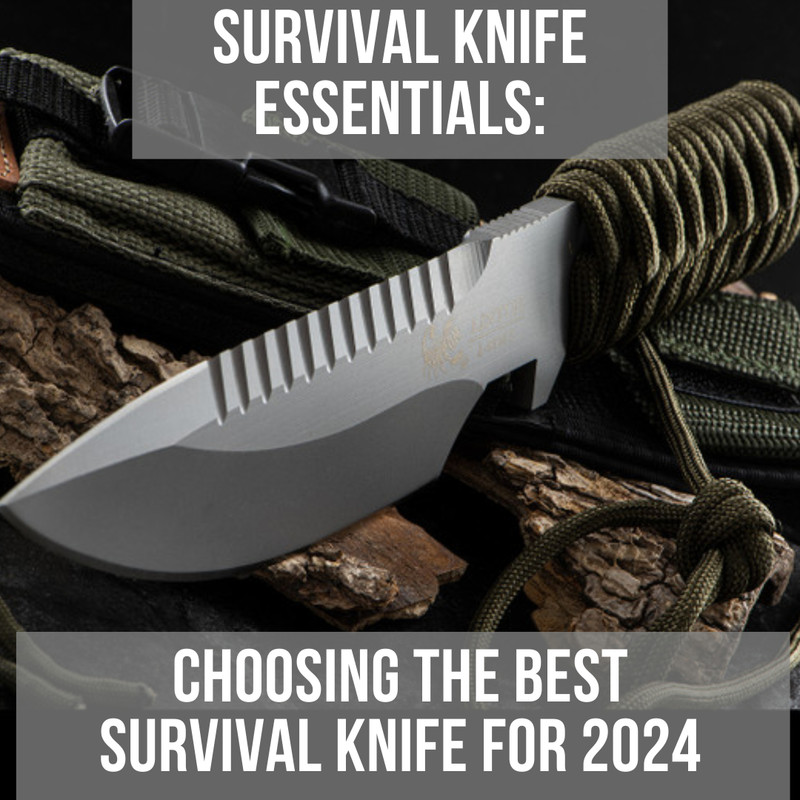
Choosing the Best Survival Knife for 2025
Posted by HH on 8th Dec 2025
Key Takeaways:
- These large survival knives aren't all new for 2025, but they're all genuinely excellent choices across different manufacturers based on blade shapes, finishes and proven field performance.
- Survival knives types vary from fixed-blade models offering strength and reliability, to bushcraft knives designed for woodcraft, and multifunctional survival knives equipped with additional features.
- Critical features to prioritise include blade steel type (stainless steel for corrosion resistance or carbon steel for edge retention), handle materials like micarta for durability, and innovative materials such as Elmax steel.
- Maintaining your survival knife through regular cleaning, sharpening, inspection, oiling and proper storage ensures safety and functionality when needed most.
- Different scenarios require different knives: robust full-tang fixed blades for wilderness exploration, compact lightweight knives for everyday carry, and specially-designed tools for bushcraft work.
- You can legally own and use survival knives in the UK for wilderness and bushcrafting activities, though carrying knives in public places is subject to strict regulations.
The best survival knife is the one you have with you. That said, if you've time to choose, we've picked ten exceptional models across different manufacturers based on blade shapes, finishes and proven field performance. These recommendations are drawn from Heinnie Haynes' position as market leader with nearly 30 years of expertise in tactical gear and outdoor equipment. Since Bruce placed that first Leatherman ad in Maxim magazine back in 1996, we've built our reputation on honest advice about quality knives. Now employee-owned since 2020, we continue that tradition by recommending only knives we'd trust in genuine survival situations.
What Makes These Survival Knives Stand Out?
These large survival knives aren't all new for 2025, but they're all genuinely excellent choices. Presented in no particular order, each brings something valuable to different survival scenarios.
- Joker Nomad - Micarta 16.5cm Bushcraft and Survival Knife: Full-tang blade made of Böhler N695 stainless steel
- KA-BAR Camp Turok: 1095 Cro-Van steel with full tang construction
- Mora Bushcraft Orange Survival Knife: 3.2mm thick Swedish stainless steel blade
- Gerber Survival Knife: Solid, half-serrated blade
- Real Steel Bushcraft Plus Fixed Blade: Convex grind on the 14C28N stainless steel blade with full tang construction
- Fallkniven F1X Elmax Fixed Blade: An evolution of the classic, Swedish quality Elmax steel
- Brisa Bigmuk Curly Birch: Thoughtful, versatile design tailored for outdoor and bushcraft tasks
- Tops Armageddon Fixed Blade: Unique combination of machete and large camp knife characteristics
- Fox Parus with Survival Kit: Versatility and durability as a survival tool
- Condor Mountain Pass Surveyor Knife: Practicality and utilitarian design
Recommended Survival Knives Comparison
| Knife Model | Blade Steel | Key Feature | Tang Type | Best For |
|---|---|---|---|---|
| Joker Nomad Micarta 16.5cm | Böhler N695 Stainless | Full-tang construction | Full Tang | Bushcraft & Survival |
| KA-BAR Camp Turok | 1095 Cro-Van | Robust construction | Full Tang | Heavy-duty Camp Tasks |
| Mora Bushcraft Orange | Swedish Stainless | 3.2mm thick blade | Full Tang | All-round Bushcraft |
| Gerber Survival Knife | Stainless | Half-serrated blade | Full Tang | Multi-purpose Survival |
| Real Steel Bushcraft Plus | 14C28N Stainless | Convex grind | Full Tang | Precision Bushcraft |
| Fallkniven F1X | Elmax | Swedish quality steel | Full Tang | Premium Wilderness Use |
| Brisa Bigmuk | Curly Birch handle | Thoughtful design | Full Tang | Detailed Bushcraft Work |
| Tops Armageddon | Heavy-duty | Machete/knife hybrid | Full Tang | Large Camp Tasks |
| Fox Parus | Stainless | Includes survival kit | Full Tang | Survival Kit Integration |
| Condor Mountain Pass | Surveyor design | Utilitarian build | Full Tang | Field Work |
How Do Different Survival Knife Types Match Your Needs?
Survival knives are specially designed blades for outdoor survival situations. Their types and uses vary widely depending on your specific needs and skills.
Fixed-blade survival knives are solid choices for survival because of their strength and reliability. Like the Gerber model mentioned above, a fixed blade has no moving parts, so it can handle demanding tasks like chopping and wood processing without risk of breaking. The size and design of the blade, including full tang construction, make these indispensable survival tools. You'll find the best selection of fixed blade knives spans everything from compact field knives to larger wilderness blades.
Folding knives are compact and portable, making them convenient for everyday carry. However, they're generally not as robust as fixed-blade knives, which is why our list doesn't include any folders, as they're better suited for lighter tasks such as cutting small kindling or preparing food.
Bushcraft knives are specifically designed for woodcraft and wilderness survival. Knives like the Joker Nomad Micarta offer versatility in outdoor activities. Their design focuses on wood preparation, precision cutting and ease of handling. They're often full tang as well. Browse our complete bushcraft knives collection to see how these differ from standard survival models.
Multifunctional survival knives come equipped with additional features such as serrated edges or survival kits containing items like fire starters and fishing tools. These all-in-one packages, the Fox Parus with Survival Kit, combine multiple survival needs into a multipurpose tool.
When selecting a survival knife, consider the tasks you'll undertake. A hefty fixed-blade may be paramount for building shelters and procuring firewood, a lighter folding knife is sufficient for day hikes and less demanding challenges. Always choose a knife that'll perform reliably under the specific conditions you anticipate.


What Key Features Should You Prioritise?
A critical factor when choosing a survival knife is the blade steel. There are two main types of steel used in knife blades:
- Stainless steel offers excellent corrosion resistance, making it ideal in wet conditions. However, it may not hold an edge as well as other types.
- Carbon steel is known for maintaining a sharp edge longer and is perfect for precision tasks. It's not as resistant to rust, though, so proper maintenance is key.
To learn more about different steels, check out our complete guide to survival knife and tool steels.
| Steel Type | Edge Retention | Corrosion Resistance | Ease of Sharpening | Best Use Environment |
|---|---|---|---|---|
| Stainless Steel | Good | Excellent | Moderate | Wet/marine conditions |
| Carbon Steel | Excellent | Poor-Moderate | Easy | Dry environments with proper care |
| Elmax | Excellent | Excellent | Moderate | All conditions (premium) |
| 14C28N Stainless | Very Good | Very Good | Easy | General outdoor use |
| Böhler N695 | Very Good | Excellent | Moderate | Versatile conditions |
The handle of your knife plays a significant role in performance. A micarta handle is durable, has good grip even when wet, and withstands extreme temperatures, ensuring ergonomic efficiency.
Some survival knives feature innovative materials such as Elmax. The Fallkniven F1x Elmax, fixed blade, is made of high-alloy powder steel known for high wear resistance and notable corrosion resistance.
Remember, a good knife balances these features to suit your specific needs, whether that be bushcraft, emergencies or general outdoor use. Always assess the knife's capabilities against the challenges you anticipate facing in the wild.
How To Maintain Your Survival Knife Correctly?
When you're in a survival situation, the integrity of your equipment is crucial for your safety. A survival knife, particularly one with a full tang, signifies strength where the blade extends down the entire length of the handle, offering superior durability.
Choose blade material wisely. Carbon steel is harder (so good for fire striking) with a longer-lasting edge, so it won't need sharpening as often but is more difficult to sharpen when required. Stainless steel is softer, so it is easier to sharpen.
Maintaining your knife's condition ensures its safety and functionality when you need it most. Here's a brief guide on caring for your survival knife.
- Clean your knife regularly: Wipe the blade after each use. Use mild soap and water for cleaning, and dry thoroughly.
- Regular sharpening: Maintain the edge with a honing stone. Periodic sharpening prevents the blade from dulling. Our knife sharpening systems make this straightforward.
- Inspect for wear and tear: Check for any cracks or damage, especially before expeditions.
- Oil the blade: For a carbon steel blade, apply a light coat of oil to prevent rust. Find maintenance products in our knife care section.
- Store properly: Keep in a dry, safe place. Use a sheath to safeguard the blade and prevent accidents.
| Maintenance Task | When Required | Carbon Steel | Stainless Steel |
|---|---|---|---|
| Wipe blade clean | After each use | Essential | Essential |
| Deep clean with soap & water | As needed | Essential (dry thoroughly) | Recommended |
| Apply protective oil | For carbon steel blades | Essential | Optional |
| Sharpen edge | Periodic maintenance | As needed | As needed |
| Inspect for damage | Before expeditions | Essential | Essential |
| Store with sheath | When not in use | In dry, safe place | In dry, safe place |
Your knife is a trusty companion in the wild. Its overall durability depends on how well you look after it. Handling it with respect and care extends its life and ensures it's ready when you face any challenge.
Which Survival Knife Suits Different Scenarios?
When considering the ideal survival knife for diverse scenarios, it's essential to factor in various environments and uses.
For wilderness exploration, a robust, full-tang knife with a fixed blade ensures reliability. The Mora Bushcraft Orange Survival Knife, with its sturdy construction and grip, is well-suited to such conditions. It provides versatility for tasks from preparing kindling to shelter building.
In pursuit of remote area exploration, a multi-functional tool such as this is indispensable. The right knife can serve as a vital survival tool, doubling as a hunting knife in the wild. A wilderness adventuring knife should have these characteristics:
- Fixed blade for strength and reliability
- Comfortable handle to ensure a secure grip in all weather conditions
- High-quality steel, such as stainless or carbon steel, for durability and ease of sharpening
For everyday carry, compact and lightweight knives are ideal. They merge convenience with functionality, allowing for daily use without burden. Features for EDC knives include portability (a compact size that fits comfortably in your pocket) and durability (a robust build to handle daily tasks efficiently).
For bushcrafters, a specially-designed tool like the Brisa Bigmuk Curly Birch is apt. Its size and shaped handle provide excellent control for precise cuts, an important feature for intricate bushcraft work. Knives with a burl wood handle have a comfortable grip and add a unique aesthetic appeal.
Notwithstanding the scenario, prioritise a knife that balances functionality, ergonomics and price to meet your needs.
Are Survival Knives Legal to Own in the UK?
You can own a survival knife in the UK and use it in the wilderness for bushcrafting activities. Be aware that carrying a knife in a public place is subject to strict regulations. Folding knife blades over 7.62cm require a valid reason for carry; locking knives are prohibited from being carried in public without good reason, as are fixed blade knives. Read our comprehensive guide to knife laws in the UK for complete details on legal ownership and carry.
Where Can You Get Expert Survival Knife Advice?
Since 1996, we've built our reputation on honest, practical advice over sales hype. Now operating from Barry as an employee-owned business, we maintain the same commitment to quality and service that Bruce established nearly three decades ago. Browse our complete survival knife collection or reach out to our team for personalised recommendations based on your specific needs.
Frequently Asked Questions
Is it permissible to own a survival knife in the UK?
What features should the best survival knife possess?
How do you effectively use a flint with a survival knife?
What makes a military survival knife distinct from other types?
Which blade steel is better for survival knives?
Why not check out our other great blogs For Gear Recommendations And Outdoor Survival Tips