Pay in 3 interest-free payments on purchases from £30-£2,000 with Paypal. Learn More
Need this item fast?
Click & Collect
Collect it from a choice of over 2,800 stores
Easy Returns
Shop confidently with hassle-free 60 day returns
Description
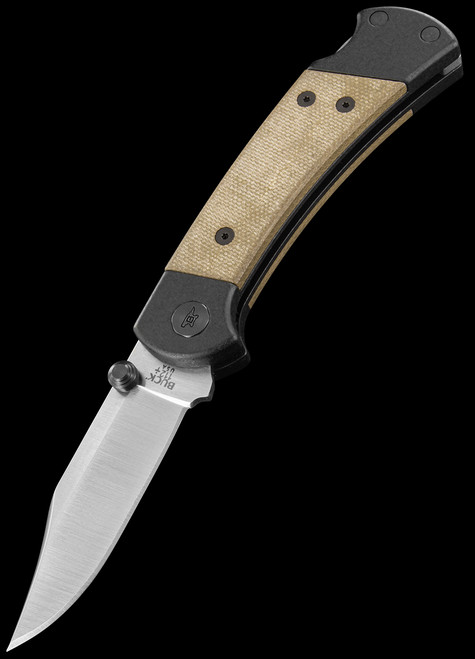
Based on an American classic, the 112 Ranger, the Buck 112 Slim possesses the same traditional features but sports a more modern look. The deep carry pocket clip is added based on the overwhelming customer demand and allows for quick and easy access. With easy one-handed opening, the 420HC stainless steel blade provides supreme edge retention and is finished with Buck’s Advanced Edge2x Blade Technology. The 7.25" knife folds down to a convenient 4.25" when closed. To decrease the weight and thickness, the heavy bolster and handles are replaced with a lightweight molded nylon while still maintaining the same quality and rigidity of the original 112.
If you loved everything about your 112, except the weight, this one will be a revelation. Disappears in your pocket- with or without the clip- but still has the hefty, reliable steel, of the original. The business end of the knife is almost identical to it's forbear, with a subtle stonewash finish. Still that versatile shape and size but more likely to find it's way into your hiking pack, than the ebony and brass bound version. Still feels solid and safe in your hand, if a little slimmer.
If you really enjoy a beefy knife, this may not be suitable. If you like Buck blades but not the bulky trimmings.....? This may solve that problem and become a long time companion.
5
Modern interpretation of a classic design
Posted by Stevo on 3rd Mar 2025
Sturdy, reasonably compact, and neatly assembled. Blade is very well centred, with nice symmetry. The cutting edge is clean and crisp, with quite fine grinding marks. A quick light strop improved the keenness; but in fairness, no burrs were present anywhere along the edge. The base of the back of the blade, where it mates with the locking bar, has a tiny flared profile, as does the top of the locking bar. Together these little flared shapes form a miniature bump at the back of the knife. This is an interesting feature that I have not seen before. In no way is the bump uncomfortable in use, nor does it detract from the smooth lines and ergonomic contours of the pocket knife. At a guess, perhaps these matching flared features are designed to strengthen the locking mechanism, by increasing the contact area between the blade and the lock. Or maybe the extra material is meant to strengthen the lock when heavier cutting chores are encountered, which would tend to increase pressure on the mating end of the locking bar. Just a thought. And the lock certainly does seem rigid. There is absolutely no lateral or rotational play. Rock solid. The understated stone wash blade finish is a practical choice for reducing the appearance of scratches and scrapes, whereas the traditional finely ground surface of the original Buck 112 Ranger model will, of course, show its honourable scars with pride. But, for a collector, those first few evidences of wear and tear are a tiny yet personal source of chagrin and remorse. If you want to keep your lovely gleaming brass and Macassar Ebony original model 112 in virtually unused condition (as I intend to), then the Slim 112 as reviewed here is a comparatively inexpensive and dimensionally similar option. Everyone is perfectly entitled to their own choices, of course, so the Slim 112, with its “everyday” stone washed finish is perhaps less pretty, but more serviceable, I think. The tough but well fitted nylon scales of the Slim 112 offer an excellent grip, a comfortable texture that is neither rough nor slippery, hand - fitting proportions, and the option of using, ignoring, reversing, or else removing the unobtrusive pocket clip. When slipped into a convenient pocket, with or without clipping the Slim 112 in place, due to the slimming effect of the modern construction, it really carries almost without notice, something that the original 112 Ranger does not really do. Although the original 112 is sleek and relatively compact, all that brass, exotic hardwood, and steel - a well respected example of usefully sculpted cutlery art, chunky and invitingly tactile - is still a bit on the heavy side. Not the Slim 112, however. Although the new 112 has only seen light use around the home so far, it seems to be a completely worthy descendant of the original design. The thumb studs work just fine as intended for one hand ambidextrous opening. As with any new folder’s locking mechanism, it is worth practicing to get used to a particular model’s characteristics. This also helps the new action to wear in. A drop of oil will flush out any grit. There are a few different ways to operate a Buck lock back design. It is worth practicing different techniques, with either hand; and with both hands. Opening the Slim 112 with two hands is quick and simple. There is no nail nick to locate; just pinch the blade and pull. It instantly snaps to attention. Quiet deployment can easily be achieved by depressing the lock, then releasing it when the Buck is fully opened. So, the overall impression is: well made, excellent fit and finish, especially at this welcome price point, slender, comfortable and fairly lightweight, well balanced, and ready to go straight out of the box. Well worth it.
5
Buck 112 Slim Select
Posted by Ray on 3rd Feb 2025
Wanted a pocket friendly proper Buck knife. I have a couple of copies but they are heavy. This 112 is a sturdy well made knife and light in the pocket. Plus it is a genuine Buck.
4
Buck 112 ss
Posted by Buck 112 ss on 29th Aug 2024
Bought the 112 ss to replace my now rarely carried Buck 110 fg. I no longer am able to belt carry due to surgery & the traditional 110 is too lumpy for my pockets! I've used this to paunch rabbits, strip pallets, in the garden and even sharpen me pencil. As solid feeling as its traditional beginnings. Good lock up & easy one hand deployment. The scales are nice and grippy even with wet hands & the deep carry clip adds a swell to the palm without producing a hot spot. Takes a screaming sharp edge quickly and holds it well enough for normal pocket knife use. It's very, very light but very sturdy in hand. Very pleased with it so far 4☆ because needs to last a few years & keep performing for the full 5☆ rating. Will be buying the 110 version very soon I think.
5
Buck 112 lightweight user
Posted by Steven Oliver on 1st May 2024
A nice lightweight, slimmed down version of the 112, without breaking the bank.
Pocket clip has good retention, if a little big. No blade play, which is a bonus, and decent lockup.
Only thing that’s missing is a sharpening choil, which I’ve now added. Also came razor sharp.
5
Buck ranger 112 slim select
Posted by Angela Bewley on 14th Sep 2023
Very happy with knife, good quality.
5
Brilliant
Posted by Steve on 23rd Feb 2023
First class service from Heinnie
Very nice knife
Lightweight but sturdy to hold
Solid lock up
Blade razor sharp out the box
5
Buck 112 slim select pocket knife
Posted by Robert V. on 8th Nov 2022
It's exactly what I expected from a buck knife. Quality is excellent, super sharp right out of the box, very light, sits well in my jeans pocket with the clip and I find it very easy to open with one hand. Would recommend it to all my friends.
5
Great knife
Posted by Sam Marsh on 23rd Sep 2022
Buck are known as "One and Done" and you can see why. They're built sturdy and very sharp out of the box. This is no exception; great slicer, good steel and rebust yet light weight and the right size for the rear pocket. Thank you HH for the fast delivery as well!
Yes, this item is legal to own in the United Kingdom.
We base this opinion on our interpretation of UK Knife Law (see our blog). Be aware that there are different rules for owning and carrying knives in public in the UK. Read about the difference here.
Yes, this item is legal to own in the United Kingdom.
We base this opinion on our interpretation of UK Knife Law (see our blog). Be aware that there are different rules for owning and carrying knives in public in the UK. Read about the difference here.