The Ultimate Survival, Bushcraft, and Knife Guide: Part 2 – Bushcraft Tools and Gear: Reddit Answered
Posted by Heinnie Haynes on 7th Feb 2025
Reading time: 7 minutes
Key Takeaways:
- A well-rounded bushcraft kit includes versatile tools such as a survival knife, axe or hatchet, folding saw, fire-starting tools, paracord, water filtration system and cooking kit.
- The ideal axe for bushcraft weighs between 500 grams and 1 kilogram, with a handle length of 35 to 40 centimetres for optimal balance and control.
- Hickory and ash wood handles provide exceptional strength and shock absorption, while G10 and Micarta synthetics offer durability in demanding environments.
- Fire-starting methods without modern tools include friction techniques (hand drill, bow drill), flint and steel, and ferro rods that produce sparks at nearly 3,000 degrees Celsius.
- Effective wilderness shelter construction requires proper location selection, appropriate design (lean-to, A-frame or debris hut), and adequate insulation materials.
- Natural resource identification and use involves foraging edible plants, creating cordage from plant fibres and building with available materials like bark and moss.
- Water purification methods in survival situations include boiling for at least one minute, chemical treatments, UV purifiers, portable filtration systems or improvised natural filters.
- Essential bushcraft cordage can be crafted from inner tree bark, plant fibres, nettles or animal sinew through stripping, softening and twisting techniques.
- Critical knots for bushcrafters include the bowline, taut-line hitch, clove hitch, square knot, figure-eight, sheet bend, and Prusik knot.
- Natural navigation techniques include using the sun's position, North Star in the Northern Hemisphere, shadow stick method and tracking natural landmarks, though natural indicators like moss growth are unreliable.
Welcome to Part 2 of Heinnie Haynes' ultimate guide to survival, bushcraft and outdoor essentials. In this instalment, we turn our attention to bushcraft tools and gear, the indispensable items that make thriving in the wilderness not only possible but efficient and enjoyable.
As experts in outdoor tools and survival equipment, we have compiled answers to some of the most commonly asked questions about bushcraft kits on Reddit and examined how to choose the right tools for the job. Whether you're a beginner seeking bushcraft gear for beginners or an experienced outdoorsman upgrading your wilderness survival tools UK collection, understanding the fundamentals of gear selection ensures you're prepared for any outdoor survival skills challenge.
From axes to fire starters, we explore the essentials you need to master bushcraft and make the wild your home away from home.


What are the must-have tools for a bushcraft kit?
A well-rounded bushcraft kit is built around versatility and reliability. Essential items include:
Survival knife: Fixed-blade with full-tang construction for carving, food preparation and general tasks
Axe or hatchet: 500 grams to 1 kilogram weight for chopping wood and splitting logs effectively
Folding saw: Compact design for cutting branches and logs with minimal effort
Fire-starting tools: Ferro rod, waterproof matches and tinder for reliable ignition in all conditions
Water filtration system: Portable filter or purification tablets to ensure safe drinking water
Compact cooking kit: Lightweight pot and utensils for meal preparation
Multi-tool: Pliers, knife and screwdrivers for detailed work and repairs
Tarp or shelter material: Waterproof covering for weather protection
These tools work together to cover the fundamental needs of wilderness living: fire, shelter, water and food preparation.
Essential Bushcraft Kit: Complete Checklist
| Category | Item | Primary Purpose | Recommended Specs |
|---|---|---|---|
| Cutting Tools | Survival Knife | Carving, food prep, general tasks | Fixed-blade, full-tang, 10-15cm blade |
| Cutting Tools | Axe or Hatchet | Chopping wood, splitting | 500g-1kg, 35-40cm handle |
| Cutting Tools | Folding Saw | Cutting branches and logs | Compact, high-carbon steel blade |
| Fire | Fire-starting Kit | Creating fire in all conditions | Ferro rod, matches, tinder |
| Shelter | Paracord | Shelter building, securing loads | At least 15 metres, 250kg rating |
| Shelter | Tarp | Weather protection | Waterproof, 2m x 3m minimum |
| Water | Filtration System | Purifying drinking water | Removes bacteria and protozoa |
| Food | Cooking Kit | Preparing meals | Compact, lightweight metal pot |
| Multi-purpose | Multi-tool | Small tasks, repairs | Pliers, knife, screwdriver bits |
How do you select the right axe or hatchet for bushcraft?
Balance and durability are key when choosing an axe or hatchet. When searching for the best bushcraft axe UK enthusiasts recommend, prioritise balance, durability and handle quality over brand names alone.
Optimal specifications include:
- Weight: 500 grams to 1 kilogram - provides enough heft for effective chopping without becoming cumbersome
- Handle length: 35 to 40 centimetres - offers excellent control for varied cutting tasks
- Head material: High-carbon steel - ensures durability and ease of sharpening
- Handle materials: Hickory or ash wood for traditional shock absorption, or fibreglass-reinforced synthetics for modern resilience
Brands like Hultafors, BeaverCraft, and Cold Steel deliver superb craftsmanship and performance and are trusted by bushcrafters worldwide.
The right axe becomes an extension of your arm in the wilderness. Test the balance by holding it at the base of the handle. It should feel comfortable, with the weight distributed naturally. This simple check can save you arm fatigue during extended use.
What are the best materials for bushcraft tool handles?
The handle materials significantly impact the tool's performance and longevity.
Wood Handles:
- Hickory wood: Exceptional strength and natural shock absorption that protects hands from jarring impacts, making it the gold standard for axe handles
- Ash wood: Offers flexibility and impact resistance while remaining lightweight, performs well in temperate climates
Synthetic Handles:
- G10 composite: Combines durability with non-slip grip, performs consistently in wet conditions
- Micarta: Layered linen or paper composite ideal for demanding environments with minimal maintenance required
- Fibreglass-reinforced materials: Modern alternative offering excellent resilience and weather resistance
The handle material you choose should match your typical conditions. Wood handles work brilliantly in temperate climates but require proper care. Synthetic materials excel in wet environments and extreme temperatures. Consider where and how you will use your tools most frequently when making this decision.
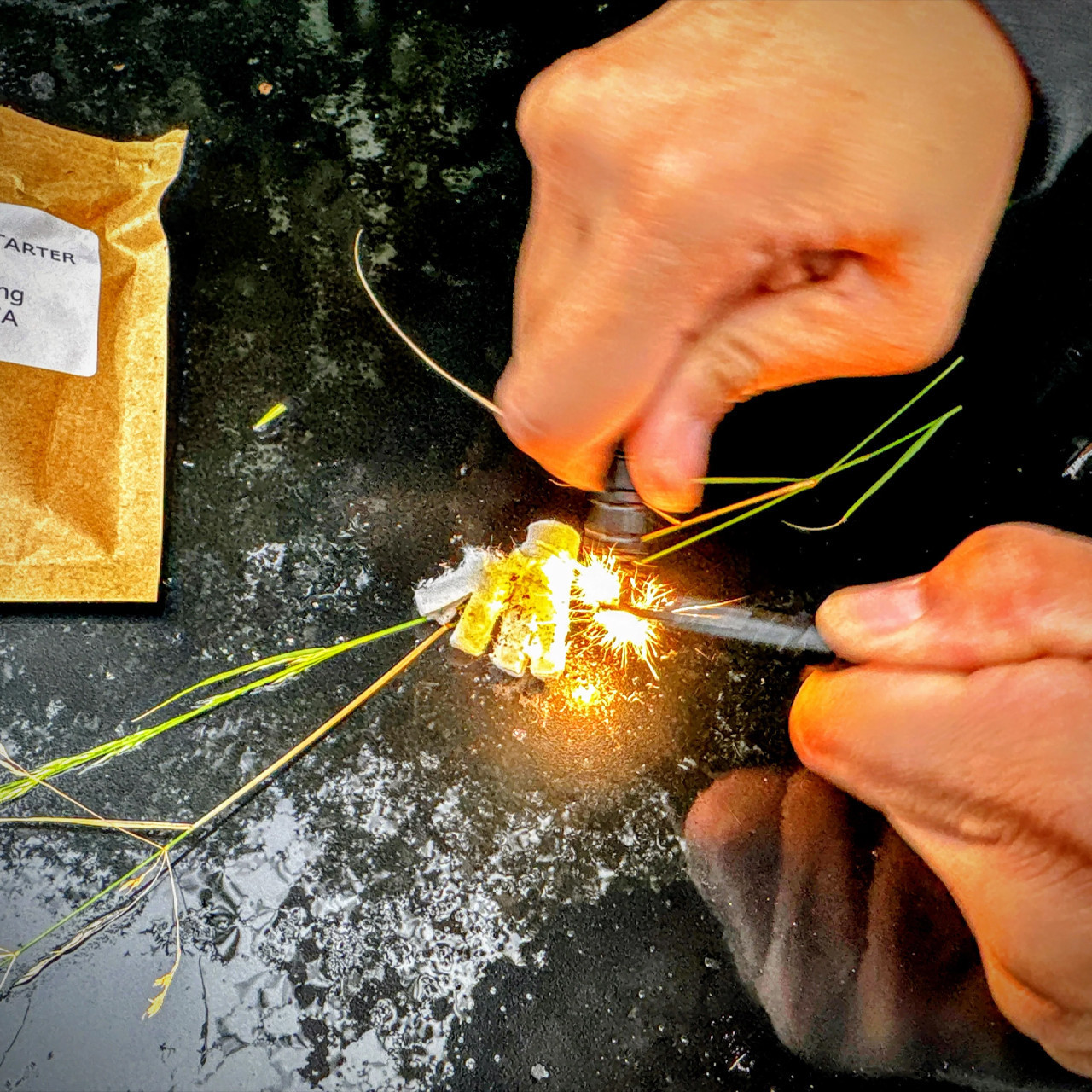
How can you start a fire without modern tools?
Fire is one of the most essential elements of survival, and natural fire starting techniques allow you to create it without modern conveniences.
Friction Methods:
- Hand drill: Generates heat through rapid rotation of a wooden spindle against a fireboard; requires significant practice and dry conditions
- Bow drill: Uses a bow mechanism to rotate the spindle, producing reliable embers with less effort than hand drill method
- Fire plough: Creates friction by ploughing a hardwood stick along a softer wood groove
Traditional Methods:
- Flint and steel - Timeless option producing hot sparks when struck together, often paired with char cloth or dry tinder to catch the spark
- Light My Fire Swedish FireSteel - Modern ferro rod offering a reliable take on traditional fire-starting, producing sparks that reach nearly 3,000 degrees Celsius

Fire-Starting Methods: Comparison Guide
| Method | Difficulty Level | Weather Reliability | Preparation Time | Best Use Case |
|---|---|---|---|---|
| Friction (Hand Drill) | Very Difficult | Low (requires dry conditions) | 15-30 minutes | Skill demonstration, emergency backup |
| Friction (Bow Drill) | Difficult | Moderate (works in damp conditions) | 10-20 minutes | Reliable primitive method |
| Flint and Steel | Moderate | High (works when wet) | 5-10 minutes | Historical reenactment, reliable backup |
| Ferro Rod | Easy | Very High (works in all conditions) | 1-3 minutes | Primary fire-starting method |
| Modern Lighter | Very Easy | Moderate (fuel affected by cold) | Instant | Quick convenience fires |
| Waterproof Matches | Easy | High (works when wet) | Instant | Emergency backup |
Preparation is key. Gather fine, dry tinder, such as grass or bark shavings, and gradually build your fire using small twigs before adding larger pieces of wood. Practising these techniques in advance ensures you are ready when it matters most. The difference between theory and practice is vast when it comes to fire-starting, so invest time honing these skills before you truly need them.
What are the most effective methods for building a shelter in the wilderness?
Shelter construction begins with choosing the right location. Primitive shelter building skills are essential outdoor survival skills for anyone venturing into wild camping equipment territory.
Location Selection Criteria:
- Natural wind protection from hills, dense vegetation or rock formations
- Elevated ground free from flooding risks and water pooling
- Access to building materials like branches, leaves and moss
- Avoid low-lying areas where cold air settles
Common Bushcraft Shelter Types:
- Lean-to shelters: Quick to build (1-2 hours), ideal for wind protection and short-term use
- A-frame shelters: Offer better rainproofing and insulation, suitable for multi-day camps
- Debris huts: Provide excellent warmth in colder conditions through superior insulation
Wilderness Shelter Types: Quick Comparison
| Shelter Type | Build Time | Weather Protection | Insulation | Best Conditions | Skill Level |
|---|---|---|---|---|---|
| Lean-to | 1-2 hours | Wind protection | Low | Mild weather, short-term | Beginner |
| A-frame | 2-3 hours | Rain and wind | Moderate | General use, multi-day | Intermediate |
| Debris Hut | 3-4 hours | Excellent all-round | High | Cold weather, winter | Intermediate |
| Tarp Shelter | 30 minutes | Good rain protection | Low | Quick setup, temporary | Beginner |
Gather materials such as long branches for structure and smaller ones for roofing, then insulate with leaves, moss or pine needles. Waterproof your shelter with layers of foliage or a tarp to ensure it withstands the elements. The insulation layer is crucial. A proper debris hut can keep you warm even in freezing temperatures, but only if you build adequate thickness into your walls and roof.
How do you identify and utilise natural resources for bushcraft?
Bushcraft is all about using what the environment provides.
Foraging Practices:
- Learn to identify edible plants specific to your region and season
- Study local flora before heading into unfamiliar territory
- Use multiple sources of confirmation before consuming any plant
- When in doubt, leave it out - no meal is worth the risk of poisoning
Natural Materials for Bushcraft:
- Tree bark: Inner bark for cordage, outer bark for waterproofing
- Plant fibres: Nettle, yucca and other fibrous plants for rope making
- Roots: Structural support and binding materials
- Moss: Insulation for shelters, water absorption, wound dressing
- Clay: Waterproofing, insulation, primitive pottery
- Stones: Tools, fire rings, shelter anchors
Safety is critical when foraging for food. Always use multiple sources of confirmation before consuming plants, and avoid anything you are unsure of. Building an understanding of the local ecosystem is vital for long-term success. When in doubt, leave it out. No meal is worth the risk of poisoning.


What are the best methods for purifying water in a survival situation?
Water purification is non-negotiable in survival scenarios.
Primary Purification Methods:
- Boiling: Most effective method for killing bacteria, viruses and parasites; maintain a rolling boil for at least one minute at low altitudes (three minutes above 2,000 metres where water boils at lower temperatures)
- Chemical treatments: Iodine or chlorine tablets effective against most pathogens
- UV light purifiers: Disrupts DNA of microorganisms, works quickly in clear water
- Portable filtration systems - LifeStraw and similar filters remove bacteria and protozoa
Improvised Natural Filtration:
If you do not have access to modern tools, create a makeshift filter using:- Cloth or fabric as the base layer
- Sand for fine particle filtration
- Charcoal for chemical absorption and taste improvement
- Gravel for coarse particle removal
- Always prioritise water safety, as drinking contaminated water can lead to severe illness that compounds survival challenges exponentially.
How can you craft cordage using natural materials?
Natural cordage is an invaluable resource in bushcraft
Suitable Materials:
- Inner tree bark: Particularly from dead trees, strips easily and remains strong
- Plant fibres: Yucca, milkweed, dogbane and other fibrous plants
- Nettles: Strong fibres once properly processed, though requires careful harvesting to avoid stings
- Animal sinew: Strong, durable material from tendons
Cordage Creation Process:
- Strip and prepare: Remove outer layers and isolate long fibres
- Soften fibres: Pound or roll between hands to make flexible
- Twist tightly: Create individual strands by twisting in one direction
- Combine strands: Twist multiple strands together in the opposite direction for strength
- Splice as needed: Add length by overlapping and twisting new fibres in
Practice this skill regularly. Natural cordage takes time to produce, so having proficiency before an emergency is essential. Start with materials that are easy to work with, like dried grass or inner bark from dead trees, before progressing to more challenging fibres.
What knots should every bushcrafter know?
Mastering essential knots is crucial for bushcraft and survival.
Essential Knot Arsenal:
- Bowline: Creates secure loops that won't slip under load, ideal for rescue and anchor points
- Taut-line hitch: Allows adjustable tension in ropes, perfect for securing tarps and shelters
- Clove hitch: Quick attachment to posts or trees, easily adjustable
- Square knot: Joins two ropes of equal diameter for non-critical applications (not recommended for critical loads or rescue work)
- Figure-eight knot: Strong stopper knot, prevents rope from slipping through
- Sheet bend: Joins ropes of different thicknesses reliably
- Prusik knot: Creates friction hitch that grips under load but slides freely when unweighted, excellent for climbing applications
These knots cover the vast majority of wilderness needs. Practice tying them repeatedly until your fingers know them by muscle memory. When your hands are cold or you are working in the dark, this automatic knowledge becomes invaluable.
How can you navigate using natural indicators?
Even without a compass, nature provides numerous tools for navigation.
Celestial Navigation:
- Sun's position: Rises in east, sets in west; at midday, sun is due south in Northern Hemisphere (due north in Southern Hemisphere)
- North Star (Polaris): In the Northern Hemisphere, locate by finding the Plough constellation and following the pointer stars; indicates true north
- Southern Cross: In Southern Hemisphere, helps locate south celestial pole
Natural Indicators:
- Moss growth: Often favours shaded, north-facing sides of trees in Northern Hemisphere, though this method is unreliable and should only be used alongside other navigation techniques
- Tree growth patterns: May show denser growth on south-facing sides, but varies by species and local conditions
- Ant hills: Sometimes built on southern slopes in Northern Hemisphere, though not consistent enough to rely upon
Shadow Stick Method:
- Place a straight stick upright in level ground
- Mark the tip of the shadow with a stone or marker
- Wait 10 to 15 minutes
- Mark the new shadow tip position
- Draw a line between the two points - this runs approximately east to west, with the first mark indicating west
Techniques like the shadow stick method and tracking natural landmarks further enhance your ability to navigate. The shadow stick method provides a reliable east-west line that works anywhere on Earth.
A well-equipped bushcraft kit is more than just a collection of tools; it is your ticket to independence and confidence in the wilderness. From a trusted survival knife to essential fire-starting techniques, the tools and skills you bring into the wild determine your ability to thrive.
Stay tuned for Part 3 of this series, where we dive into the must-have survival gear that every adventurer should carry. In the meantime, explore our range of premium bushcraft tools and gear, trusted by outdoorsmen and survivalists across the UK. With Heinnie Haynes, you are always prepared for the adventure ahead.
Frequently Asked Questions (FAQs)
What is the most important tool in a bushcraft kit?
How much should you spend on a complete bushcraft kit for beginners?
Can you learn bushcraft skills without expensive specialist equipment?
What axe weight works best for general bushcraft applications?
How long does it take to become proficient at natural fire-starting methods?
Why not check out our other great blogs For Gear Recommendations And Outdoor Survival Tips