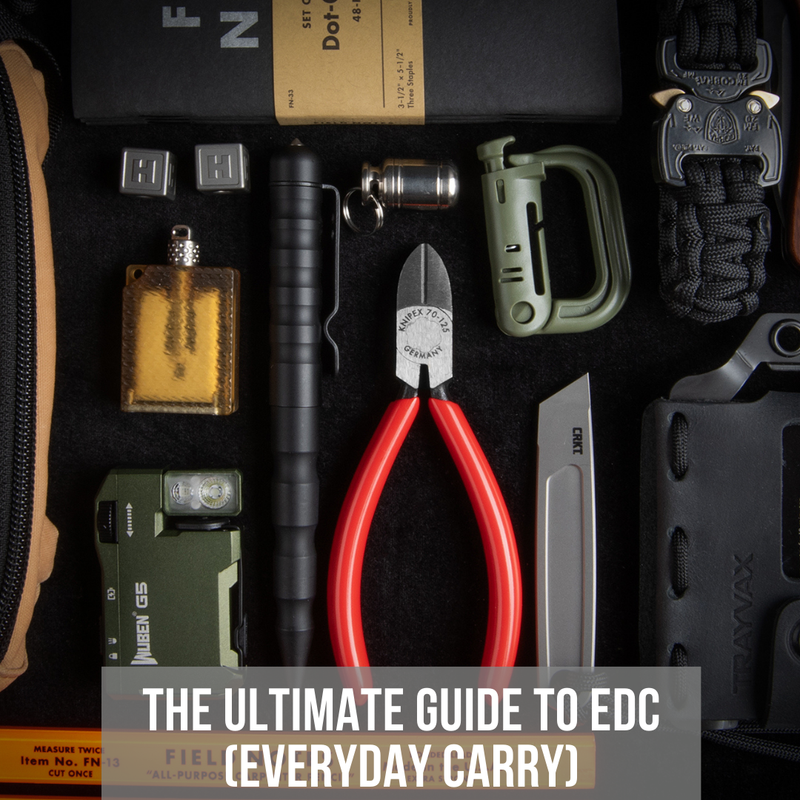
The Ultimate Guide to EDC
Posted by Heinnie Haynes on 15th Mar 2026
Estimated reading time: 14 minutes
Choosing everyday carry gear is one of those decisions that looks simple until you're staring at hundreds of options with no idea where to start. EDC covers everything from pocket knives and multi-tools to torches, pens and wallets, and every category comes with its own trade-offs. This guide gives you practical advice to help you build an EDC kit that actually works for your life.
Key takeaways:
- EDC stands for Everyday Carry: the items you keep on you daily to handle routine tasks and unexpected situations.
- A solid EDC kit starts with a few well-chosen essentials rather than cramming your pockets with gear you never use.
- UK knife law sets clear rules on what you can carry without needing good reason: non-locking folding blades under 7.62 cm.
- The best EDC pen is one you'll actually carry and use, not the heaviest or most expensive option on the shelf.
- Choosing gear based on your real daily routine matters more than copying someone else's pocket dump.
- Quality materials and thoughtful design separate gear that lasts from gear that ends up in a drawer.
What is EDC?
EDC stands for Everyday Carry. It refers to the items you keep on your person each day, chosen to help you handle whatever crops up. The term took off in online forums and communities in the early 2000s, but the concept is older than the internet. People have always carried tools. EDC just gave the habit a name and a community to go with it.
So what does EDC mean in practice? It means thinking deliberately about what you carry rather than grabbing your phone and keys on autopilot. A tradesperson might carry a multi-tool and a permanent marker. Someone who commutes by train might carry a pen, a torch and a power bank. A hillwalker might add a compass and a first aid kit. The specific items change. The principle doesn't: carry what you need, leave behind what you don't.
EDC culture has broadened over time. It started in survival and preparedness circles, where pocket knives and fire starters dominated the conversation. Today you'll find EDC discussions covering everything from notebooks and wallets to grooming kits and cable organisers. It's less about worst-case scenarios now and more about making daily life run smoother.
But the core idea hasn't changed. EDC is about readiness. It's about solving small problems before they become big ones. And it's about choosing gear that deserves a spot in your pockets.
What is an EDC Kit?
An EDC kit is the complete set of items you carry daily, chosen to cover the tasks and situations you're most likely to face. It's not a fixed checklist. Your kit should match your life, not someone else's Instagram pocket dump.
Most kits share a common foundation:
- A pocket knife or multi-tool for cutting and small repairs
- A torch for low-light situations
- A pen and notebook for notes, lists and forms
- A wallet or card holder for everyday essentials
- A power bank to keep your phone alive
Beyond the basics, EDC gear branches into categories that suit specific needs. Pouches and pocket organisers stop smaller items rattling around. Lighters serve anyone who needs a flame. Optics suit birdwatchers, hunters and anyone who benefits from magnification. Carabiners and lanyards secure keys and tools to belt loops or bags.
The point isn't to carry everything. A lean kit you actually use beats an overstuffed pouch that stays at home because it's too heavy or awkward to pocket. Start with three or four essentials. Live with them for a few weeks. Add or remove items based on what you actually reach for and what sits untouched. That editing process is where a good kit takes shape.
What is an EDC Knife?
An EDC knife is a folding pocket knife designed for daily carry. It's compact enough to sit in a trouser pocket without bulk and functional enough to handle the tasks you'll encounter most: opening parcels, stripping cable, slicing fruit, cutting cordage.
In the UK, the law sets specific boundaries. A UK-friendly carry knife must have a non-locking folding blade with a cutting edge under 7.62 cm (3 inches). Anything with a locking mechanism or a longer blade requires good reason to carry in public. That's not guidance. It's law.
How do you open an EDC knife? Common methods include thumb studs, thumb holes, and nail nicks. All of these are manual and all are legal in the UK. Spring-loaded or assisted-opening mechanisms are a different matter and fall outside standard UK-friendly carry.
Blade steel matters more than most beginners realise. Budget knives often use softer steels that lose their edge quickly. Mid-range and premium options use steels like VG-10, Magnacut or S30V that hold an edge longer and resist corrosion. Handle materials range from lightweight FRN and G10 composites to aluminium, titanium and micarta. Each brings different trade-offs in weight, grip and durability.
Pay attention to the pocket clip too. Most EDC knives include one, and its position and depth determine how the knife sits in your pocket. A deep-carry clip keeps the knife low and discreet. Some clips are reversible for left or right-hand carry.
The best EDC knife fits your hand, suits your daily tasks and meets UK legal requirements. Everything else comes down to personal preference.
What is an EDC Pen?
An EDC pen is a writing instrument built for pocket carry. It needs to survive being jostled alongside keys and tools, write reliably on demand and feel comfortable in hand.
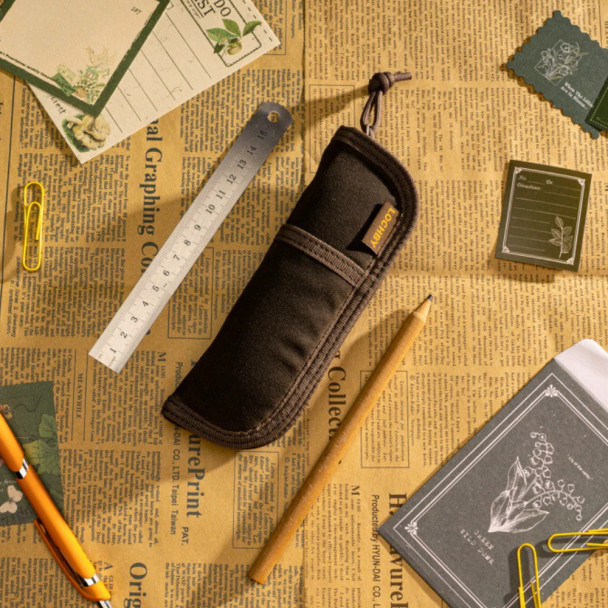
Standard office pens aren't up to the job. They leak. They snap. They run dry at the worst moment. Manufacturers like Fisher Space Pen, BigIDesign and Lochby design EDC pens from machined metal (aluminium, brass, titanium or stainless steel) with refillable cartridges and secure cap or click mechanisms that won't deploy accidentally in your pocket.
Think about refill compatibility before you buy. Some EDC pens accept widely available Parker-style or Fisher Space Pen refills. Others use proprietary cartridges. If you travel or want to swap ink types, a pen that takes standard refills gives you more flexibility.
Weight and balance vary considerably. A brass pen has a satisfying heft but adds noticeable weight over a full day's carry. Titanium is lighter and stronger but costs more. Aluminium sits in the middle: light, affordable and tough enough for daily use.
Grip texture, clip design and overall length all affect how comfortably the pen carries and writes. Too short and it feels cramped during extended writing. Too long and it pokes out of a shirt pocket. The sweet spot sits somewhere between 12 cm and 14 cm.
What Specific Features Should You Look for When Choosing EDC Gear?
Buying EDC gear without a framework leads to impulse purchases and a drawer full of unused tools. Run through this checklist before you commit to anything.
Daily relevance. Will you use this item at least a few times a week? If the answer is no, it probably doesn't belong in your daily carry. Occasional-use items can live in a bag or glovebox instead.
Size and weight. Every item competes for the same limited pocket space. Check closed dimensions and weight. A few extra grams per item add up quickly across a full kit.
Build quality. Look at materials, fit and finish. Tight tolerances, clean machining and quality fasteners suggest a tool that will hold up. Rough edges, wobbly pivots and cheap plastics suggest the opposite.
UK knife law. Non-locking folding blades under 7.62 cm need no good reason to carry. Anything else requires one. Check before you buy.
One-hand operation. Can you deploy and use the tool with one hand? For knives, torches and multi-tools, this matters more than you'd think until you need it.
Maintenance. Can you sharpen the blade yourself? Can you replace the battery or refill the pen? Gear that's easy to look after gets used longer.
Carry method. Does it have a pocket clip, a lanyard hole or a belt loop? How does it sit alongside your other items without creating bulk or hot spots?
Spares and repairs. Can you get replacement parts: clips, screws, o-rings, refills? Quality manufacturers support their products long after purchase.
If a potential buy scores well across these points, it's worth considering. If it falls short on two or more, keep looking.
How Do EDC Multi-Tool Comparisons Help You Choose the Right One?
Multi-tools are the most versatile items in any EDC kit. That versatility also makes them the hardest to choose. Comparing models side by side is the quickest way to narrow the field.
Start with tool count versus tool quality. A multi-tool with 20 functions sounds impressive. But if the pliers flex under light pressure and the screwdrivers strip at first contact, that number means nothing. Fewer, well-executed tools beat a long spec sheet of average ones every time.
Leatherman and Victorinox dominate the multi-tool space for good reason. Leatherman models like the Free series offer one-hand-accessible tools with magnetic locking. Victorinox Swiss Army knives take a different approach: slimmer profiles, lighter weight and a focus on blade quality alongside secondary tools.
Size is a real trade-off here. Full-size multi-tools (like the Leatherman Wave or Surge) pack more capability but add weight and bulk. Compact models (like the Victorinox Cadet or Leatherman Skeletool) carry easily but at the expense of tool count. Mid-size options try to split the difference.
Locking mechanisms matter for safety during use. But remember: a multi-tool with locking blades requires good reason to carry in the UK. If you want something for unrestricted daily carry, look for models with non-locking blades or go bladeless.
What about pliers? If you use them regularly, compare the geometry. Needle-nose pliers reach into tight spaces. Standard pliers offer more gripping power. Some models include both in a tapering design. Wire cutters vary in quality too: replaceable cutters are a genuine advantage on tools you'll use hard.
Spring-loaded handles reduce hand fatigue during extended plier use. It sounds minor until you've spent ten minutes crimping connectors with a non-sprung tool.
The best comparison method is honest self-assessment. List the tools you actually use in a typical week. Then find the multi-tool that covers those functions best, without adding tools you'll never touch.

Which EDC Items Are Best for Different Lifestyles?
Your daily routine should dictate your kit, not the other way around.
Urban commuters need light, slim gear that survives a crowded train and a full workday. A slim wallet or card holder, a compact pen, a small torch and a power bank cover most bases. A keychain multi-tool or a small Swiss Army knife handles occasional cutting and tightening without adding noticeable weight.
Tradespeople need durability above everything. A robust multi-tool with pliers, screwdrivers and wire cutters is the centrepiece. Add a permanent marker, a tape measure and a reliable torch. Pocket organisers and tool pouches keep gear accessible and stop it wrecking your clothing.
Outdoor enthusiasts and bushcrafters lean towards gear that performs in the field. A quality pocket knife, a fire starter, a compass and a head torch cover core needs. For longer trips, add paracord, water purification and a compact first aid kit. Pack everything waterproof or in a dry bag.
Creatives gravitate towards writing and sketching tools. A quality pen, a pocket notebook (Field Notes or similar), a mechanical pencil and a compact ruler form the foundation. A small torch helps in dim studios or on location. A USB power bank keeps devices alive during long sessions.
Anglers need corrosion-resistant tools. Saltwater and freshwater both punish cheap metals. A multi-tool with pliers, line cutters and a scaling blade does serious work here. A waterproof torch is essential for dawn starts and late finishes. A small dry bag protects everything else.
The pattern is clear. Start with what you actually do each day. Build around those tasks. Ignore what works for someone with a completely different routine.
What Are the Best Alternatives to Traditional EDC Gear?
Traditional EDC leans heavily on knives, multi-tools and torches. These remain excellent choices, but they aren't the only options worth considering.
Pocket tools take a different approach. Flat, card-sized tools from brands like CRKT, Gerber and Nite Ize pack bottle openers, screwdrivers, wrenches and pry bars into a credit-card footprint. They slip into a wallet and add almost no weight. They won't replace a proper multi-tool for heavier tasks, but they handle light duties surprisingly well.
Keychain tools attach to your keys and come with you by default. Small carabiners with built-in bottle openers, micro torches and tiny pry bars all fall into this category. Brands like Nitecore and RovyVon make keychain torches that put out impressive lumens from a package not much larger than an AA battery.
Tactical pens combine a writing instrument with a glass breaker tip and a sturdy body. They give you a pen and a secondary tool in one item, which makes them a practical option if you want to consolidate your carry.
Pocket organisers and pouches aren't gear in themselves, but they change how you carry everything else. A good organiser lets you carry more without feeling overloaded. Brands like Viperade and Maxpedition design organisers specifically for EDC loadouts.
Your phone already replaces several traditional EDC items: torch, compass, notebook, camera. But it's also the one device you can't afford to have fail on you. Smart EDC means carrying at least one physical backup for your most critical functions. A keychain torch and a pocket pen cost almost nothing in space and weight, and they work when your battery doesn't.
How Do You Spot Quality EDC Gear Before You Buy?
Knowing what separates good gear from poor gear saves you money and frustration. This table covers the most reliable indicators across common EDC categories.
| Category | Green Flags | Red Flags |
|---|---|---|
| Knives | Named blade steel (e.g. VG-10, 14C28N, S30V); smooth pivot action with no blade play; deep-carry pocket clip; clean grind lines; manufacturer warranty | Unnamed or vague ‘stainless steel’ with no grade; blade wobble when open; loose or flimsy clip; uneven grinds; no warranty or returns policy |
| Multi-tools | Individually locking tools (where legal); spring-loaded pliers; replaceable wire cutters; tool access without fully opening the body; branded steel | Stiff or gritty tool deployment; pliers that flex under light pressure; tools that fold back during use; vague material descriptions |
| Torches | Stated lumens and candela; regulated output (consistent brightness); USB-C rechargeable; IPX rating for water resistance; multiple brightness modes | ‘Super bright’ with no lumen rating; rapid dimming after turn-on (unregulated driver); proprietary charging; no water resistance rating |
| Pens | Machined metal body; accepts standard refills (Parker, Fisher); secure clip that doesn't bend easily; smooth click or cap mechanism | Plastic internals hidden inside a metal shell; proprietary refills only; clip that warps after a few uses; cap that loosens over time |
| Wallets | Full-grain or top-grain leather (or quality synthetic); tight stitching; RFID blocking where claimed; slim profile that doesn't bulge | Bonded leather (lowest grade) or vague ‘genuine leather’ (second-lowest); loose threads; RFID blocking claimed but untested; oversized design that defeats the purpose |
| Pouches | Reinforced stitching at stress points; quality zips (YKK or equivalent); MOLLE compatibility where relevant; internal elastic loops sized for common EDC items | Thin fabric that frays quickly; zips that catch or separate; elastic that stretches out; generic sizing that holds nothing securely |
Use this as a starting point. Handle items in person where you can. Read reviews from people who've carried the item daily for months, not just unboxed it. And trust your instincts: if something feels cheap in hand, it probably is.
We've spent three decades finding and testing the widest range of EDC gear in the UK. Every product on our shelves has been questioned, carried and put to work before it earned a place there. If you're building your first kit or refining one you've carried for years, our team knows this gear inside out. Book a free Heinnie Kit Assist call for honest, no-pressure advice from people who genuinely know what they're talking about.
Why not check out our other great blogs For Gear Recommendations And Outdoor Survival Tips