Creating a Comprehensive Emergency Communication Plan
Posted by Heinnie Haynes on 12th Sep 2025
When crisis strikes, your mobile phone's dead and the power's out, how do you contact family, friends or emergency services? A solid emergency communication plan for preppers isn't just good sense - it's the difference between staying connected and being completely cut off from the world. Whether you're facing severe weather, civil unrest or extended power outages, having multiple ways to communicate can be lifesaving.
What should be included in an emergency communication plan?
Your emergency communication plan needs several layers of backup systems. Start with the basics: multiple phone chargers, portable power banks and car chargers for your devices. But don't stop there. Include battery-powered or hand-crank radios for receiving emergency broadcasts. Keep a list of important phone numbers written down - you can't rely on your phone's contacts if the battery dies.
Two-way radios are invaluable for short-range family communication. Look for models that work without mobile networks. A Maxpedition RDP Radio Pouch keeps your radio secure and accessible on your belt or backpack.
Weather-resistant emergency whistles serve as backup signalling devices when electronic communication fails. The PDW ULTEM Signal Whistle delivers 120 decibels - loud enough to be heard over considerable distances in emergency situations.
How do you prepare for communication during emergencies?
First, establish primary and backup meeting points for your family. Choose one near your home and another outside your neighbourhood. Everyone should know these locations by heart. Create a communication tree showing who contacts who, and designate an out-of-area contact person who can coordinate between separated family members.
Stock your emergency kit with reliable communication tools. Quality tactical flashlights with signalling capabilities are essential. The Nextorch P86 combines a powerful 1600-lumen torch with an electronic whistle (two critical communication tools in one device). For detailed guidance on choosing the right lighting, check out our tactical flashlight buying guide.
Keep written copies of your plan in multiple locations: home, car, workplace and with trusted family members. Digital copies are convenient, but paper doesn't need batteries.
What are the three types of emergency communication?

Emergency communication falls into three categories: alerting systems, two-way communication and information gathering.
- Alerting systems help you signal for help or warn others of danger. This includes emergency whistles, signal mirrors and bright torches. The Storm All Weather Whistle works even underwater and produces a focused 3150 hertz tone specifically designed to cut through background noise. Battery-powered signalling devices are compact additions to any emergency kit.
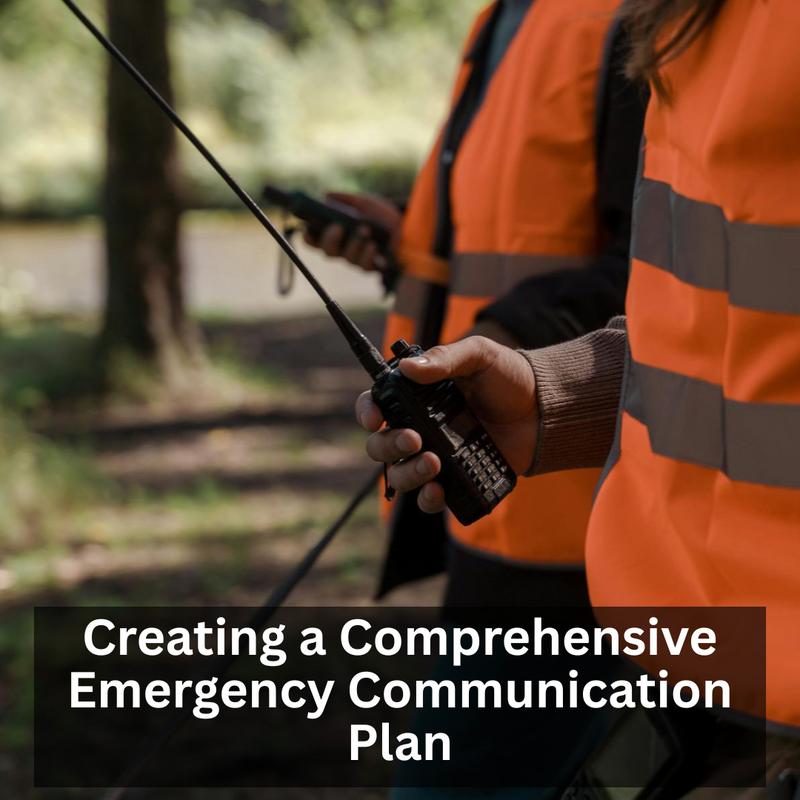
- Two-way communication allows conversation and coordination. This covers mobile phones, two-way radios and amateur radio systems. Two-way radios can work without infrastructure and have excellent range for coordinating with family members.
- Information gathering keeps you informed about developing situations. Battery-powered or hand-crank radios receive emergency broadcasts. Digital radio apps work when internet connections remain available.
How do you communicate in an emergency when the power is out?
When mains power fails, your communication options narrow quickly. Start with your mobile phone, but conserve battery by switching to aeroplane mode when not actively communicating. Use power banks and car chargers to keep devices running.
Two-way radios become critical when mobile networks overload or fail. They work independently of infrastructure, and many models include weather alert functions. Some higher-end models offer emergency channels monitored by rescue services.
Consider traditional signalling methods too. A quality emergency whistle like the Vargo Titanium Emergency Whistle weighs almost nothing but can summon help from considerable distances. Bright torches with strobe functions serve as visual signals at night.
For extended outages, hand-crank or solar-powered radios keep you connected to emergency broadcasts. Some models include mobile phone charging capabilities.
What communication methods work when mobile networks fail?
Amateur radio provides reliable long-distance communication when other systems collapse. Licensed ham radio operators can relay emergency messages and coordinate with emergency services. Many communities have emergency communication groups you can connect with before a crisis strikes.
Mesh networking devices create local communication networks without an internet infrastructure. These pocket-sized units connect with others nearby to form communication webs covering several miles.
Satellite communicators offer two-way messaging anywhere with clear sky views. While expensive, they're invaluable for remote locations or when all terrestrial systems fail.
Don't overlook low-tech solutions. Runners or cyclists can carry messages between locations. Pre-arranged visual signals using torches, mirrors or coloured cloth communicate basic information across distances.
Quality emergency lighting serves dual purposes - illumination and signalling. Tactical torches with multiple output modes and strobe functions are essential kit for any prepper's communication plan.
Building your emergency communication network today
Creating an effective emergency communication plan for preppers takes thought, preparation and practice. Start by identifying your specific risks - urban preppers face different challenges than rural ones. Build redundancy into every aspect of your plan. If one method fails, you need backups for your backups.
Test your equipment regularly and train your family on its use. The middle of an emergency isn't the time to figure out how your radio works. Update your contact lists frequently and review meeting points annually.
Consider joining local emergency volunteer groups or amateur radio clubs. These connections provide valuable knowledge and expand your communication network beyond your immediate family.
Don't forget that communication planning links directly to other preparedness areas. Your emergency kit needs proper organisation, and the tools within it must be reliable.
A well-planned emergency communication strategy transforms uncertainty into manageable challenge. When disaster strikes and conventional systems fail, you'll stay connected to what matters most - the safety and coordination of your loved ones. Start building your comprehensive survival kit today, because preparation isn't paranoia - it's prudence
Why not check out our other great blogs For Gear Recommendations And Outdoor Survival Tips